Vietnam's Mid-Autumn Festival Was Already Called "Children's Festival" More Than a Century Ago
Tết Trung Thu is not a day off in Vietnam, and children are its stars. It began as a harvest night for adults, until the lanterns and toys made for kids gave it a second name.
[Vietnam's Mid-Autumn Festival Was Already Called "Children's Festival" More Than a Century Ago]
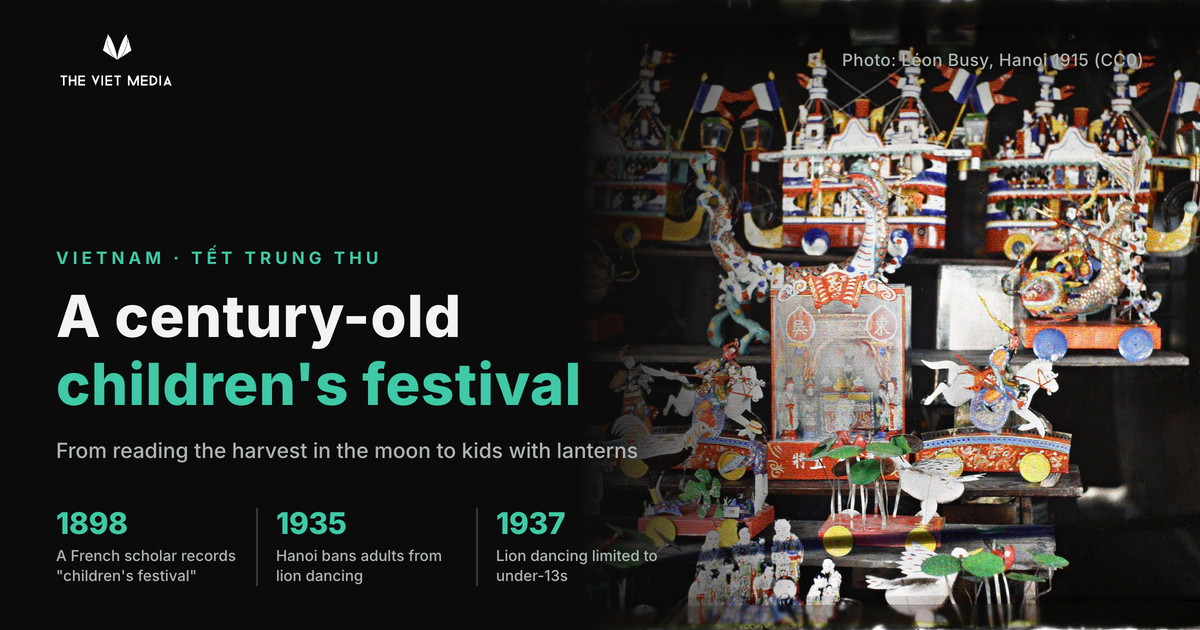
In Taiwan, the Mid-Autumn Festival is a public holiday. In Vietnam, people go to work as usual. The Labor Code's list of public holidays does not include it. Vietnam's Mid-Autumn Festival, Tết Trung Thu, belongs to children. Kids carry lanterns and watch lion dances, while adults buy the lanterns, the mooncakes and the fruit for the offering table.
It was not always that way. Records from more than a century ago show a festival that belonged to adults too. It became a children's festival only over time.
The French scholar Edmond Nordemann compiled a reader of Vietnamese texts, the Chrestomathie annamite, published in Hanoi in installments from 1898. His account of Mid-Autumn starts with grown-ups. Families made offerings to their ancestors. At night, adults drank and watched the moon to read the coming harvest. A clear moon meant a good tenth-month rice crop. A hazy moon meant a good fifth-month crop. No moon at all meant both crops would fail. That is why people also called it the moon-watching festival, tết trông trăng.