Vietnam Voltage and Plugs: Will Your Devices Work, and What Time Is It There?
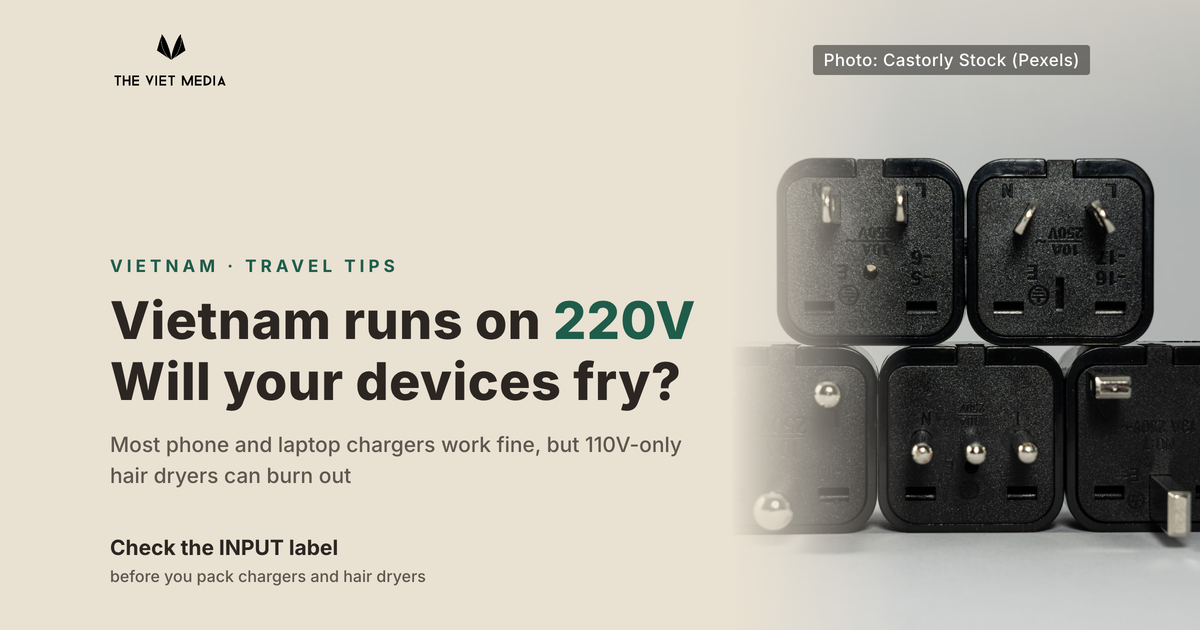
Vietnam is one hour behind Taiwan and most sockets take flat-pin plugs. The real risk is voltage. Outlets run at 220V, and a 110V-only hair dryer can burn out the moment you switch it on.
[Vietnam Voltage and Plugs: Will Your Devices Work, and What Time Is It There?]
Of the three things to check before a trip to Vietnam, two are easy. Most sockets accept flat-pin plugs, and the time difference with Taiwan is just one hour. The one to watch is voltage. Vietnam runs on 220 volts, while standard outlets in Taiwan supply 110. A hair dryer built only for 110 volts can burn out the moment you plug it in.
Plug a 110V-only appliance into a 220V socket and it gets double the voltage it was designed for. It usually fails on the spot, and heating appliances such as hair dryers can overheat. Some sources list Vietnam at 230 volts. That is simply the international standard rating, and it makes no difference to your devices.
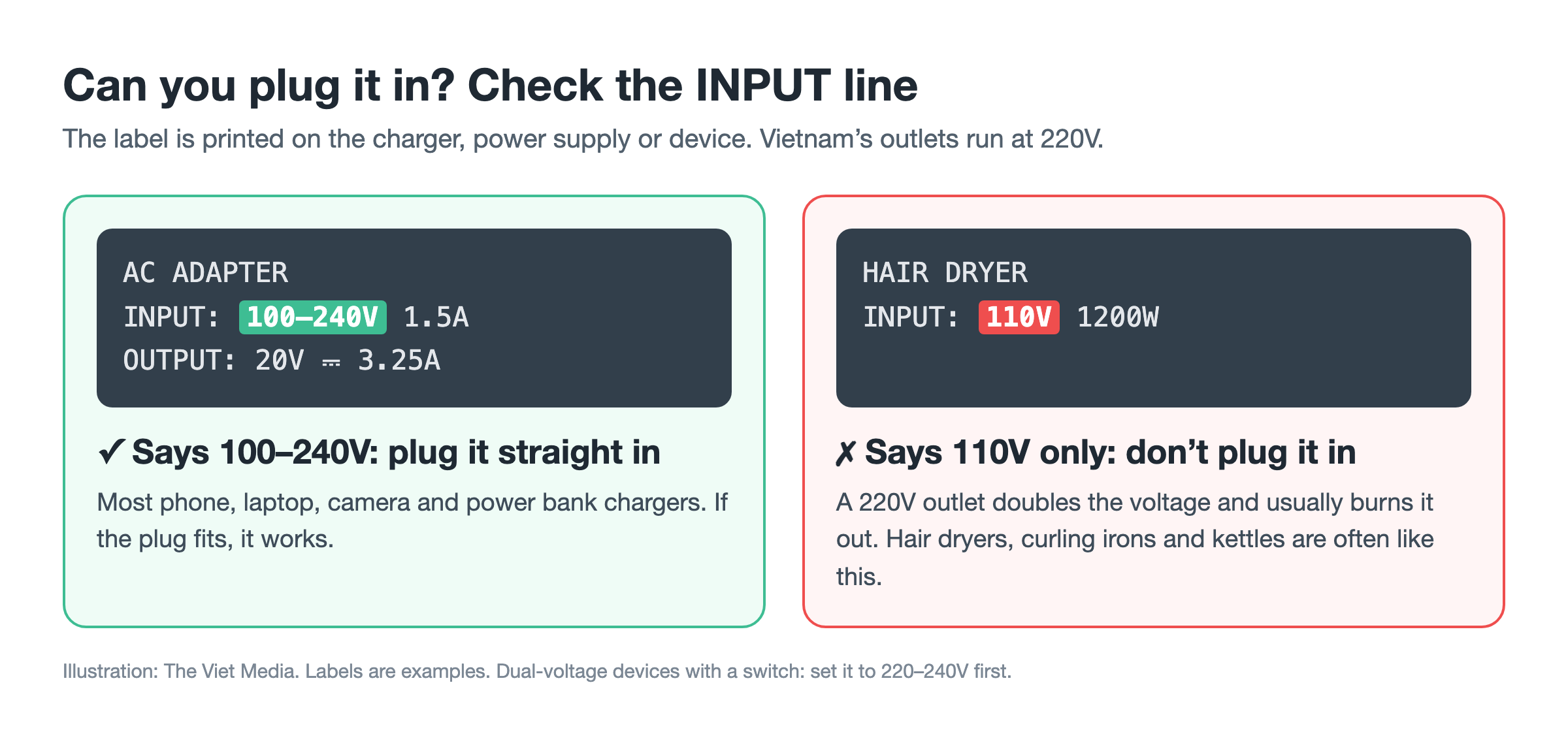
To find out whether something will work, check the label on the charger, power supply or device:
➤ "100–240V": works on any voltage, so it will run fine in Vietnam
➤ "110V" or "100–120V" only: single voltage, so do not plug it into a Vietnamese socket
➤ Dual-voltage with a switch: set it to 220–240V before plugging in, and switch it back before you head home
Most chargers for phones, laptops and cameras, and the chargers for power banks, are rated 100–240V. Apple says its own power adapters support 100–240V. As long as the plug fits, you can charge as normal without a voltage converter.
Heating appliances are the ones to worry about. Many hair dryers, curling irons and electric kettles are single-voltage 110V models and can burn out in a Vietnamese socket. Dual-voltage dryers need to be switched first: one manufacturer warns in its manual that plugging into 220V while the switch is still on 110V risks fire and electric shock. Rather than packing a heavy, bulky voltage converter, bring a dual-voltage model or leave these appliances at home.
Plug shape is less of a problem. Vietnam uses both flat-pin plugs (Type A, the kind common in Taiwan) and round-pin plugs (Type C, common in Europe). Most sockets are combination outlets that take either, so a flat-pin plug will usually fit.
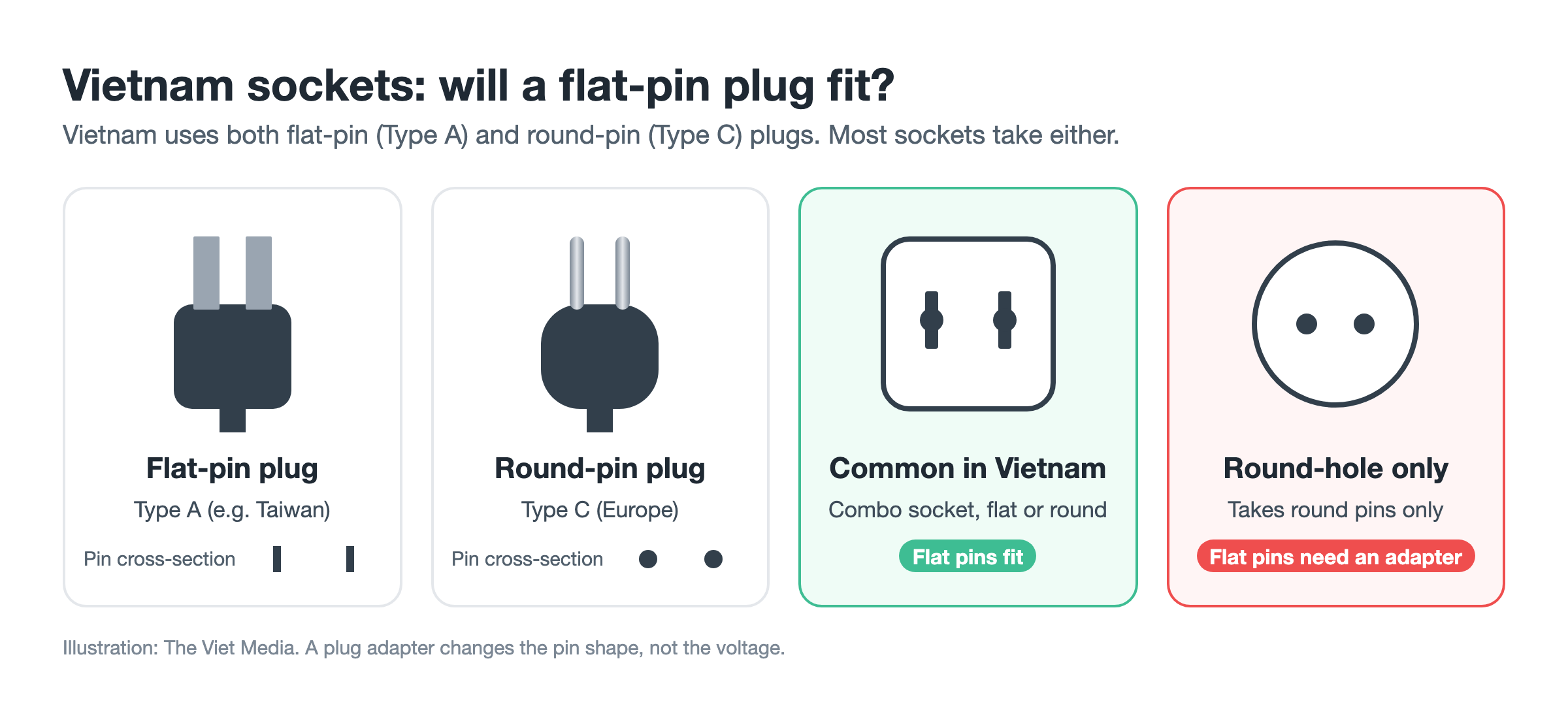
Some sockets have only round holes, and a flat-pin plug won't go in. Common combination sockets usually have no earth hole either, so a three-pin plug may not fit. It is worth packing a plug adapter. You can buy one at electronics shops, hardware stores or online before you leave, and electronics shops in Vietnam sell them, and convenience stores sometimes do too. Remember that an adapter only changes the pin shape, not the voltage. A single-voltage appliance still won't work through one.
As for the time, Vietnam is one hour behind Taiwan: when it is noon in Taipei, it is 11 a.m. in Vietnam. The whole country has used a single time zone since 1975. Neither Vietnam nor Taiwan uses daylight saving time, so the gap stays at one hour all year.
Before you pack, check each device. Look for 100–240V on chargers and a voltage switch on hair dryers, and bring a plug adapter. Then you can plug in with confidence when you land.