The World's Largest Cave, and Only One Company Can Take You Inside
Son Doong holds the record for the world's largest single cave passage, and only one company is allowed to take visitors inside. Here is how it was found, what the six-day trip involves and what it costs.
[The World's Largest Cave, and Only One Company Can Take You Inside]
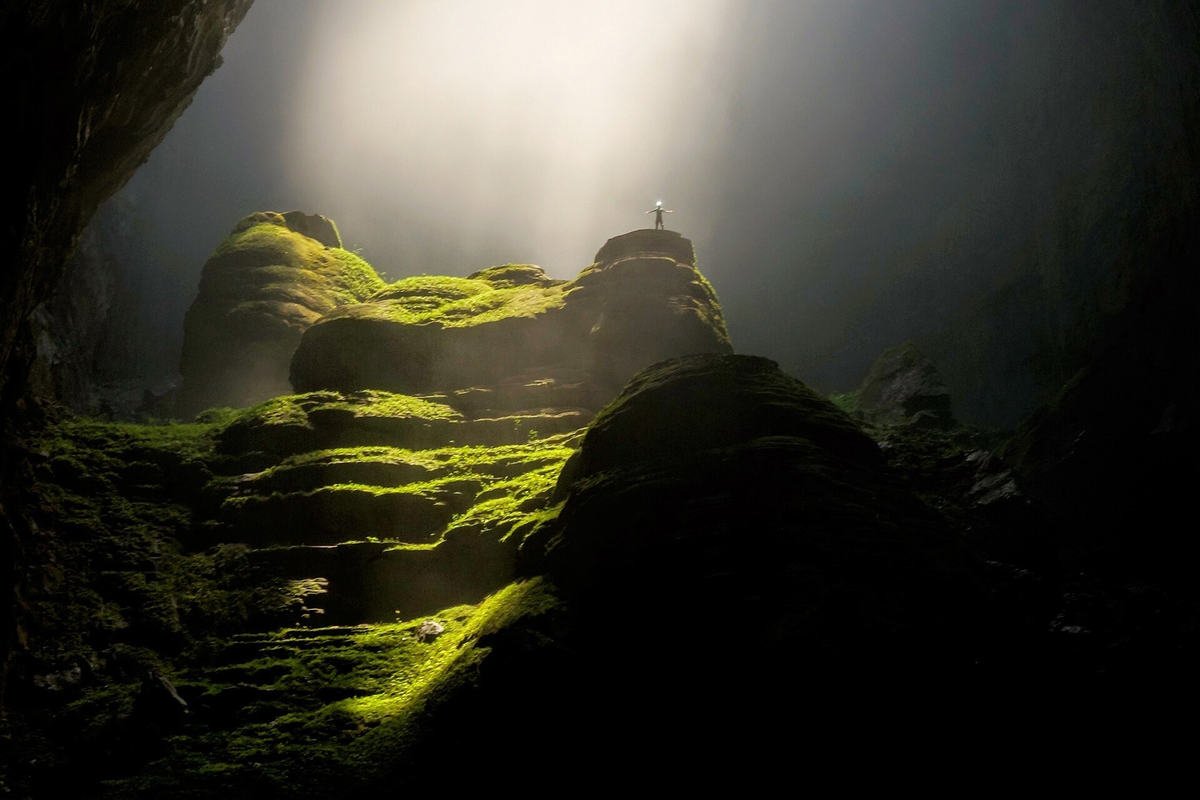
Hang Sơn Đoòng sits in the mountains of central Vietnam. Guinness World Records lists it as the world's largest single cave passage. There is only one way in: a six-day expedition run by the Vietnamese tour operator Oxalis Adventure, which says it is the only company licensed to take visitors into the cave. Spots are scarce. Every tour through the end of 2028 is already booked.
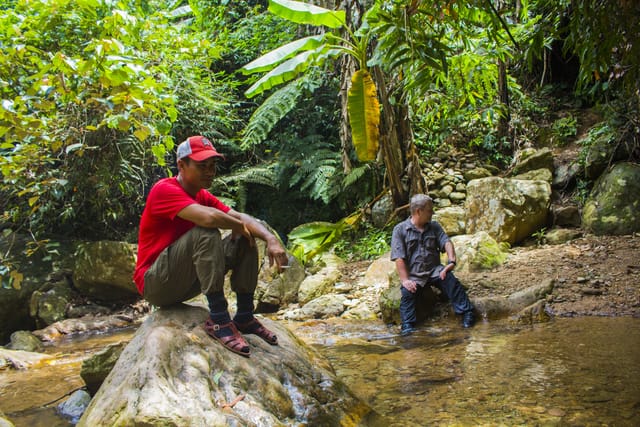
The cave was found only about three decades ago. In 1990, a local man named Hồ Khanh was caught in a storm in the forest. While sheltering, he noticed wind blowing out of a hole in the ground. British cavers later asked him to lead them there, but he could not find the entrance again until 2008. In 2009, a British-Vietnamese expedition led by Howard Limbert went in for the first time. Deep inside, the team hit a rock wall about 90 metres high, later known as the Great Wall of Vietnam, and had to turn back. They returned the next year, climbed the wall and finished surveying the cave.
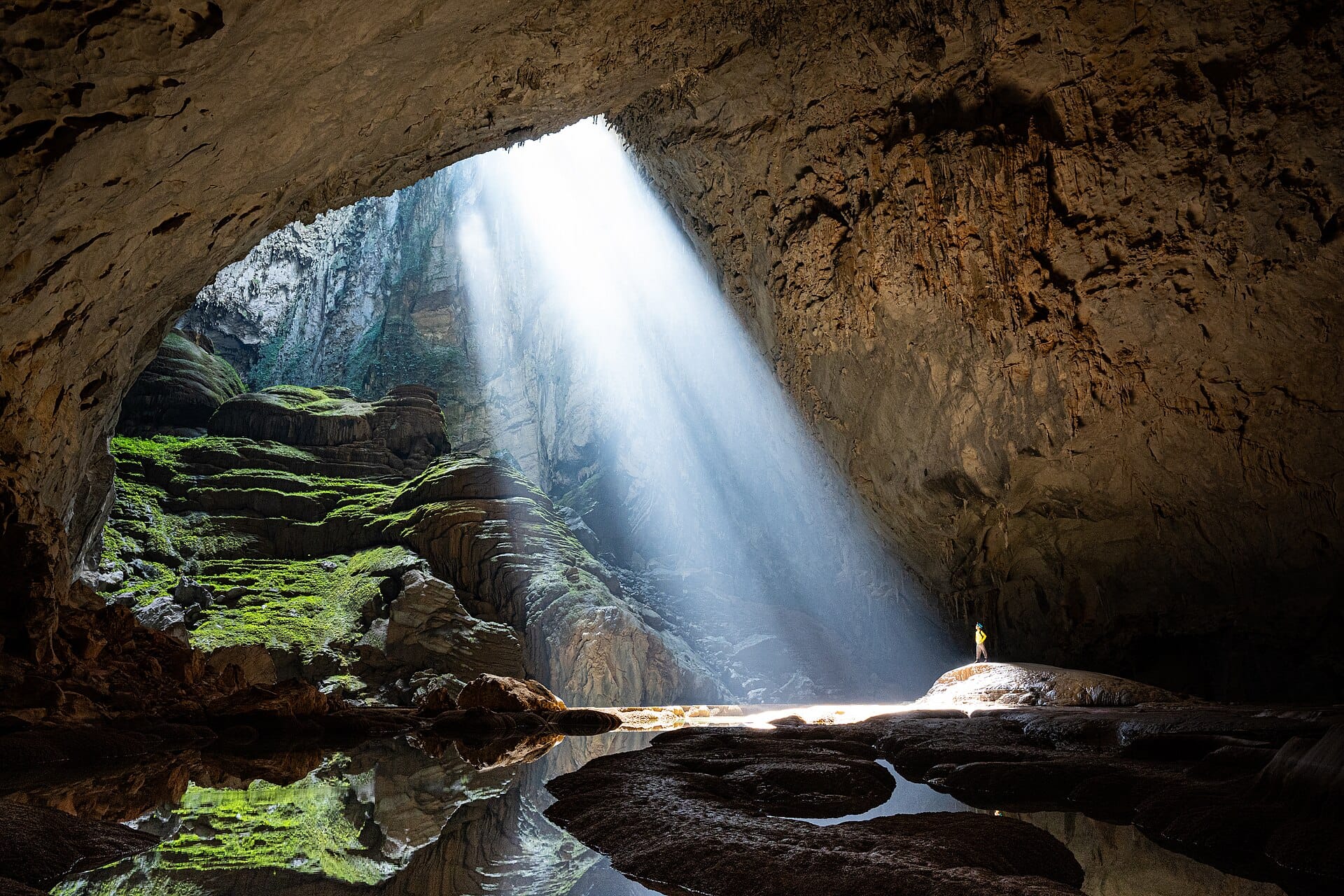
The main passage is about 200 metres high and 150 metres wide. CBS News described it as 65 stories tall. The cave lies inside Phong Nha–Kẻ Bàng National Park, a UNESCO World Heritage Site. The area used to belong to Quảng Bình province, which merged into Quảng Trị province in July 2025.
Oxalis was founded in 2011 and is based in Phong Nha village. In 2013, the then Quảng Bình provincial government approved adventure tourism in the cave and designated Oxalis to run it. The company ran a few pilot trips that August and began selling tours to the public in 2014.
According to Oxalis, about 95% of its staff come from the Phong Nha area. The Son Doong tours employ 130 local people who work in five rotating teams. Most are porters, and many of them used to make a living from illegal logging or hunting.
Oxalis says each group is capped at 10 guests, with no more than 1,000 visitors a year. Tours run only from January to August. The rest of the year the cave is closed, because of the weather and to let the ecosystem recover.
Based on the itinerary Oxalis publishes, the trip lasts six days and five nights. Guests spend the first night at a hotel in Phong Nha, camp for three nights, two of them inside the cave, and spend the last night at the Chày Lập Farmstay.
On day one, guests must reach Đồng Hới by 3 p.m. Domestic flights connect Hanoi and Ho Chi Minh City with Đồng Hới Airport, and trains and buses run from Đà Nẵng. Oxalis then drives guests to Phong Nha. The evening starts at the Phong Nha Caves Exploration Museum, which displays hand-drawn maps and equipment used by the British-Vietnamese expedition team over more than 30 years. After that comes a mandatory safety briefing, where everyone signs a release form and staff check each guest's shoes and backpack.
Day two is the first trek. Porters carry the luggage to camp, and guests carry only a small daypack. The route covers 14 km, with many knee-deep stream crossings. It passes through Đoòng village, home to the Bru-Vân Kiều ethnic minority. Lunch is at the mouth of Hang Én, another huge cave where thousands of swiftlets nest. In the afternoon there is time for a swim in a stream, and the group camps near the entrance to Son Doong.
Day three is when guests actually enter Son Doong. The morning is spent in a dry passage above the entrance. In the afternoon, guests put on climbing harnesses and, with the safety team's help, make their way down a steep slope about 80 metres to the cave floor. From there the route follows the underground river over rocky slopes and sandbanks towards a stalagmite called the Hand of Dog. The night is spent at a campsite with a view of the first doline.
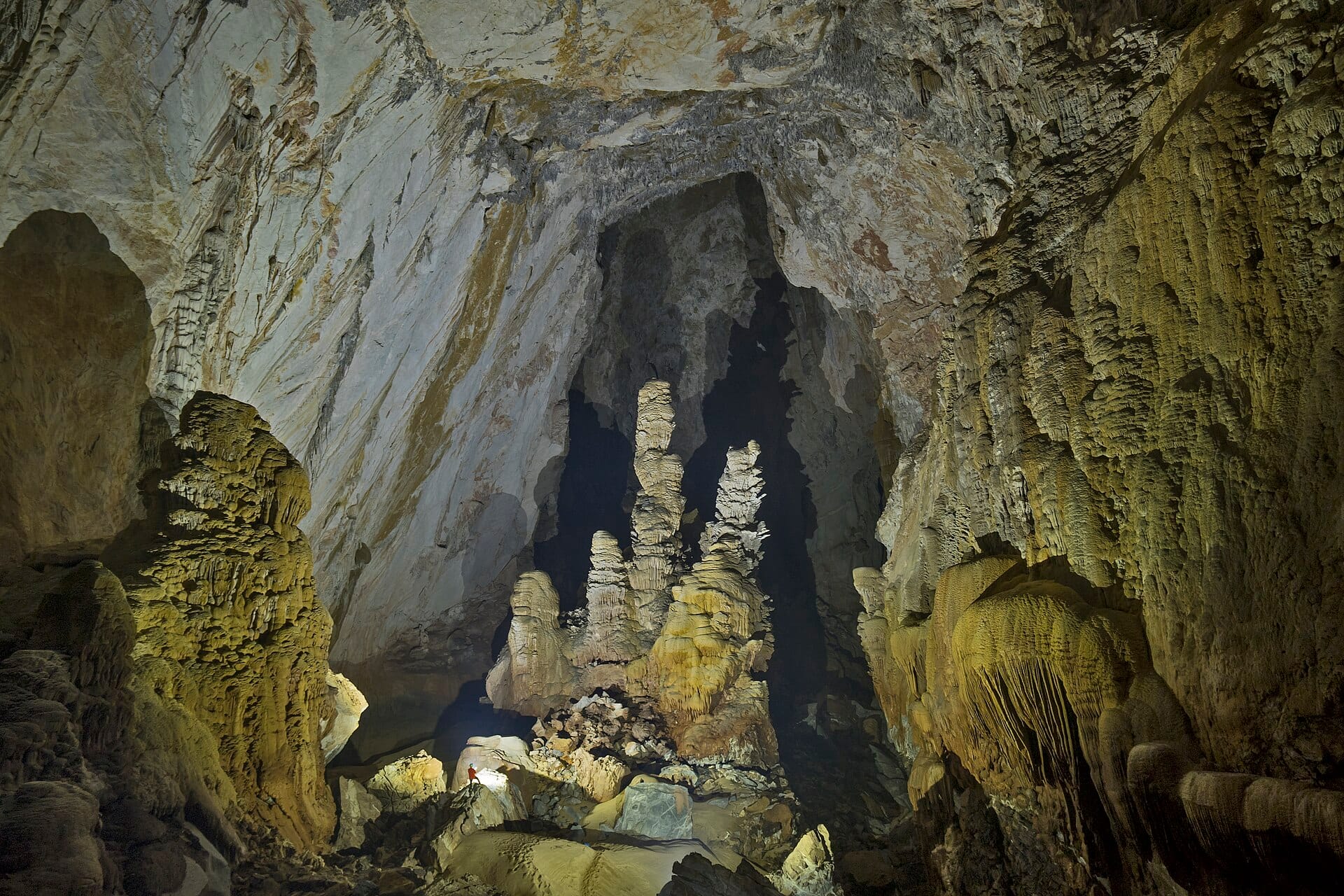
On day four, the group leaves camp, climbs steep sections along the cave wall on fixed ropes and reaches the bottom of the first doline, known as Watch Out for Dinosaurs. A giant stalagmite called the Wedding Cake stands here. On a clear day, sunlight streams down through the opening. In the afternoon, the group reaches the second doline, where a whole primary forest grows beneath the opening. It is called the Garden of Edam, and that night's camp sits at its edge.
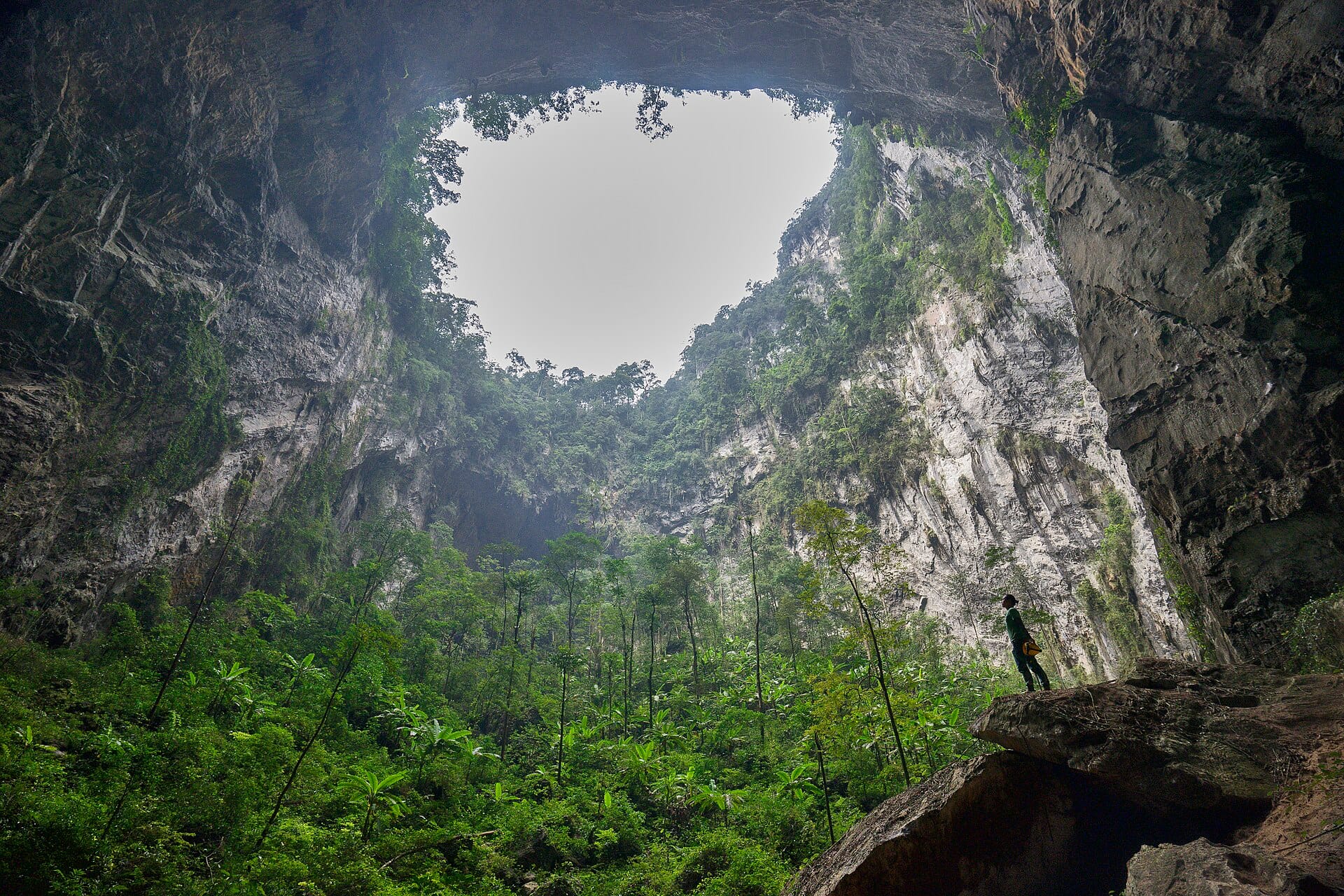
Day five is the way out. The route passes an area of cave pearls, small stones of different shapes and sizes formed as calcite builds up layer by layer around grains of sand. Next comes an underground lake, crossed by boat when the water is high or on foot through a muddy section when it is low. That leads to the foot of the Great Wall of Vietnam, the same wall that stopped the first expedition. Guests climb a vertical steel ladder of about 18 metres, then pull themselves up more than 70 metres of steep rock on ropes.
After lunch at the top of the wall, the group exits the cave and walks to the road, where the expedition ends. The night is spent at the farmstay. On day six, guests rest there before Oxalis drives them back to Đồng Hới.
Oxalis supplies the camping gear. Tents sit on platforms 30 cm off the ground and come with mattresses and sleeping bags. Each campsite has toilets and showers. Expedition cooks prepare three meals a day, with vegetarian options. All drinking water is filtered and boiled, and all rubbish is carried out of the cave.
The tour costs VND 80 million, about USD 3,000, per person. Of that, USD 620 covers official fees: the entrance and environmental service fee plus a national park management and supervision fee. Every 10 guests are supported by 28 staff. Eighteen of them are porters, and the rest are cave experts, guides, safety assistants and cooks.
The price includes the travel insurance required under Vietnamese law, but each claim is capped at VND 50 million, about USD 1,900. Oxalis recommends that guests buy their own cover.
Participants must be between 18 and 70. The fitness requirements are specific. Within the 12 months before booking, guests must have completed at least one overnight trek in a forest or mountain area, covering at least 8 km a day with at least 1,000 metres of elevation gain. They must also be able to run 5 km on flat ground in under 45 minutes, or climb five flights of stairs without stopping. Oxalis adds that people with chronic conditions such as high blood pressure or diabetes may not be suitable.
Bookings go through the Oxalis website. After submitting an application, guests receive a booking code. A consultant then contacts them to check their health and fitness, and only once that is confirmed does Oxalis send an invoice and payment instructions. Cancellation fees rise as the departure date gets closer, and cancelling within 45 days of departure means no refund.
Tours for 2026 and 2027 sold out long ago. After CBS's 60 Minutes aired a segment on Son Doong in March 2026, about 200 more foreign travellers signed up, and the earliest they can go is 2028. As of October 2026, 2028 is also fully booked, and bookings for 2029 have not opened.
The Viet Media Pro: at least four in-depth articles a month, access to every paid article, building into a knowledge base on Vietnam's policy, industries, companies, and people.