Who's Awake at 3 A.M. in Vietnam? Inside the 24-Hour Cafes and the Night Economy Now Written Into Policy
A reader asked why Vietnam's big cities stay busy past midnight, and why 24-hour cafes actually have customers. We followed the question from the pre-dawn wholesale market all the way to the policy documents Hanoi issued this year.
[Who's Awake at 3 A.M. in Vietnam? Inside the 24-Hour Cafes and the Night Economy Now Written Into Policy]
A reader sent us a good question. On several trips to Vietnam's big cities, they noticed people out walking and sitting around late at night, even in the small hours — and 24-hour cafes that somehow had customers. Is there something different about how Vietnamese urbanites live and spend?
The observation is accurate. Early-morning Hanoi offers a working example: the market under Long Bien Bridge, the city's best-known fruit wholesale hub, runs on a schedule opposite to the rest of the city. Daytime is for retail; late at night it switches to wholesale, peaking in the small hours, and vendors and restaurants come to restock before sunrise. Porters haul goods on handcarts through the night — a trade that has existed under the bridge for decades, and the market's nighttime rhythm has not changed. Some of the people awake at 3 a.m. are simply at work. The city's food supply chain has always run at night.
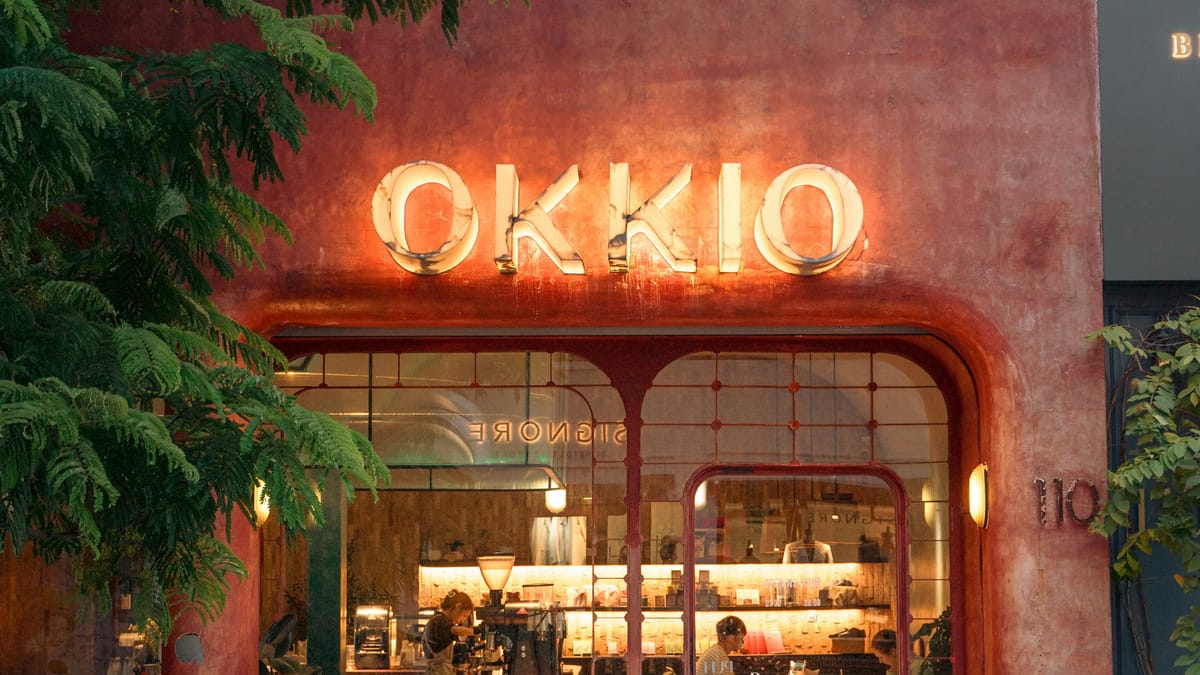
But what stuck with our reader was probably the cafes. Around Hoan Kiem Lake in Hanoi, places like Xofa Café & Bistro stay open around the clock, with drinks priced from 48,000 to 79,000 VND. The late-night crowd is students cramming for deadlines, office workers finishing overtime, young people holding small group meetings. Vietnamese media has a name for them: "cú đêm" — night owls.
Who is paying for this? The answer looks odd at first: mostly young people with modest incomes. A 2024 survey by Vietnamese market research firm Mibrand found the most frequent cafe-goers earn between 5 and 10 million VND a month (roughly USD 200 to 400), visiting one to three times a week. They are 18 to 30 years old — a mix of office workers, freelancers, and students. The survey did not break out late-night visits, but the profile it draws is exactly who you see in the shops after dark.
For students, this is real money. A report last spring interviewed several Hanoi university students: regulars study at cafes two or three times a week, and drinks cost 45,000 to 65,000 VND each. One student estimated the habit normally eats 10–15% of her monthly allowance from home; in exam season, the monthly bill can top a million dong. Their reasons line up: home is too distracting, and the campus library closes on weekends. Come exam season, the habit connects straight to the all-night cafes — students treat them as "open libraries" that run until morning, and grinding through deadlines overnight has been written up as a normal part of modern student life. For this crowd, a cafe is an extension of the study and the office: a few tens of thousands of dong buys a seat with air-conditioning and Wi-Fi for the whole night.
The cafe culture accommodates this use. Unlike in Taiwan, Japan, or South Korea, where coffee shops prize quiet and privacy, Vietnamese cafes allow conversation and shared tables, and nobody lowers their voice. People with cramped apartments settle in; so do people who like the buzz. The shops naturally stay open later and later.
The annual food-and-beverage market report by iPOS and Nestlé Professional estimates Vietnam had about 329,500 F&B outlets in 2025, with revenue of roughly 726.5 trillion VND, up 5.5% from the year before. More telling is the trend the report singles out: the leading beverage format for 2026 will be the "multi-functional cafe" — a space where customers can do focused work and socialize. A 24-hour cafe is that trend taken to its extreme.
What the government has its eye on is a different group in the same hours: nighttime tourists and their spending. In July 2020, Vietnam's prime minister approved a national scheme for developing the night economy, defining it as cultural, entertainment, dining, shopping, and tourism services between 6 p.m. and 6 a.m., and allowing designated areas in cities including Hanoi, Ho Chi Minh City, and Da Nang to pilot extended night services until dawn.
Nearly six years on, Hanoi has turned the scheme into a concrete city plan — three documents in three months. In May, the city government approved its Night Economy Development Scheme for 2026–2030, which also writes in longer-term goals: by 2035, the night economy is meant to contribute 7–8% of the city's GRDP (gross regional domestic product — essentially a city's GDP). The city plans 6 to 8 flagship night-economy zones plus 15 to 20 streets and spaces operating past midnight. The supporting infrastructure has a timetable too: extended weekend metro hours, night buses, and a Red River night cruise by 2030.
In June, Hanoi's People's Council followed with a legal framework for operating hours: from 6 to 10 p.m., night activities can run citywide; from 10 p.m. to 2 a.m., they are permitted in approved commercial-cultural areas and qualifying night-economy zones. The framework governs how night activities and the city's designated night-economy zones open and how late they run — an authorization, not a curfew. In mid-July, the People's Committee issued an implementation plan that does the tourism math — raise visitors' nighttime spending to 25–30% of total travel expenditure, and stretch the average stay to 2.5–3.5 days.
Beyond Hanoi, Ho Chi Minh City is eyeing the night too, with a different card: the country's largest cultural-industry ecosystem, with about 97,000 professionals, whose share of GRDP rose from about 3.5% to about 5.7% in five years — which is why experts see the city as well positioned to build a night economy on culture.
So the small hours in Vietnam's big cities feel unusually lively because three things stack on top of each other. A supply chain that runs at night puts part of the workforce on the clock before dawn. Cramped housing pushes young people's studies and offices into cafes, and the shops extend their hours to match. And the government now treats all of it as a new growth engine, writing the night into city planning one policy document at a time.
The Viet Media Monthly
A curated monthly digest of the most important political, economic, tech, and industry developments in Vietnam.
Designed for reading on desktop or tablet — no algorithm, no noise. Just the stories that matter.
Delivered before the 10th of each month. Cancel anytime.