Vietnam's Banks Are Quietly Raising Interest Rates, and Borrowers Are Feeling It
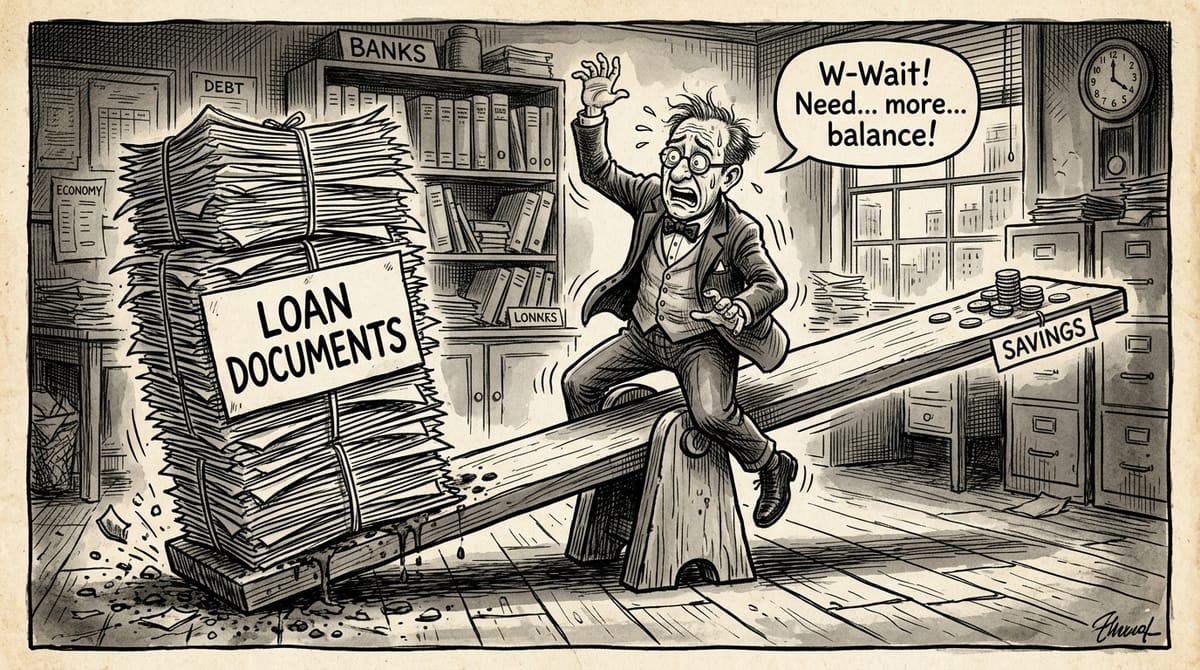
Vietnamese banks are aggressively raising deposit rates as lending outpaces savings. Mortgage rates have jumped back above 10%, and the pressure is building.
[Vietnam's Banks Are Quietly Raising Interest Rates, and Borrowers Are Feeling It]
Since early March, deposit interest rates across Vietnam's banking sector have been climbing fast.
MB Bank raised its top deposit rate from 7.5% to 8.4%. BIDV now offers up to 6.8% on online term deposits. VietinBank pushed short-term rates to 4.75%, the maximum allowed by the central bank. Techcombank, Sacombank, and SHB followed with their own increases. In total, more than nine banks have raised rates this month, including all four major state-owned lenders.
Mortgage rates have risen too. By early 2026, home loan rates were back above 10%.
▍ Why Banks Are Competing for Deposits
According to the State Bank of Vietnam, the main driver is a gap between credit growth and deposit growth.
In 2025, bank lending grew by nearly 18%, the fastest pace in five years. Deposits grew by only about 14%. That left a gap of roughly four percentage points.
But the lending side is only part of the story. Deposits are also leaking out.
Vietnamese media outlet Dan Viet reported that corporate deposits started declining in Q3 2025, as businesses and individuals shifted money into gold, US dollars, and real estate. A wide gap between domestic and international gold prices fueled demand for gold imports, draining foreign exchange. The dong also weakened about 3% to 4% against the dollar over the past year, making USD holdings more attractive than dong-denominated deposits.
Banks are being squeezed from both sides: strong loan demand on one end, shrinking deposits on the other. According to Vietnam Investment Review, many banks' loan-to-deposit ratios are now approaching the central bank's regulatory ceiling of 85%.
There's a structural problem too. About 80% of bank deposits in Vietnam are short-term, but nearly half of outstanding loans are medium- or long-term. Short money is funding long debt.
Starting January 2026, a new rule made things tighter: State Treasury deposits are no longer counted in the loan-to-deposit ratio. That instantly worsened the ratio for some banks, adding more urgency to the deposit race.
▍ The U-Shaped Rate Cycle
To understand this rate hike wave, you need to look at the past three years.
From 2023 to 2024, the SBV cut its refinancing rate from 6% to 4.5% in a series of reductions. The economy was recovering slowly from COVID, the property market was sluggish, and businesses weren't borrowing. Low rates were meant to stimulate credit.
It worked. By 2025, credit growth hit 18% and GDP grew 8%, making Vietnam one of Asia's fastest-growing economies.
But during the low-rate years, deposit returns were unattractive. Many savers moved their money into stocks, gold, and property. When credit demand finally picked up, banks found they didn't have enough deposits to fund it.
Rates are now climbing back up. It's the natural end of that cycle.
▍ Deposit Rates Up, Lending Rates Follow
Higher deposit rates mean higher funding costs for banks. Those costs get passed on to borrowers.
According to VietnamNet, promotional mortgage rates in 2025 were around 5.5% to 6%. By early 2026, they had risen to 10% to 11%. After the promotional period ends, floating rates at most banks run between 12% and 14%.
For a 15- to 20-year mortgage, even a half-percentage-point increase adds tens of millions of dong to annual repayments. The Saigon Times reported that many potential homebuyers are now standing on the sidelines, waiting rather than committing.
Developers are responding with interest-rate subsidies, deferred payments, and bigger discounts to keep sales moving. Small and mid-sized businesses that rely on bank loans for expansion are also feeling the pinch.
▍ Oil Prices and the Exchange Rate Are Adding Pressure
Beyond the banking system's internal imbalance, external factors are pushing rates higher.
The Middle East conflict has sent oil prices surging. UOB estimates that every $10 increase in Brent crude adds about 0.3 to 0.4 percentage points to Vietnam's CPI, with a two- to three-month lag. If oil stays elevated, inflation pressure will make it harder for the central bank to cut rates.
The exchange rate is another constraint. With the US dollar strong globally, keeping Vietnamese rates too low risks capital outflows and further dong depreciation. That limits the SBV's room to ease.
The central bank's policy rate remains at 4.5%. This rate-hike wave is driven by commercial banks competing for deposits, not by a central bank tightening. But the SBV hasn't intervened to stop it either.
▍ What Comes Next
Analysts widely expect deposit rates to rise another 0.5 to 1 percentage point in the first half of 2026.
The SBV has set a credit growth target of 15% for 2026, well below last year's 18%. If lending slows, the deposit crunch should ease and rates could stabilize.
But if oil stays expensive, inflation picks up, and the dong stays under pressure, rates may keep climbing.
For businesses and investors in Vietnam, this shift is worth watching. Dong deposits are becoming more attractive. But if you're planning to borrow for property or expansion, funding costs are significantly higher than a year ago.
The Viet Media Monthly
A curated monthly digest of the most important political, economic, tech, and industry developments in Vietnam.
Designed for reading on desktop or tablet — no algorithm, no noise. Just the stories that matter.
Delivered before the 10th of each month. Cancel anytime.