Cooler Master Plans $3 Billion Vietnam Expansion as Taiwanese Manufacturers Accelerate Southward Shift
Cooler Master plans to invest $3 billion in Vietnam's Bac Ninh province, transforming from a PC case maker into a global hub for AI server liquid cooling — the latest signal of Taiwanese manufacturers accelerating their shift to Vietnam.
[Cooler Master Plans $3 Billion Vietnam Expansion as Taiwanese Manufacturers Accelerate Southward Shift]
In March 2026, Taiwanese cooling equipment maker Cooler Master presented Bac Ninh province with an expansion plan far larger than anyone expected.
The company, founded in Taipei in 1992, wants to raise its total Vietnam investment to $3 billion and employ 40,000 workers by 2029.
Cooler Master already has a factory running at Gia Binh Industrial Park in Bac Ninh, with $140 million in realized capital, about 1,300 workers, and production underway since July 2025.
If the $3 billion plan materializes, it would scale up the current operation by more than 20 times.
▍ From PC Cases to AI Cooling
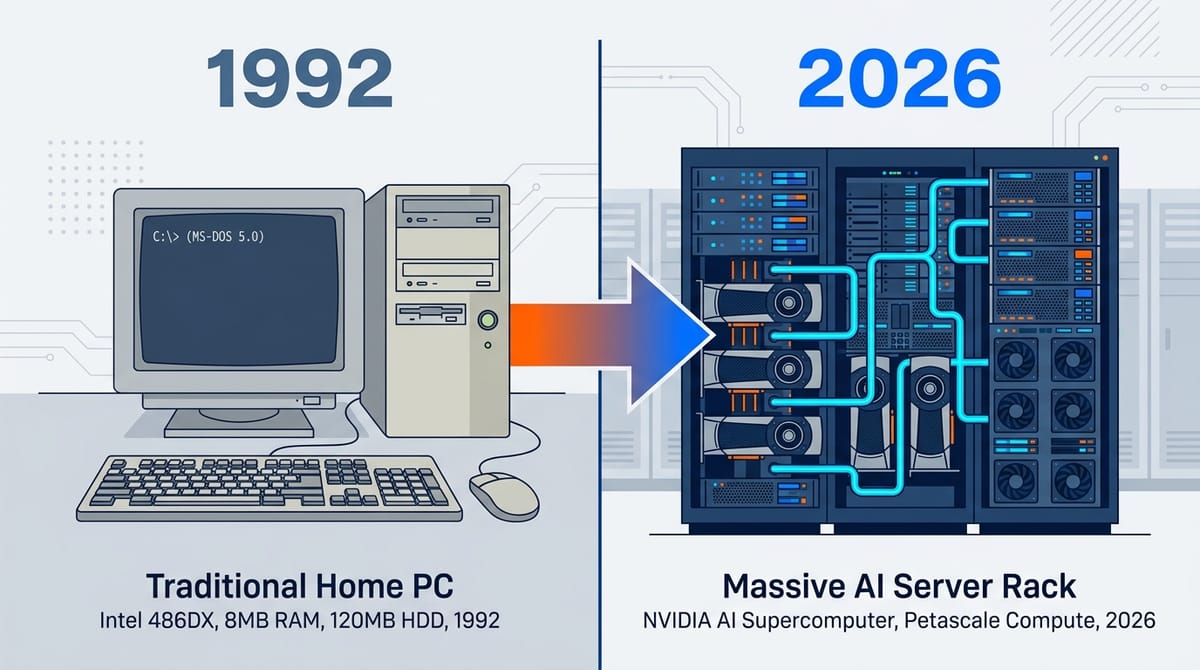
Most people know Cooler Master for computer cases and CPU coolers.
The company's traditional lineup includes cases, power supplies, cooling fans, laptop cooling pads, and peripherals like keyboards and mice. It also makes coolers for Nvidia and AMD on an OEM basis.
But the Vietnam factory is a different story.
The Bac Ninh plant produces cooling modules for AI servers, machine learning systems, and precision liquid cooling equipment for data centers.
Cooler Master VP Andy Lin told Bac Ninh chairman Pham Hoang Son in a March 2026 meeting that the goal is to turn Bac Ninh into the company's "global supply chain hub."
The pivot has market data behind it.
The global data center liquid cooling market hit roughly $3 billion in 2025 and is expected to approach $7 billion by 2029.
Goldman Sachs estimates that liquid-cooled AI servers grew from 15% of all AI servers in 2024 to 54% in 2025, and should reach 76% in 2026.
Liquid cooling is going from niche to standard for AI infrastructure, and Cooler Master sits right on that supply chain.
▍ Why Bac Ninh
Cooler Master's choice of Bac Ninh follows clear logic.
The province sits just east of Hanoi and is one of northern Vietnam's most developed manufacturing zones.
By 2025, Bac Ninh had attracted over $46.8 billion in cumulative FDI. Samsung alone has invested $8.3 billion there, making it the province's largest foreign investor.
Cooler Master's Bac Ninh investment has moved in three stages.
In October 2023, it received its first investment certificate for $75 million.
In December 2024, that grew to $200 million.
In March 2026, it proposed the $3 billion long-term plan.
From first landing to a $3 billion expansion proposal in under three years.
The factory currently occupies 10 hectares. Cooler Master plans to lease an additional 90 hectares at Gia Binh Industrial Park, bringing the total to 100 hectares.
The extra land is also meant for upstream and downstream suppliers to co-locate, creating a full supply chain cluster with worker dormitories, expert housing, and a training center.
Bac Ninh chairman Pham Hoang Son said the province is ready to offer tax incentives if the project meets regulatory requirements.
▍ A Bigger Wave: Taiwan's Manufacturing Exodus
Cooler Master's $3 billion plan is part of a much larger trend of Taiwanese manufacturers moving to Vietnam.
Start with trade. Taiwan-Vietnam bilateral trade reached roughly $39.7 billion in 2025, up about 40% from $28.3 billion in 2024.
Taiwan's newly approved FDI in Vietnam totaled about $965.8 million in 2025, ranking sixth among all source countries.
Then look at individual companies.
Foxconn is the most visible case. Between 2020 and 2024, Foxconn spent over $500 million in capex in Vietnam. Its 2024 Vietnam output topped $10 billion with more than 70,000 workers.
Foxconn Industrial Internet (FII) has set a target to double its Vietnam revenue to $20 billion in 2026, driven by AI server demand.
FII chairman Brand Cheng said AI-related business now accounts for about 80% of FII's revenue.
The speed of production migration is striking.
Three years ago, nearly all of Foxconn's production was in China. Today, about 35% is spread across Vietnam, India, and Mexico. This is structural supply chain reorganization, not just adding another factory.
▍ AI Cooling: The Next Supercycle
Cooler Master's timing in Vietnam coincides with an explosion in AI infrastructure.
AI servers are getting denser, and traditional air cooling can no longer keep up. Liquid cooling has become a standard requirement for data centers.
FII's own operations illustrate the trend.
In Vietnam, FII sources cooling systems, PCBs, and assembly work for Nvidia's GB300 NVL72 platform, serving cloud providers like Amazon, Google, and Oracle.
AI accounts for roughly 80% of FII revenue. Vietnam is already a critical node in this supply chain.
Cooler Master has long made coolers for Nvidia and AMD, giving it existing customer relationships in this supply chain.
Moving from PC component cooling to AI server liquid cooling builds on the same technical base and overlapping customer set.
Expanding production in Vietnam is a bet on two trends at once: the growth of the AI cooling market and Vietnam's rise as a global manufacturing base.
▍ From Cheapest Alternative to Critical Node
Vietnam's appeal to foreign investors has evolved for over a decade, but recent years mark a qualitative shift.
Taiwanese companies used to go to Vietnam mainly for cost savings, making garments, shoes, and basic electronics.
New investments increasingly target high-value components: AI server parts, liquid cooling systems, advanced packaging.
Vietnam's disbursed FDI reached $27.62 billion in 2025, up 9% year-on-year, the highest in the 2021-2025 period.
Cooler Master's $3 billion plan captures this transformation.
A mid-sized Taiwanese company that started making PC cases is building a global AI cooling supply chain hub in northern Vietnam.
That alone says something about how Vietnam's role in global manufacturing is changing, from cheapest alternative to critical supply node.
The Viet Media Monthly
A curated monthly digest of the most important political, economic, tech, and industry developments in Vietnam.
Designed for reading on desktop or tablet — no algorithm, no noise. Just the stories that matter.
Delivered before the 10th of each month. Cancel anytime.