The Bob Dylan of Vietnam: Both Sides Banned Trịnh Công Sơn's Songs, and Vietnam Still Sings Them 25 Years After His Death
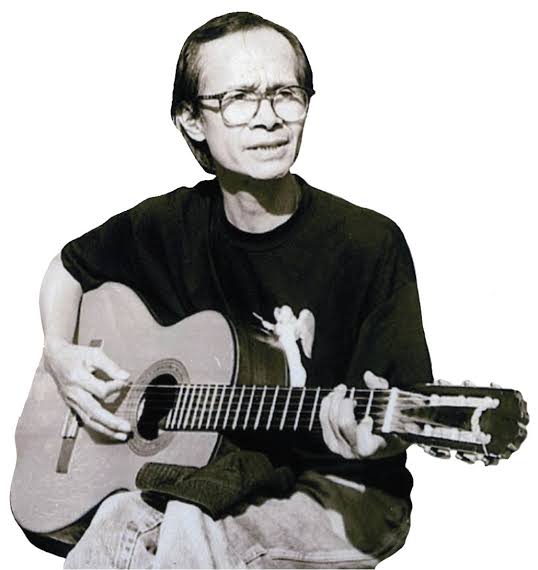
He wrote about ordinary people in wartime and refused to take sides — so both sides banned his music. Twenty-five years after his death, tribute concerts run from Ho Chi Minh City's Book Street to Singapore, and his most famous singing partner, 81-year-old Khánh Ly, came home to visit his grave.
[The Bob Dylan of Vietnam: Both Sides Banned Trịnh Công Sơn's Songs, and Vietnam Still Sings Them 25 Years After His Death]
On the evening of April 1, Nguyễn Văn Bình Book Street in Ho Chi Minh City was packed. The date marked 25 years since the death of songwriter Trịnh Công Sơn, and his family had organized a tribute concert named after one of his songs: "Em còn nhớ hay em đã quên" — do you still remember, or have you forgotten. Saxophonist Trần Mạnh Tuấn led a lineup of singers on stage. The same day, the family released a collection of his paintings.
A month earlier, 81-year-old singer Khánh Ly had returned to Vietnam. She suffered a stroke the year before; her itinerary after recovery included a stop at Sơn's grave. The two formed one of the most famous partnerships in Vietnamese music: he wrote, she sang. When Sơn died in 2001, hundreds of thousands of people filled the streets of Ho Chi Minh City for his funeral — a send-off matched in Vietnamese history only by that of Ho Chi Minh himself.
Trịnh Công Sơn was born in 1939 in Buôn Ma Thuột in the central highlands and grew up in Huế. His father was jailed for anti-French resistance activities, and at age ten, Sơn spent a year living in Huế's Thừa Phủ Prison, where his father was held. At 19 he wrote his first hit, "Ướt Mi" (Tearing Lashes). He later studied Western philosophy in Saigon, then switched to a teachers' college in Quy Nhơn in 1961 to avoid the South Vietnamese draft, and taught at an elementary school in Bảo Lộc, Lâm Đồng after graduating. He wrote more than 600 songs over his lifetime and never married. He died in 2001.
What made him a legend were the anti-war songs he wrote at the height of the Vietnam War. He didn't write slogans. He wrote about ordinary people: a mother grieving for her soldier son, the graveyards and scorched fields left to the next generation. In his songs, he set a thousand years of Chinese rule and a hundred years of French colonization alongside the civil war in front of him, and asked the Vietnamese to let go of their hatred for one another. The South Vietnamese government disliked the pacifist lyrics, and he lived under constant official pressure. The songs spread anyway — Khánh Ly performed them with him on university campuses across the South, show after show, until they were everywhere. He wrote love songs in the same years, including his signature "Diễm Xưa," named for his first love in Huế. To her younger sister, Dao Ánh, he would go on to write more than 300 love letters over 37 years.
On April 30, 1975, the afternoon President Dương Văn Minh announced South Vietnam's surrender, Trịnh Công Sơn walked into the Saigon radio station and sang "Nối vòng tay lớn," a song he had written in 1968 about the North and South joining hands, and said the nation's dream had come true. His family soon emigrated to Canada. He chose to stay — and the new government sent him to a labor camp for "re-education." As PBS's Vietnam documentary project later put it, both the South and North Vietnamese governments banned the sale or broadcast of his music. Only years later did his songs about love and postwar reconciliation find acceptance again and return to popularity. In 2022, a rock tribute concert named after "Nối vòng tay lớn" was held in Ho Chi Minh City — this time with official approval.
Who first called him the Bob Dylan of Vietnam? The most widely circulated version credits American folk singer Joan Baez, but that attribution exists only in later retellings, with no traceable original source. What survives on the record comes from two American outlets: PBS's Vietnam project wrote that after the 1968 battle of Huế he "soon became known as the 'Bob Dylan of Vietnam,'" and The Washington Post used the same phrase in its 2001 obituary. What is certain is that the two names eventually met. In 2004, three years after his death, Sơn received the World Peace Music Award alongside Bob Dylan and Joan Baez. In 2011, Dylan played his first-ever show in Vietnam, in Ho Chi Minh City, with a tribute to Sơn built into the evening. And this year, American scholar John C. Schafer's comparative study of the two songwriters was translated by Fulbright University Vietnam and published in the country, under a title taken from one of Sơn's songs: "Để gió cuốn đi" — let the wind carry it away.
As for how much of his influence survives in today's Vietnam, a few numbers tell the story. The 2022 biopic "Em và Trịnh" grossed roughly VND 100 billion, the first Vietnamese film to reach that scale that year. In 2019, on what would have been his 80th birthday, Google put him on its homepage Doodle — the first Vietnamese person so honored. The 300-plus love letters Dao Ánh kept for more than half a century were returned to his family in 2022, to be housed in a museum the family is planning. This year's 25th-anniversary tributes ran from Hanoi and Hội An to Singapore. And on Book Street that April night, the songs on stage were the ones he wrote more than half a century ago.
The Viet Media Monthly
A curated monthly digest of the most important political, economic, tech, and industry developments in Vietnam.
Designed for reading on desktop or tablet — no algorithm, no noise. Just the stories that matter.
Delivered before the 10th of each month. Cancel anytime.