The Streets Behind the Pink Church Just Made Time Out's Coolest List
Time Out picked the low-rise blocks behind the pink church, not the wall everyone photographs.
[The Streets Behind the Pink Church Just Made Time Out's Coolest List]
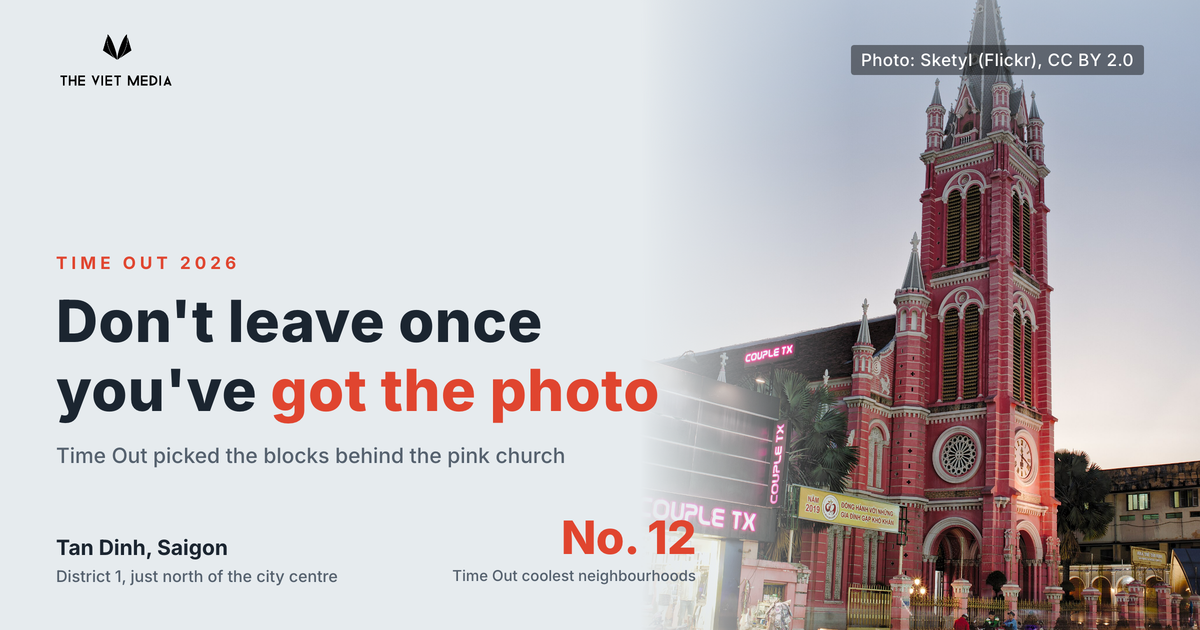
Time Out published its 2026 list of the world's coolest neighbourhoods in mid-September. Tan Dinh, in Ho Chi Minh City, came 12th out of 40. Jongno 3-ga in Seoul took the top spot.
Almost every visitor to the city photographs Tan Dinh's pink church and then heads back downtown, Time Out wrote. But the blocks behind the church are the ward itself, and they are quiet — low-rise, low-volume, full of places to eat, in a part of Saigon that has almost run out of quiet.
Tan Dinh sits in District 1, just north of the centre, bounded to the north by the Nhieu Loc–Thi Nghe canal. Time Out builds the list from nominations by local writers, then ranks them on food and drink, nightlife, independent shops, liveability and a sense of community. This is the third year running that a Ho Chi Minh City neighbourhood has made it: Thao Dien in 2024, Nguyen Thai Binh in 2025.
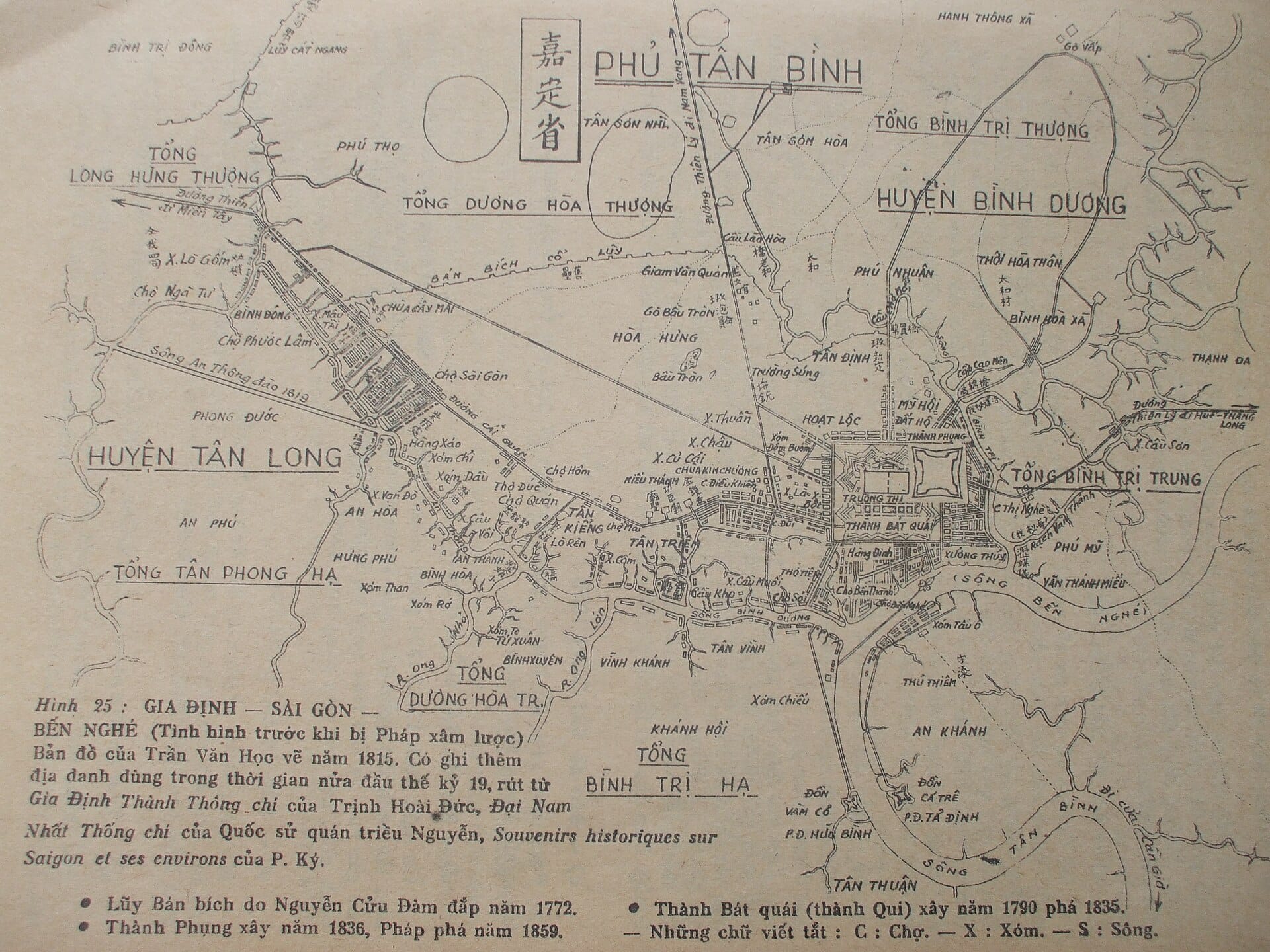
The name goes back a long way. "Tan" means new and "dinh" means to settle — the new place where migrants from the north put down roots. A map drawn in 1815 by Tran Van Hoc, an official of the Nguyen dynasty, already marks "Go Tan Dinh." By the early twentieth century the area was full of shops and food stalls, with troupes performing cai luong and hat boi, the traditional opera of the south.
Tan Dinh Market was built into that world. Work started in 1926 and it opened in 1927, about thirteen years after Ben Thanh Market. Three bell towers on the facade make it easy to spot; the middle one still holds its old bronze bell, and the steel roof frame and tiles have survived.
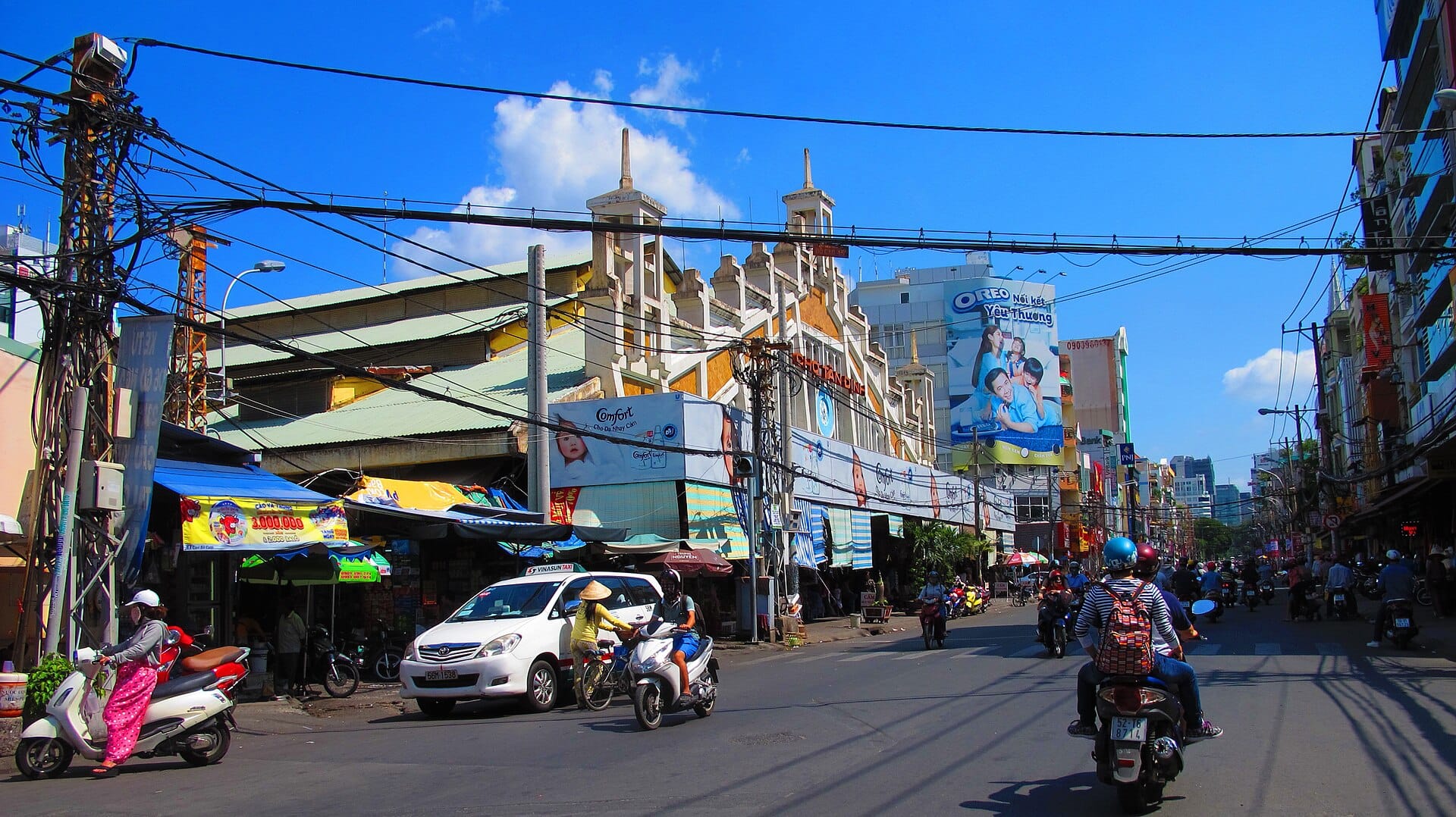
The stalls sell fabric, clothing, fresh food and dry goods. Older residents remember it as the "rich people's market," where the goods were better and the prices a little higher. In November 2025 the market was listed as a city-level architectural heritage site, and this July the ward held a centenary, counting from the year construction began. Business is another matter. Traders compete with supermarkets, convenience stores and e-commerce, and some now sell through livestreams and social media.
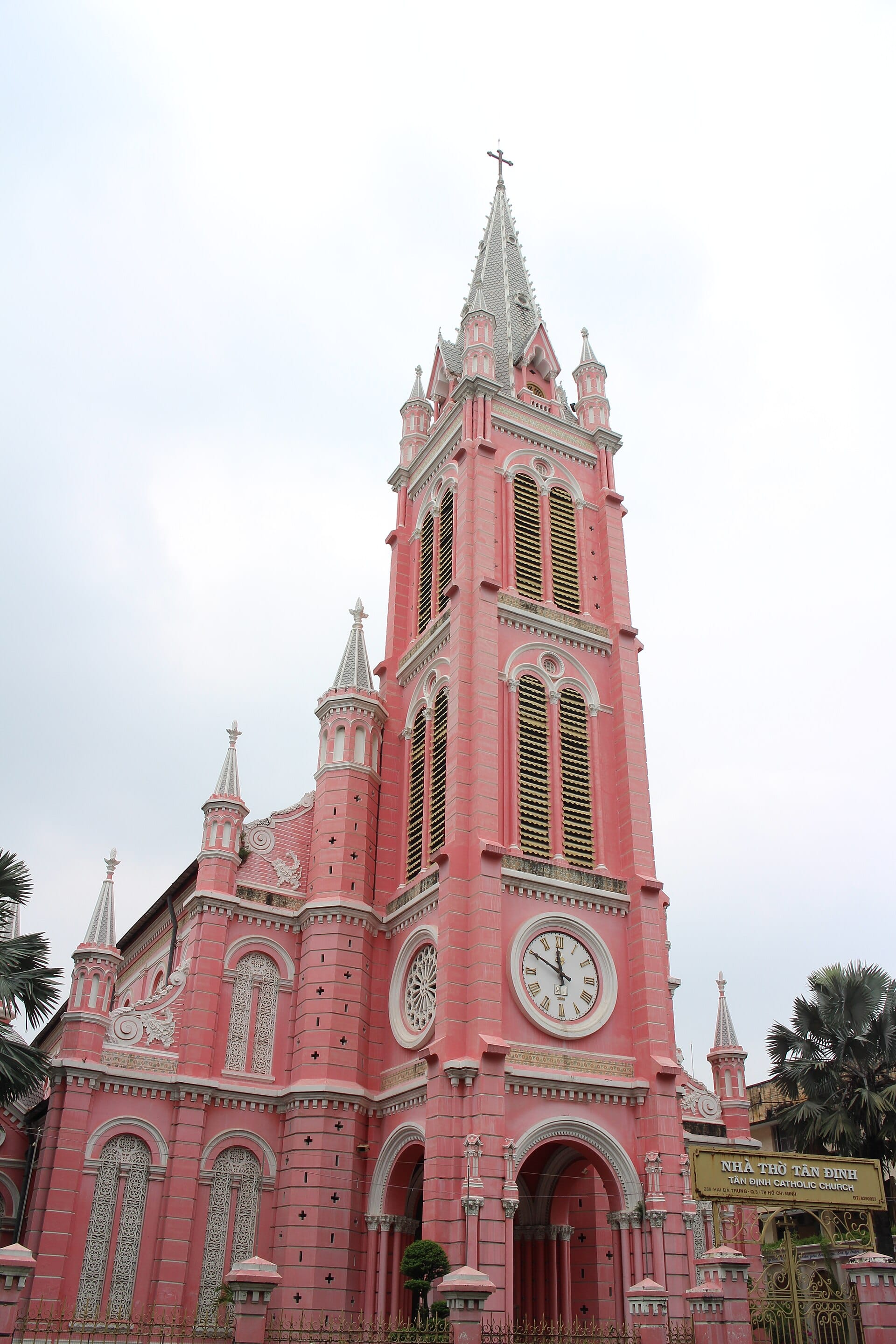
The pink church is older than the market. Built under the French priest Donatien Éveillard, it was completed in December 1876; most of what stands today dates from a rebuild between 1896 and 1898, with further work in the late 1920s. Its formal name is the Church of the Sacred Heart of Jesus, and the architecture is mainly Romanesque with Gothic and Renaissance touches. The pink came later: a 1957 renovation painted the exterior salmon and the interior strawberry and cream.
Here is where it gets confusing. Everyone calls it Tan Dinh Church, but its address is 289 Hai Ba Trung, and the parish website lists it in Ward 8 of District 3. The church and the Tan Dinh ward in District 1 have always been in different districts.
The church's side of the line has since been redrawn twice. In February 2021, Wards 6, 7 and 8 of District 3 merged into Vo Thi Sau ward. The 2025 reorganisation — approved in June, effective in July — folded Vo Thi Sau and what remained of Ward 4 into a new ward called Xuan Hoa. The same reorganisation merged the old Tan Dinh ward with the remainder of Da Kao to form today's Tan Dinh. So the church now has a Xuan Hoa address, while the parish, the tour routes and everyone else still say Tan Dinh.
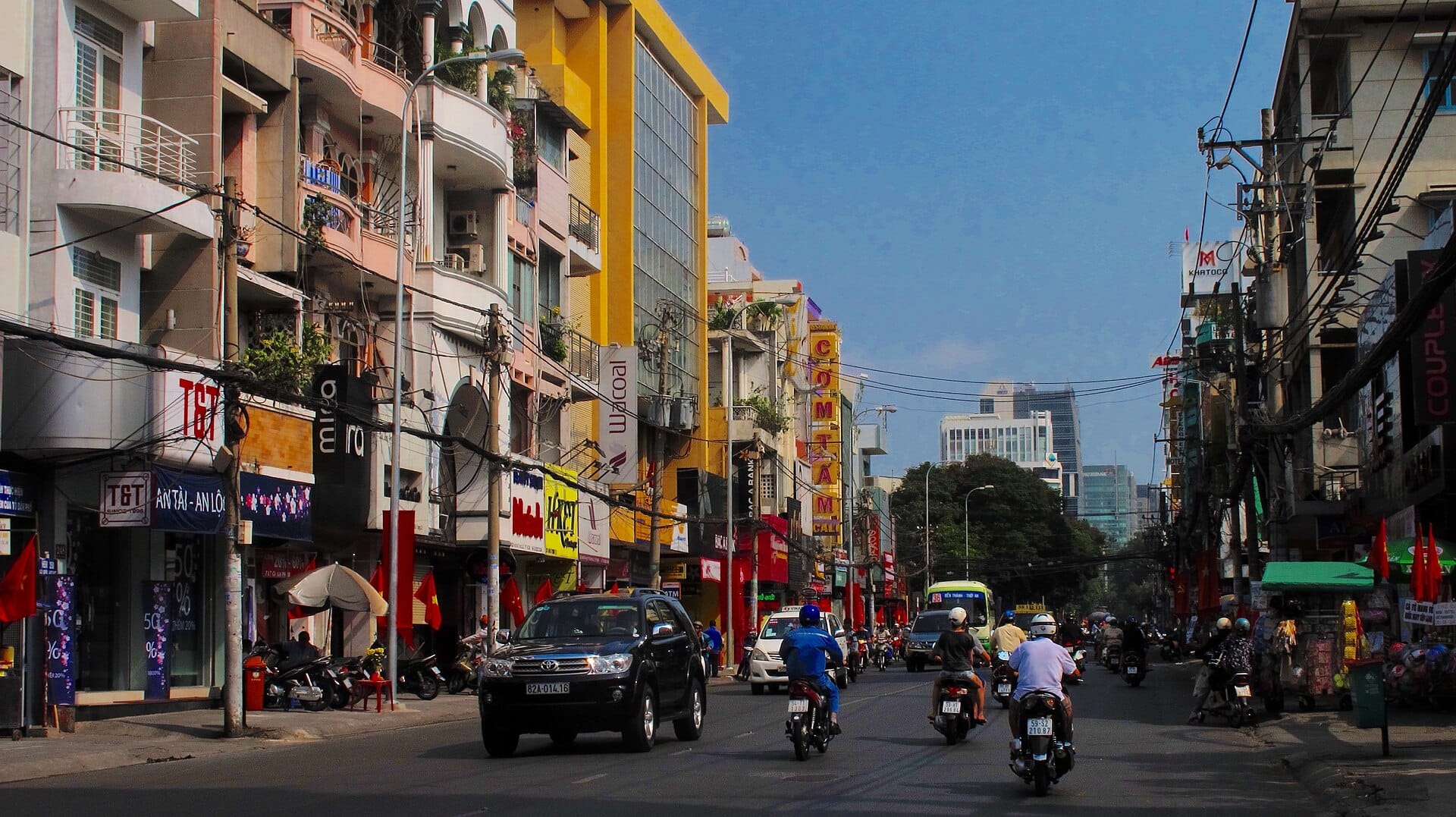
The people opening restaurants in Tan Dinh are young Vietnamese, Time Out wrote. PK Maltroom, which it calls the country's first whisky bar, is here, and two Hanoi tasting-menu chefs chose these streets for their first southern outposts. One of them, the zero-waste plant-based Tales by Chapter, earned a Michelin Green Star in 2026. By Time Out's count, three restaurants in the ward received first-time Michelin honours in June alone.
The old places are still open too. Banh Xeo 46A, listed in the Michelin Guide, has been serving Vietnamese crepes for more than seventy years. The cafe at 113A Dang Dung, known as Do Phu, looks like any other shopfront but was a base for Saigon's commando network during the war against the US; the building still holds hidden letterboxes, a bunker and an escape route, and has been open to visitors since 2017. Nearby are the Jade Emperor Pagoda, a national architectural heritage site, along with the Tran Hung Dao temple and Nam Chon communal house.
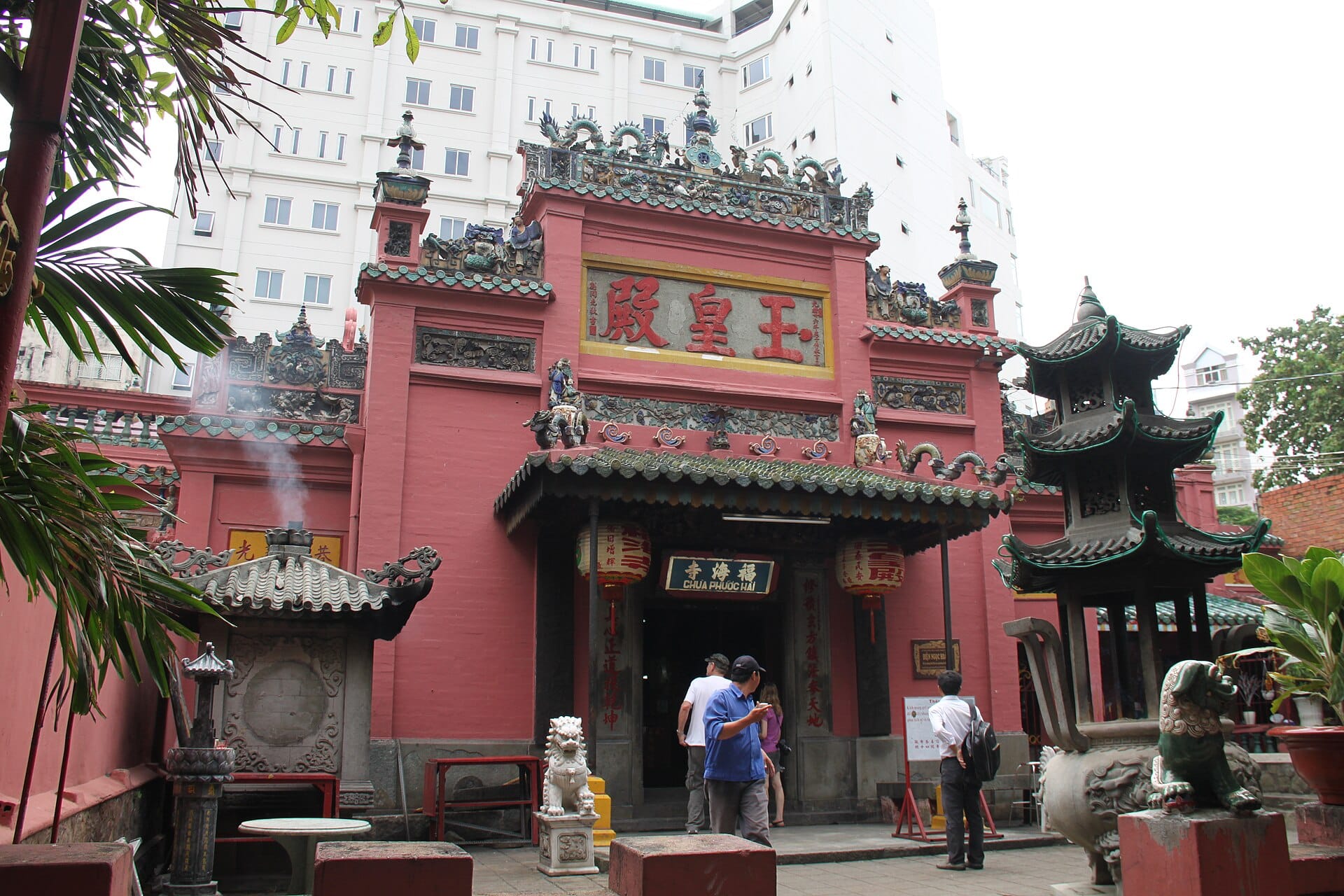
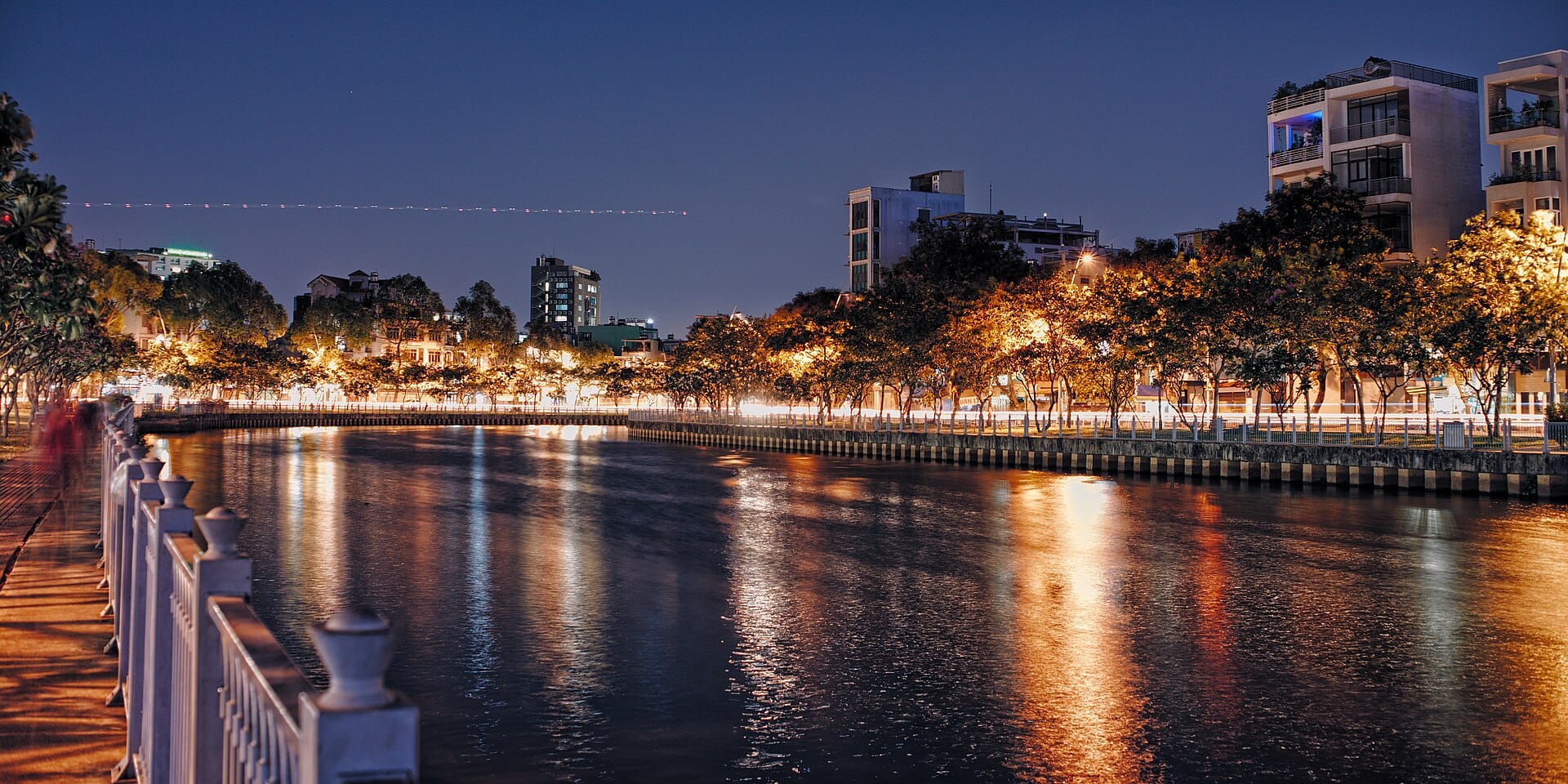
Time Out's advice: don't leave once you have your photo of the church. Walk the streets behind it, then take the canal at golden hour.
The Viet Media Pro: at least four in-depth articles a month, access to every paid article, building into a knowledge base on Vietnam's policy, industries, companies, and people.