That Green App You Use in Vietnam? It Might Be Coming to Taiwan
Uber offered $950M for foodpanda Taiwan and got blocked. Grab signed for $600M. The difference comes down to deal structure.
[That Green App You Use in Vietnam? It Might Be Coming to Taiwan]
▍ Southeast Asia's Super App
Taiwanese visitors to Ho Chi Minh City usually stand at the curb for a while before crossing the street. Motorcycles come from every direction. Nobody stops, nobody crashes. Bangkok is the same. So is Jakarta. And Manila.
Grab was founded in Malaysia in 2012 as a ride-hailing service. It later added food delivery, payments, insurance, and lending. It now operates in eight countries with over 50 million monthly active users.
For fourteen years, it never left Southeast Asia.
▍ NT$31.2 Billion vs. NT$19.2 Billion
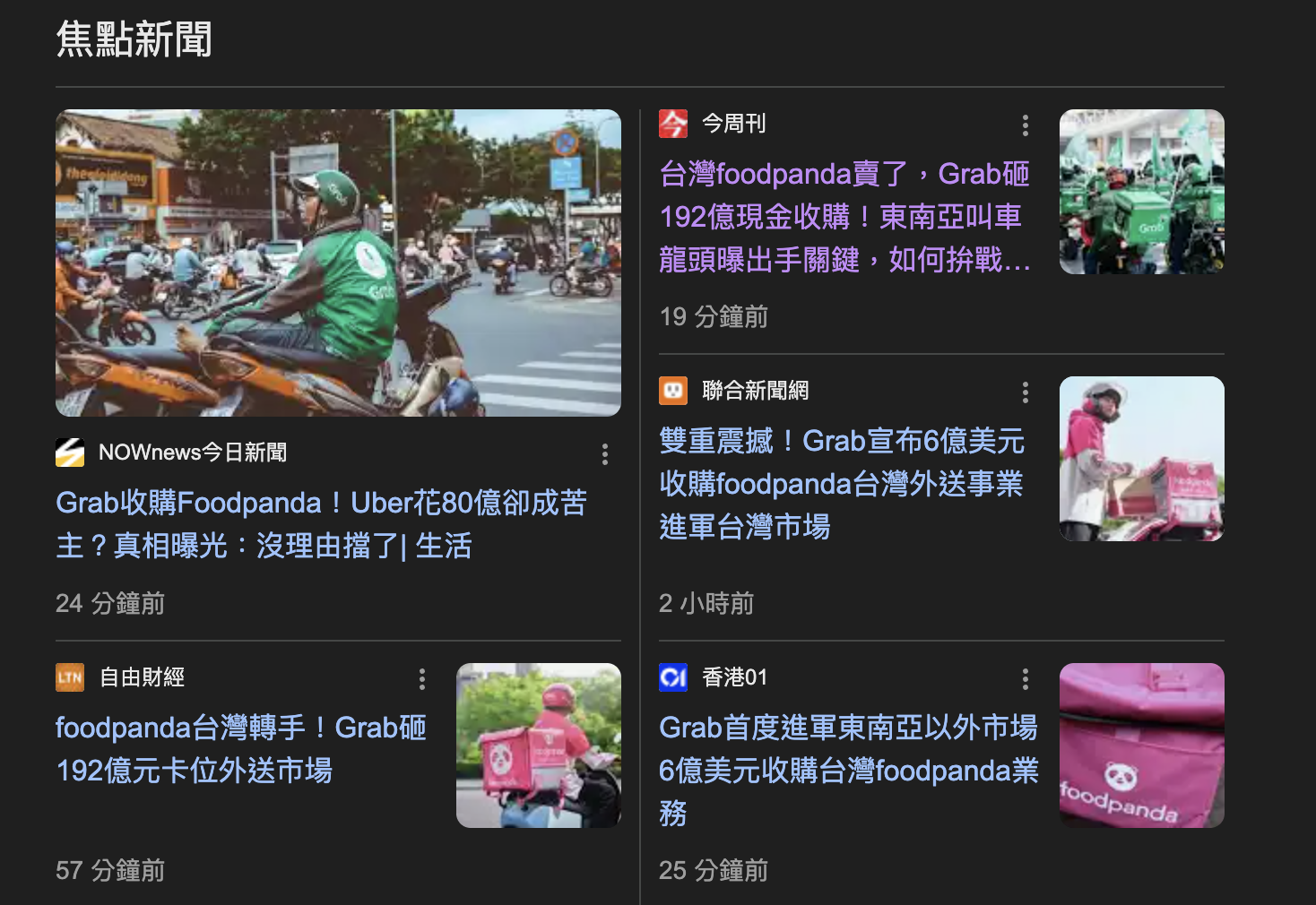
On March 23, 2026, Grab announced a deal to acquire foodpanda's Taiwan operations for $600 million, with closing expected in the second half of the year. Taiwan would be its ninth market and first outside Southeast Asia.
To understand this deal, you need to know about one that failed.
In May 2024, Uber signed a $950 million agreement with Delivery Hero, foodpanda's parent company, to buy the same business. Had it gone through, Taiwan's food delivery market would have been left with almost no major competitor to Uber Eats. Taiwan's Fair Trade Commission blocked it at year-end: post-merger market share would exceed 90 percent. Uber paid a $250 million termination fee and walked away empty-handed.
Same asset. $950 million last year, $600 million this year.
The price drop isn't the point. The two deals are structurally different.
Uber was blocked for a clear reason: Taiwan's delivery market had two players, and the merger would have left one. Grab's deal has a different structure, but the Fair Trade Commission hasn't weighed in yet. The outcome remains uncertain.
▍ Why Taiwan, Why Now
Grab CEO Anthony Tan said Taiwan's 23 million consumers have habits "highly similar" to Southeast Asia. That's partly PR talk, but not entirely. Taiwan's delivery market is mature, consumers don't need convincing, and the market is a manageable size for a first move outside the region.
The timing worked too. Delivery Hero, based in Berlin, has been shrinking for years, exiting parts of Europe and refocusing on profitable markets. After Uber's deal fell through, Delivery Hero hired JPMorgan for a strategic review. CEO Niklas Ostberg called selling Taiwan "a key first step." Foodpanda Taiwan generated roughly $1.8 billion in gross merchandise value in 2025 and was profitable. Delivery Hero let it go anyway. The $600 million in cash goes toward debt repayment.
One side wanted to sell, the other wanted to buy. The deal came together.
In Southeast Asia, Grab's playbook is to acquire users through delivery, then layer on payments and financial services to build a super app. That playbook has worked. But Taiwan already has LINE Pay, JKoPay, and EasyPay. Grab won't find an empty market if it tries to replicate the same path. How far it gets remains to be seen.
Whether Grab riders in green jackets will actually appear on Taiwan's streets still depends on the Fair Trade Commission.
The Viet Media Monthly
A curated monthly digest of the most important political, economic, tech, and industry developments in Vietnam.
Designed for reading on desktop or tablet — no algorithm, no noise. Just the stories that matter.
Delivered before the 10th of each month. Cancel anytime.