VinSpace Signs SpaceX Launch Deal for First Satellites in 2027
VinSpace has secured a SpaceX launch contract for 2027. It still has to build its satellites, prove them in orbit and turn their capabilities into services people pay for.
[VinSpace Signs SpaceX Launch Deal for First Satellites in 2027]
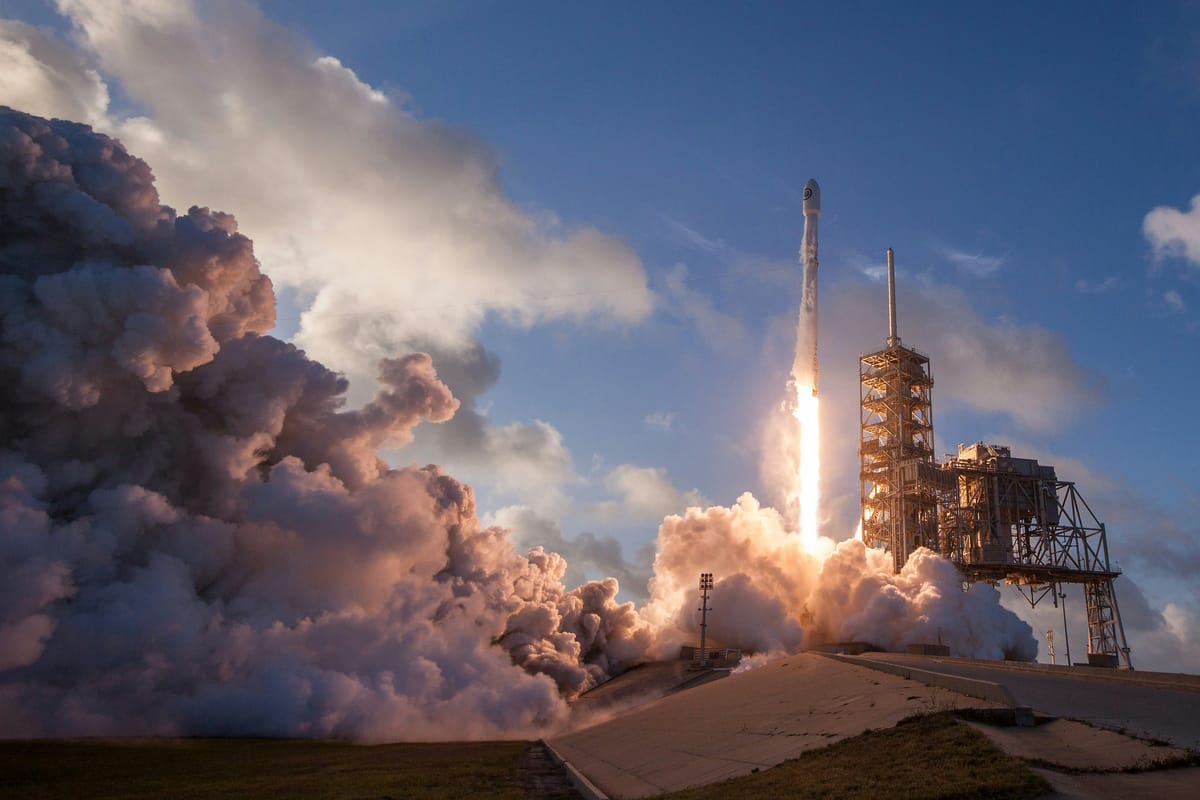
On Aug. 11, VinSpace, part of the Vingroup ecosystem, said it had signed a contract with SpaceX to join a Transporter rideshare mission — a flight where multiple customers share one rocket — in the second quarter of 2027. The satellites on board will be VinSpace's first.
SpaceX is selling a launch service. Nothing the two companies announced involves joint development or technology transfer. VinSpace says it will handle satellite research, design and manufacturing itself, along with operations once the satellites reach orbit. CEO Vũ Trọng Thư put it this way: turning R&D into actual missions starts with reliable access to space.
Transporter is SpaceX's rideshare line, flown on Falcon 9 rockets. It is routine business for the company: the Transporter-16 mission in March carried 119 customer satellites and payloads in a single flight, bringing the program's running total past 1,600. SpaceX even publishes its rates online, which serve as a market reference: from USD 350,000 for up to 50 kg to sun-synchronous orbit (a common orbit for small satellites), plus USD 7,000 per kilogram beyond that, with missions roughly every four months. If a customer's satellite misses its slot, the money paid rolls over in full to a later flight, minus a 5-10% rebooking fee.
VinSpace's own numbers remain unpublished. The company has not disclosed the contract value, the number of satellites or their specifications, saying only that the mission will test its self-developed satellite modules in orbit to prepare for commercial applications.
VinSpace was founded in November 2025 with VND 300 billion in registered capital and six registered business lines, spanning aircraft, spacecraft and telecom-satellite manufacturing as well as air cargo. Ownership sits squarely with the founding family: Phạm Nhật Vượng holds 71%, Vingroup 19%, and his two sons the remaining 10%. On paper, this is a family-led venture in which Vingroup itself holds less than a fifth. Registered capital is not a program budget, and there is no public answer yet on what the satellite plan will actually cost.
Vingroup's 2025 annual report says VinSpace wants to build a "Make in Vietnam" constellation of nanosatellites for telecommunications and remote sensing. The company also plans cleanrooms, testing equipment and ground stations, with the long-term goal of covering everything from satellite design and manufacturing to in-orbit operations and data services. The SpaceX contract covers only the launch.
This will not be Vietnam's first trip to orbit. The country launched telecom satellites in 2008 and 2012, and in 2013 PicoDragon, a one-kilogram satellite built by the Vietnam National Space Center, became the first made-in-Vietnam satellite to operate in orbit. The state-led track has another satellite waiting: LOTUSat-1, a 570 kg radar satellite built with Japan by NEC, was due to fly in February 2025 but slipped to 2027 after a failed Japanese rocket test. That delay is a useful reminder for VinSpace — building a satellite is one thing; getting it to orbit on schedule depends on the rocket side.
And seats on SpaceX's side are tightening too. In July, small-satellite operators confirmed to industry media that SpaceX has stopped taking new rideshare bookings beyond late 2028, as it shifts capacity toward its own Starlink deployment. VinSpace's 2027 slot sits inside the existing manifest and is unaffected — which makes locking in a seat early one of the more tangible things this contract delivers.
The company's direction also lines up with Vietnam's national space strategy through 2030. That policy, issued in 2021, targets domestically designed, built and tested small satellites along with ground control and data-receiving stations, for applications from telecommunications and navigation to environmental and disaster monitoring. What this private company wants to do overlaps with where the state was already heading.
So the 2027 mission is about more than whether a rocket lifts off. Between now and commercial value, there are at least four hurdles:
➤ Finish building, integrating and ground-testing the self-developed modules on schedule
➤ Make the 2027 rideshare flight and reach the planned orbit
➤ Pass in-orbit testing, return verifiable data and maintain a stable link with ground stations
➤ Turn telecom or remote-sensing capability into services customers pay for
What is certain today is that VinSpace has bought its ticket to space for 2027. The real test of its technology comes after the mission flies. Watch for when the company reveals its satellite count and specs, how the cleanroom and ground-station build-out progresses, and when the mission's official designation shows up on SpaceX's manifest.
The Viet Media Monthly
A curated monthly digest of the most important political, economic, tech, and industry developments in Vietnam.
Designed for reading on desktop or tablet — no algorithm, no noise. Just the stories that matter.
Delivered before the 10th of each month. Cancel anytime.