Can Vietnam's New Rules Fix Its Unfinished Building Problem?
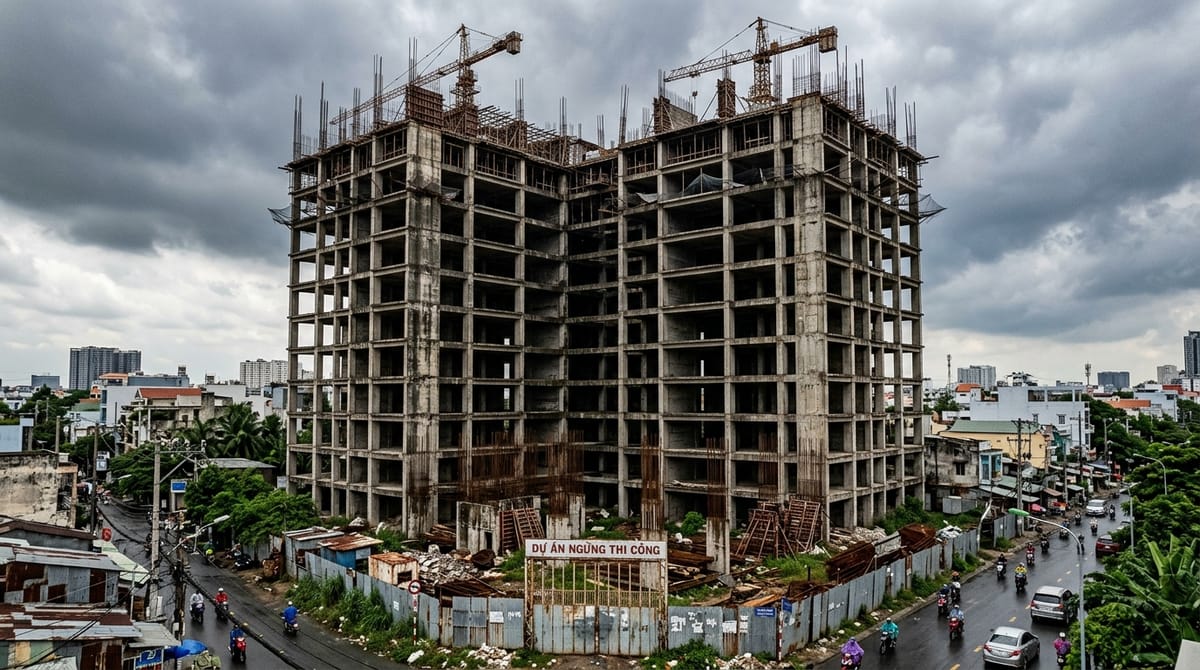
220 projects in Ho Chi Minh City stalled due to regulations, only 77 resolved. A proposed law change would allow transfers of projects with unpaid fees to restart the market.
[Can Vietnam's New Rules Fix Its Unfinished Building Problem?]
Under current regulations, real estate projects with unpaid government fees — land use charges, land taxes, and land use right certificate costs — cannot be transferred. Cash-strapped developers who want to hand off projects to better-capitalized buyers are stuck. The result: a growing pile of unfinished buildings and a paralyzed property market.
▍ Ho Chi Minh City's Predicament
Between 2015 and 2023, 220 projects in Ho Chi Minh City stalled due to regulatory issues. Only 77 have been resolved. The remaining 143 are still waiting for a government solution.
Some developers have tried workarounds — transferring to individuals first, then having those individuals sell to another company. But such maneuvers carry high legal risk, complex paperwork, and potential contract disputes that make the problem worse.
▍ The Reform Proposal
Industry players recommend amending the rules to allow project transfers even when fees remain unpaid, with buyers assuming the outstanding obligations. This would restore market liquidity and prevent land from sitting idle.
The Ho Chi Minh City Real Estate Association (HoREA) has proposed revising the 2024 Real Estate Business Law to let buyers directly assume unpaid land use fees — resolving market gridlock while ensuring government revenue is preserved. Without reform, companies will keep circumventing restrictions through equity deals, and tax revenue will suffer anyway.
▍ Outlook
The government worries that easing transfer rules could fuel speculation. But experts argue that excessive restrictions only freeze the market, shrink tax revenue, starve developers of cash flow, and leave consumers without new housing. Under Resolution No. 171/2024, the government is considering a fix that could take effect as early as April 2025 — potentially sparking a revival in Vietnam's property market.