Grab Burned $1.2 Billion on Digital Banking. Only Indonesia Is Paying Off
Grab's financial services arm has racked up over $1.2 billion in losses since its 2021 IPO, and of its three digital banks only Indonesia's Superbank makes money — while in Vietnam, Grab has exited payments entirely.
[Grab Burned $1.2 Billion on Digital Banking. Only Indonesia Is Paying Off]
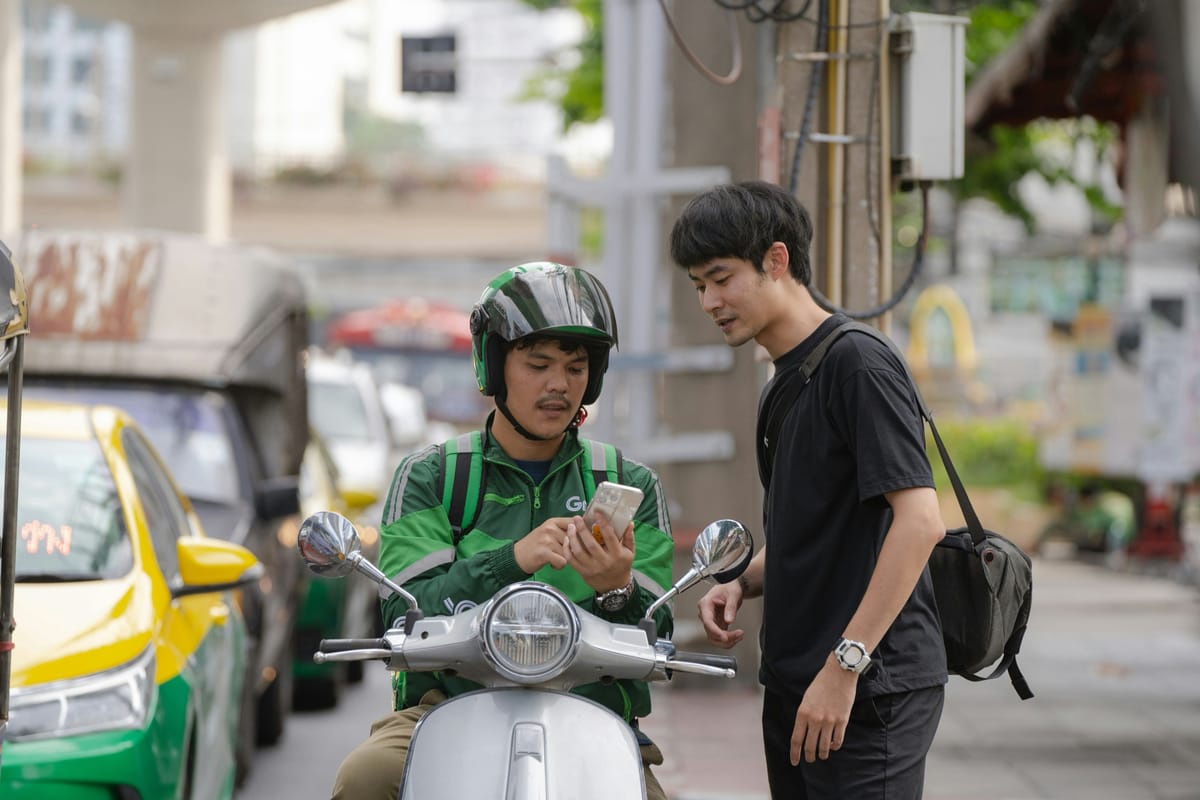
Most people know Grab as the app that gets them a ride or delivers dinner. Fewer know it also owns three digital banks — one each in Indonesia, Singapore and Malaysia — taking deposits and making loans like any other lender. Someone finally totaled up what that side business has cost. Since the company listed in the US in late 2021, its financial services segment — payments, lending and the three banks — has accumulated more than $1.2 billion in adjusted EBITDA losses, according to an analysis by David Jimenez Maireles published on Tech in Asia. Maireles knows the business from the inside: he co-founded TNEX, Vietnam's first purely digital bank.
The bleeding continued through last year. In 2025 the segment grew revenue 38%, from $253 million to $347 million, yet losses still widened slightly, from $105 million to $110 million. That makes financial services the odd one out at Grab. The group posted record quarterly revenue of nearly $1 billion in the second quarter of this year and has now improved its adjusted EBITDA for eighteen straight quarters. Banking is the last segment still in the red.
Look closer, though, and the three banks are living two different lives.
Superbank in Indonesia turned profitable in 2025, its first year in the black, earning $8.4 million for the year and another $5.8 million pre-tax in the first quarter of 2026. Grab had long held a stake and moved to majority ownership in June, consolidating the bank into its accounts. As of June, Superbank served 7.4 million customers — and more than 60% of them also use Grab or the OVO e-wallet. That overlap is the entire acquisition strategy. Grab owns 90% of OVO, and eligible OVO users can upgrade their accounts so that wallet balances flow automatically into a Superbank savings account earning 5% a year. The customer barely does anything. The bank simply lives inside an app they already open every day to pay for things.
Singapore and Malaysia tell a different story. GXS, launched in Singapore in 2022, and GXBank, launched in Malaysia in 2023, sit under GXS Group, which lost about SGD 210 million (roughly $161 million) in 2025 — only marginally better than the year before. Scale is not the problem: deposits grew 38% to SGD 2.3 billion, loans jumped 324% to SGD 1.03 billion, and non-performing loans sit at just 1.5%. The problem is that those deposits were bought with interest rates, and both licenses came with early-stage caps on deposits or assets that limit how big the banks can get. Maireles is blunt about the lesson: digital banks win by solving problems incumbent banks have not solved, and distribution or branding comes second. Nubank gave millions of Brazilians their first credit card. Korea's KakaoBank leaned on the Kakao messaging app and changed savings habits with a 26-week deposit challenge. GXBank's flagship Bonus Pocket, by contrast, is essentially an interest-bearing piggy bank. Its main draw is the rate — and Malaysia's incumbent giants, Maybank and CIMB, can match a rate any time they choose.
This year brought the turning point. In second-quarter results released in early August, financial services revenue reached $134 million, up 59% and the fastest-growing segment in the group, while adjusted EBITDA losses narrowed to $15 million from $26 million a year earlier. Management set a clear deadline: the segment should turn profitable in the second half of 2026. Lending is the engine. Grab's gross loan portfolio has reached about $2.3 billion, up from under $800 million a year ago; even excluding the newly consolidated Superbank, the book doubled to $1.6 billion. The year-end target is over $3 billion.
Deals are the other lever. In late May, Singtel transferred its Superbank stake to Grab's GXS Bank, pushing Grab past majority ownership of a bank that had listed in Indonesia only last December at a valuation of about $1.6 billion. Consolidation produced a one-time $307 million gain — a paper revaluation of Grab's existing stake, not cash — that lifted quarterly net profit to $235 million. In July, Grab also closed its acquisition of Stash, a US wealth management platform with $5.5 billion in assets under management that is already EBITDA-positive; Grab wants its investment-product capabilities and plans to adapt them for Southeast Asia. The path to profitability, in other words, runs through lending into its own ecosystem and buying profitable assets onto the balance sheet. What it does not solve is the product problem at the two banks in Singapore and Malaysia.
And then there is Vietnam, which is close to a blank space on Grab's financial map. On July 1, 2024, Moca — the main e-wallet on Grab's Vietnamese app — shut down, officially as part of a "restructuring strategy," ending an eight-year run on a payment license obtained in 2016. Grab made Vietnamese headlines this week for something entirely unrelated to finance: the National Competition Commission fined it VND 1.36 billion, about $50,000, for six consumer protection violations. In Vietnam today, Grab is a ride-hailing and delivery platform. No wallet, no bank.
Local players have filled the space. Cake, the digital bank under VPBank, serves more than 6 million customers and processes about 1 million loan applications a month. TNEX, backed by MSB, launched in 2020, reached 1.5 million customers within two years and now operates as TNEX Finance with over 2.6 million users. Timo, one of the earliest names, was sold to Kredivo Group, which plans to invest about $15 million in the Vietnamese market over three years. Cake and TNEX are built on their parent banks' licenses, risk controls and existing customers — the mirror image of Grab's route from ride-hailing super-app to banking. Grab proved one version works in Indonesia and left evidence in Singapore and Malaysia that another does not. In Vietnam, it is no longer on the field.
The Viet Media Monthly
A curated monthly digest of the most important political, economic, tech, and industry developments in Vietnam.
Designed for reading on desktop or tablet — no algorithm, no noise. Just the stories that matter.
Delivered before the 10th of each month. Cancel anytime.