Hidden Behind Sabeco and Vinamilk for 30 Years, Thai Capital Now Wants to List in Ho Chi Minh City
Over 30 years, Thai capital quietly became Vietnam's eighth-largest foreign investor by buying local brands, building an ecosystem, and tracking the diplomatic upgrade. Now Thai firms want to list directly in Ho Chi Minh City — a shift from quiet acquisition to the public stage.
[Hidden Behind Sabeco and Vinamilk for 30 Years, Thai Capital Now Wants to List in Ho Chi Minh City]
01 | A signal that Thai capital wants to list directly
On May 28, 2026, the chair of Vietnam's State Securities Commission (SSC) sat down in Bangkok with the chair of Thailand's Securities and Exchange Commission (SEC). Word came out afterward: some Thai companies are actively working through the process to list on the Ho Chi Minh Stock Exchange (HoSE).
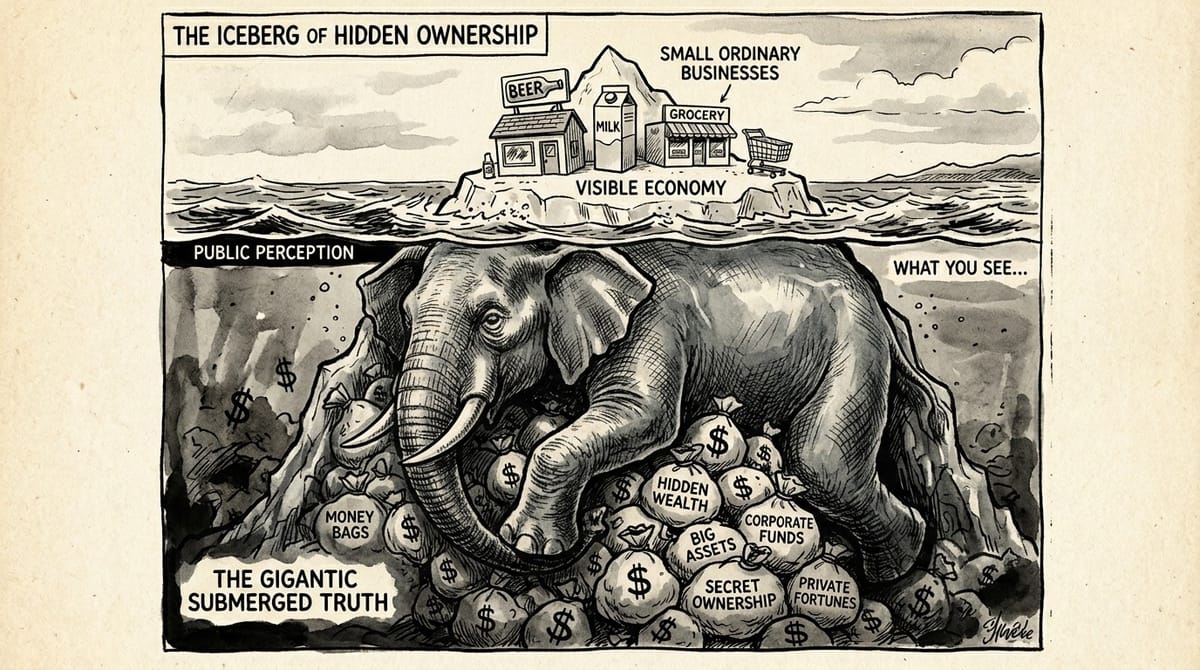
Read the wording carefully — "working through the process," "want to list." So far not a single Thai firm has actually gone public in Vietnam. But the intent alone is worth a pause. For the past three decades, Thai capital has played it the other way around here: pour the money in, then hide behind local brands that Vietnamese consumers know well. Sabeco's beer, Vinamilk's milk, MM Mega Market's wholesale stores — Thai groups stand behind all of them, though most Vietnamese shoppers couldn't tell you that.
What Thai capital wants now is to step into the open. This piece breaks down three things: how deep Thai capital runs in Vietnam, the playbook it used to put down roots, and what "wanting to list directly" says about where it now stands.
02 | How deep does it run? Start with a map
By the end of April 2026, Thai firms had 804 active projects in Vietnam. By cumulative investment, Thailand is Vietnam's eighth-largest foreign investor, and within ASEAN it trails only Singapore, ranking second.
That ranking has been climbing. At the end of June 2025, Thailand still had 771 projects, ranking ninth — within a year it rose to eighth. New money is arriving faster, too: in the first nine months of 2025, Thai firms' new investment was about seven times the figure for the same period a year earlier.
Beyond investment, the trade base is thick. Since 2016, Thailand has been Vietnam's largest trading partner within ASEAN, while Vietnam is Thailand's second-largest. Two-way trade keeps growing year by year, and both countries have set a target to push it higher still.
03 | Playbook one: buy existing local brands
Thai capital's first move is acquisition — buy a brand Vietnamese already recognize and skip the years it takes to build a market from scratch.
SCG (Siam Cement Group) is the clearest case. It has been in Vietnam for over 30 years, with 28 companies, 50 factories, and more than 15,000 employees. Everyday brands like Duy Tân plastics, Bình Minh plastics, and Prime tiles — which sound thoroughly local — all sit inside SCG's empire.
Beer belongs to ThaiBev. In 2017 it spent heavily to indirectly hold 53.6% of Sabeco, Vietnam's largest brewer.
Dairy leader Vinamilk has Thai owners behind it too. In December 2025, F&N (Fraser and Neave) bought roughly another 4.6%, lifting its and affiliates' combined stake from 20.39% to 24.99%. F&N is controlled by Thai billionaire Charoen Sirivadhanabhakdi.
Wholesale retail got swallowed as well. BJC, part of the same Charoen-controlled TCC Group, completed its acquisition of 100% of MM Mega Market Vietnam.
04 | Playbook two: build the whole ecosystem, from stores to petrochemicals to power
Thai capital isn't content owning one company. It behaves more like it's laying a full chain across Vietnam — from consumer goods to manufacturing to energy to finance.
On the retail end, Central Retail has the densest footprint: 43 GO! hypermarkets, 16 mini go! stores, 9 TOPS Market outlets, and 23 LanChi Mart stores. How much does Vietnam matter to it? In the first quarter of 2026, Central Retail's Vietnam revenue made up about 23% of group revenue, and was up 26% year on year.
In manufacturing and heavy industry, the biggest bet is SCG's flagship, the Long Sơn Petrochemicals Complex (LSP) — SCG's single largest investment in Vietnam, accounting for a large slice of its total spend there. It was paused for a time amid conflict in the Middle East, and SCG is now pushing an ethane integration expansion. Its local ties run deep: it employs around 1,000 high-skilled workers, with local firms making up about 80% of its suppliers.
Industrial property and energy are two more pieces. Amata has been in Vietnam since 1994 and now manages about 3,000 hectares of industrial, commercial, and service land, with more committed to expanding its parks. In energy, Super Energy runs nine solar plants plus a wind project in Gia Lai province.
The last piece is finance. Thai bank Krungsri took over Vietnam's SHB Finance in two steps: it acquired the first 50% in May 2023, then cleared the transfer of the remaining 50% in November 2025 — full ownership. From consumer goods all the way to finance, the ecosystem is now complete.
05 | Playbook three: move in step with the diplomatic upgrade
Lay these moves on a timeline and Thai capital's footsteps track closely with the upgrade in bilateral ties.
On May 16, 2025, the prime ministers of Vietnam and Thailand announced they would raise relations to a "Comprehensive Strategic Partnership." A year later, in May 2026, the two sides adopted an Action Program for 2026–2031, built around "three connections": connecting supply chains, connecting businesses and localities, and connecting sustainable development strategies.
Corporate signals keep surfacing. Thapana Sirivadhanabhakdi, CEO of TCC/ThaiBev, told Vietnamese leader Tô Lâm that the group is studying new business areas to expand into in Vietnam. A Grant Thornton report says Thai groups increasingly view Vietnam as a "growth pillar" and a long-term engine in their regional portfolios. A 2025 "Thai Business Sight in Vietnam" survey by ThaiCham found that 62% of Thai firms operating in Vietnam were optimistic about the country's macroeconomic outlook for the year.
Stack the diplomacy, the trade, and the ecosystem together, and that opening news about "wanting to list" looks far less out of the blue. When a foreign investor has already committed money, people, and supply chains to Vietnam for the long haul, stepping directly into its capital market — listing on HoSE — looks almost like the natural next step. But it bears repeating: for now this is still a process in motion and a stated intention. No Thai firm has actually listed in Vietnam yet.
06 | Three playbooks, as a reference for anyone watching Vietnam
Put the three plays together: buy local brands to enter fast, build an ecosystem up and down the chain to lock in position, then ride the rhythm of the diplomatic upgrade to scale up.
For Taiwanese companies weighing Vietnam, Thai capital isn't a template to copy — it's a regional rival worth taking apart. It makes one thing clear: in the Vietnamese market, what you face often isn't just local players, but a neighboring power that has spent 30 years digging in, with a footprint spanning consumer goods to energy, and is now preparing to enter the capital market too. As Thai capital moves from "hidden behind brands" toward "listing in public," it signals an intent to stay longer and dig deeper in Vietnam — something anyone heading there should see clearly first.
The Viet Media Monthly
A curated monthly digest of the most important political, economic, tech, and industry developments in Vietnam.
Designed for reading on desktop or tablet — no algorithm, no noise. Just the stories that matter.
Delivered before the 10th of each month. Cancel anytime.