Why Do Vietnam and Taiwan Both Have Such Low Government Debt?
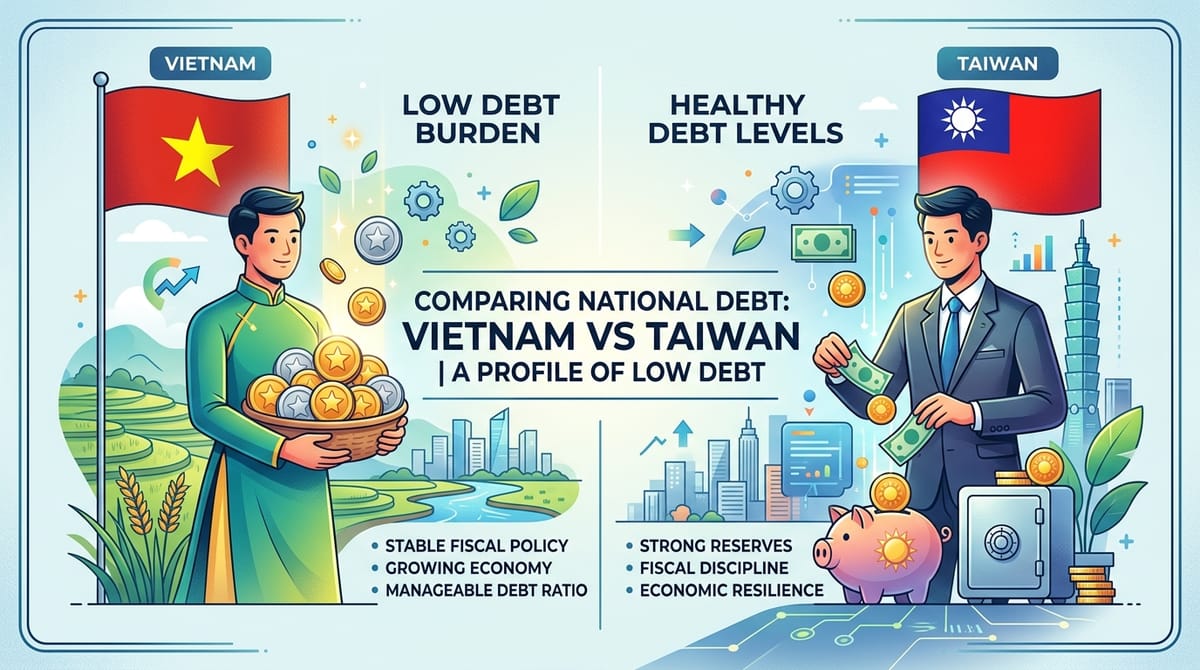
Vietnam caps national debt below 40% of GDP. With Taiwan, they are the lowest-debt economies in Southeast and East Asia.
[Why Do Vietnam and Taiwan Both Have Such Low Government Debt?]
Vietnam's economy is growing fast, yet its government debt stays stubbornly below 40% of GDP. The country even has a hard legal ceiling of 60%. This "low-debt philosophy" is unusual among fast-growing Southeast Asian economies, which typically borrow more aggressively. Vietnam instead relies on foreign investment inflows and export-driven growth to fund infrastructure and development.
The risk: if foreign capital slows or the global economy stumbles, Vietnam may need to ramp up borrowing quickly to cover infrastructure gaps.
▍ A Shared Trait
Taiwan and Vietnam happen to be the lowest-debt economies in East Asia and Southeast Asia, respectively. Both enjoy significant fiscal flexibility for future planning. Their low-debt strategies reflect different economic structures and development stages, but both underscore the value of fiscal discipline.
▍ Balancing Low Debt and High Growth
Vietnam's debt is low, but its infrastructure ambitions are massive — including the confirmed Ha Noi–Ho Chi Minh City high-speed rail project. Most of these plans rely on public-private partnerships (PPP) or foreign financing. If external funding dries up, delays and fiscal pressure could mount quickly.
Vietnam must carefully balance the "low debt" approach with the need for "high growth." Being too conservative risks missing the window for infrastructure upgrades and industrial transformation.