Vietnam Produces Oil but Can't Weather an Oil Shock — A Crisis Exposes Structural Vulnerability
Vietnam is an oil-producing country, yet it's among the hardest hit by the current oil shock. The problem isn't just prices — it's what happens when an economy that exports crude and imports gasoline faces a stress test it was never really prepared for.
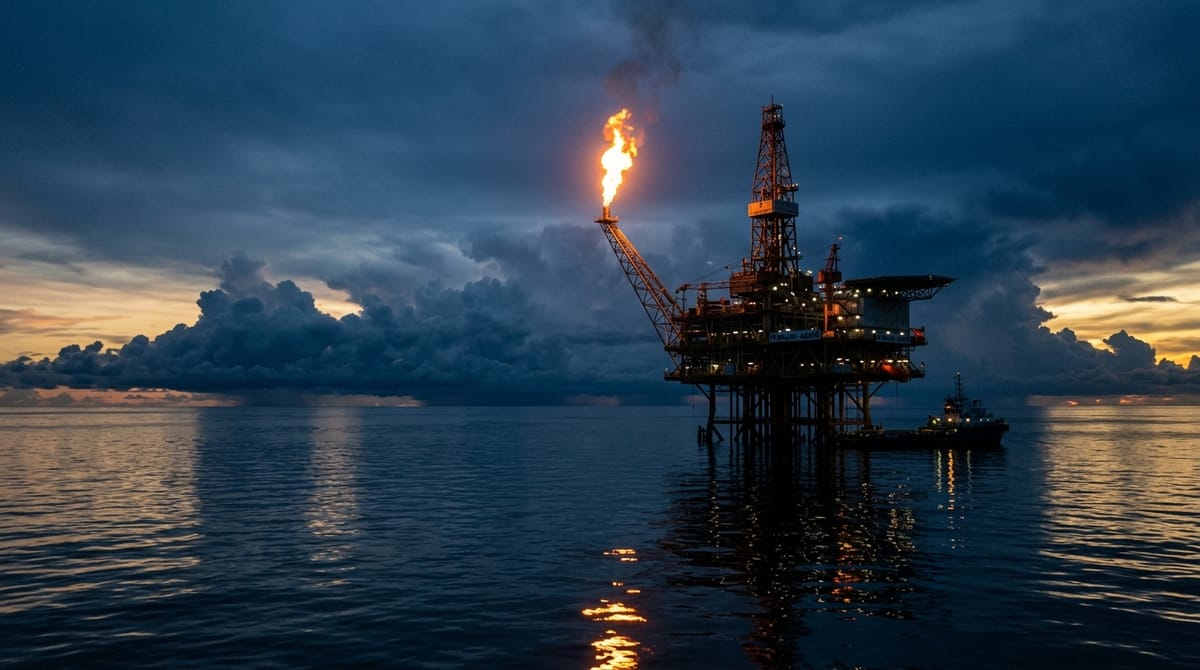
In October 1973, Arab oil producers imposed an embargo on Western nations supporting Israel. Within months, oil soared from under $3 to nearly $12 per barrel.
The hardest-hit industrialized country wasn't the United States. It was Japan.
Japan was the world's fastest-growing economy in the early 1970s, with GDP growth near double digits. But 90% of its oil was imported. When the embargo hit, industrial output dropped 20%, inflation jumped from single digits to 23%, and GDP swung from strong growth into contraction. It was Japan's first postwar recession.
But Japan responded fast. The government ordered immediate 20% cuts to industrial oil and electricity use, then launched a decade-long restructuring of energy policy — nuclear power, energy-saving technology, small fuel-efficient cars. The 1973 crisis didn't destroy Japan's economic miracle. It forced a complete energy overhaul — and that overhaul is exactly why Japan came through the second oil shock in 1979 almost unscathed.
In March 2026, Vietnam is going through a more severe oil stress test than the one triggered by the Russia-Ukraine war in 2022. That time it was a price problem — oil was expensive, but available. This time it's a supply problem — the Strait of Hormuz is blocked, and Kuwaiti crude simply can't get out. The scale is nowhere near Japan's 1973 experience, but the structural vulnerabilities it exposes may run deeper than most people realize.
A Bowl of Phở Goes Up 5,000 Dong
Start at street level.
In the first week of March, phở shops across Ho Chi Minh City posted price increases: VND 5,000 more per bowl of beef phở. Coffee went from VND 15,000 to VND 18,000. Sticky rice rose VND 3,000, and roadside bánh mì stalls added VND 2,000.
At traditional markets, vegetable prices climbed VND 5,000-6,000 per kilogram. Cauliflower hit VND 50,000. Cucumbers and tomatoes reached VND 35,000. One shopper said chicken was VND 130,000 per kilo two days ago — VND 140,000 this morning.
These numbers look small individually. But for a Vietnamese family earning VND 7-8 million a month, every small increase adds up to a noticeably higher cost of living. A vegetable vendor explained it plainly: the shipping company added VND 100,000 in delivery charges, so prices went up accordingly.
The transmission chain from refinery to wet market has almost no buffer.
Delivery Drivers, Truckers, Airlines
The people hit hardest by oil prices are the ones whose livelihoods run on fuel.
A Grab delivery driver in Ho Chi Minh City did the math: daily earnings average about VND 300,000, with fuel costing around VND 100,000. After the price hike, fuel eats an extra VND 50,000 per day — wiping out a quarter of net income. Grab announced subsidies of up to VND 900,000 per month for gas-powered drivers, but it barely makes a dent.
Logistics firms are under even more pressure. Viettel Post added a 10% fuel surcharge on domestic shipping starting March 16. Giao Hàng Tiết Kiệm (Vietnam's version of Yamato Transport) added 10.29% from March 10. Consumers are noticing that online shopping deliveries are quietly getting more expensive.
Long-haul diesel truckers put it bluntly: "Once diesel goes past VND 30,000 per liter, we're basically driving for free. The more we drive, the more we lose."
Aviation is a disaster of another order. Jet fuel surged from $83 to $231 per barrel — nearly tripling in a month. Vietnam Airlines estimates full-year losses could reach VND 30 trillion if prices stay at this level. Vietjet burns an extra VND 2 trillion per month in fuel costs. China and Thailand, needing fuel for themselves, have banned jet fuel exports — and Vietnam gets 60% of its aviation fuel from those two countries.
The CAAV has warned of large-scale flight cuts starting in April.
An Oil-Producing Country's Oil Paradox
Here's a fact most people don't know: Vietnam is an oil producer.
Vietnam pumps about 180,000 barrels per day, ranking in the global top 40. Offshore fields in the south — White Tiger, Great Bear, Lion — have been producing since the 1980s. Oil was once Vietnam's most important export.
But Vietnam produces crude. Not gasoline.
Vietnam extracts crude oil, exports most of it (mainly to China and Japan), then buys back refined gasoline and diesel from international markets. The country's two refineries — Dung Quất in Quảng Ngãi and Nghi Sơn in Thanh Hóa — together cover roughly half of domestic fuel demand. The other half is imported.
The bigger issue is that Nghi Sơn, Vietnam's largest refinery, has been a chronic problem. This joint venture between Kuwait, Japan, and Vietnam cut production by 25% in 2022 due to financial difficulties and nearly shut down. In 2023, it halted operations for 55 days because of equipment leaks and maintenance. Reported losses that year may have reached $1 billion. And 85-90% of its crude imports come from Kuwait — which means they pass through the Strait of Hormuz.
In other words, Vietnam's refining lifeline depends on one of the most vulnerable shipping lanes on earth.
This is Vietnam's oil paradox: oil under its feet, but not enough refining capacity, and import sources concentrated in the wrong place. When the strait gets blocked, the refinery's raw material is cut off, and the domestic wells can't help — because the crude they pump isn't the grade the domestic refineries are built to process. An oil-producing country ends up in almost the same position as a country that produces no oil at all.
The Chain Reaction: From Prices to Inflation to GDP
The impact doesn't stop at gas stations and wet markets.
According to Vietnam's General Statistics Office, every 10% rise in gasoline and diesel prices shaves about 0.5 percentage points off GDP growth and adds roughly 0.36 percentage points to inflation.
Since early March, RON95 gasoline has risen about 34%. Diesel is up nearly 57%.
By those ratios, if prices stay elevated, Vietnam's GDP growth could take a hit of over one percentage point, and consumer prices could be pushed up by nearly a full point.
Vietnam's 2026 GDP growth target is above 10%. Its inflation target is under 4.5%. February inflation had already climbed from 2.53% in January to 3.35%. If oil prices don't come down, holding the 4.5% line will get much harder.
If inflation gets out of control, the central bank will be forced to raise interest rates. Higher rates would weigh on the stock market and real estate, and push up corporate borrowing costs. Vietnam's stock market already crashed over 6% in early March — the VN-Index dropped more than 100 points in a single day, a record.
Looking further out, FTSE Russell is expected to upgrade Vietnam from frontier market to emerging market status in September 2026, which would trigger an estimated $6 billion in passive capital inflows. The mid-year review is underway. If the macro environment deteriorates because of oil, that timeline could be affected.
The chain reaction runs from phở shops all the way to international capital markets.
The Government's Response: Fast So Far, But a Long Fight Ahead
Vietnam's government has moved quickly.
On March 4, the prime minister issued Decision 385, establishing an energy security task force. On March 6, Emergency Resolution 36 was released, allowing fuel prices to be adjusted immediately when international benchmark increases exceed 7% — instead of waiting for the regular Thursday adjustment cycle. On March 9, Decree 72 cut import tariffs on gasoline, diesel, and jet fuel to 0% through the end of April.
The government also tapped its oil price stabilization fund, subsidizing RON95 by VND 4,000 per liter and diesel by VND 5,000. Supermarket chains cooperated with price-hold campaigns — MM Mega Market froze prices on 300 essential items through month-end, and GO! supermarkets offered 30% discounts on vegetables and seafood.
These measures cushion the short-term blow, but they come with a fundamental problem: the stabilization fund is limited, and subsidies can't last forever. Vietnam's strategic petroleum reserve covers only about 7 days. Combined with commercial reserves, that's roughly 30 days total. The prime minister has ordered a study on building reserves to 90 days of imports, but that's a long-term project, not a short-term fix.
It's Not Just About Oil Prices
Back to Japan in 1973.
That crisis became a turning point not because of how much oil prices rose, but because it exposed a vulnerability Japan's economic model had never confronted: an industrial powerhouse that imported 90% of its oil had built its entire growth story on someone else's energy supply.
Vietnam today looks somewhat similar.
Over the past two decades, Vietnam poured virtually all its policy resources into attracting foreign manufacturing — Samsung, Apple supply chains, Intel's packaging and testing plant. The strategy worked brilliantly, making Vietnam one of the biggest beneficiaries of global supply chain restructuring.
But investment in energy infrastructure lagged behind. Two refineries, one of them chronically unstable. Oil imports concentrated on Kuwait. Renewable energy development is accelerating, but in the short term it can't replace fossil fuels in transport and industry.
This isn't just about oil prices. It's an energy security problem for an export-driven economy — and it's the kind of problem that's easy to ignore when oil is cheap.
Japan spent a decade rebuilding its energy policy after 1973. The cost was enormous. But that pivot is why Japan barely felt the second oil shock in the 1980s.
The question for Vietnam now: Will this crisis turn out to be just an oil price blip — something that goes back to normal once the Strait of Hormuz reopens? Or will it mark the beginning of a serious rethinking of energy security?
Crises pass. Structural vulnerabilities don't fix themselves. When the next stress test comes, whether Vietnam is ready will depend on what it does after this one ends.