How Will Vietnam's New Oil Pricing Formula Work?
Vietnam plans to stop publishing oil price benchmarks and give wholesalers more pricing freedom. The reform raises transparency and competition concerns.
[How Will Vietnam's New Oil Pricing Formula Work?]
Oil prices are the most direct driver of consumer costs. Every fluctuation ripples through the economy and daily life.
This year, Vietnam's government plans to eliminate its official international oil price publications and hand wholesalers greater pricing autonomy. For context, here is how Taiwan approaches fuel pricing.
▍ The Taiwan Model
Taiwan uses the "7D3B floating oil price formula," adjusting weekly based on the weighted average of Dubai and Brent crude prices plus exchange rate shifts. The government publishes every calculation, giving all market participants a transparent benchmark.
▍ Risks in Vietnam's Approach
Vietnam's proposed reform could introduce significant market risk. Without government-published benchmarks, wholesalers would hold full pricing power. Retailers and consumers would have little basis to assess whether prices are fair — and monopolistic behavior becomes a real possibility.
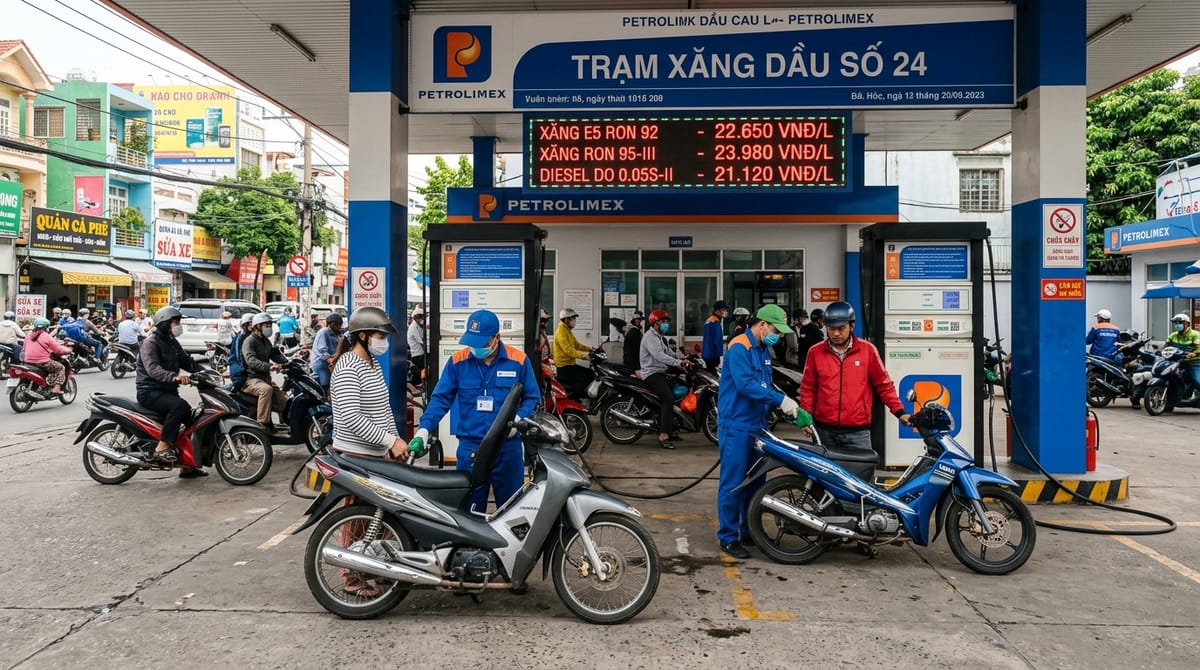
Vietnam's petroleum market is currently led by state-owned giants like Petrolimex and PV Oil, alongside some private operators. The government uses subsidies and profit caps to keep prices stable. But if wholesalers set prices independently, retailers lose negotiating leverage and consumers cannot tell whether price moves track actual market conditions.
▍ The Core Tension
This reform is ultimately about balancing market liberalization with price transparency. Taiwan's model limits full market pricing but ensures wholesalers, retailers, and consumers all have a clear reference. If Vietnam opens pricing without adequate safeguards, a few large petroleum firms could control the market — raising potential competition-law issues.