Vietnam's New Flight-Delay Refund Rules Take Effect in July: Can VietJet Slip Through?
From July, Vietnamese airlines must refund and compensate passengers for long delays. But the money only flows when the delay is the airline's own fault — so can VietJet, famous for late flights, slip through?
[Vietnam's New Flight-Delay Refund Rules Take Effect in July: Can VietJet Slip Through?]
From July 1, Vietnam's Decree 208 comes into force. Once a flight is delayed past certain thresholds, airlines must look after passengers — and if the delay drags on, refund the ticket and pay compensation. The decree is one of the implementing rules for the Civil Aviation Law that the National Assembly passed late last year.
Most headlines stop at "delays mean refunds." Few mention the catch buried underneath: the refund and the "non-refundable advance compensation" only apply when the delay is the airline's own fault. If the cause is weather, air traffic control, or anything outside the carrier's hands, the airline owes you water and a meal at most — the refund and compensation can be withheld.
Everything hinges on that phrase, "the carrier's own fault." Whether a given delay counts as the airline's fault — who decides, and who has to prove it — is something the decree never spells out clearly. The right can be written down in black and white, but if a delay never clears that bar, the money never reaches the passenger.
Which brings up the question most travelers actually care about: will VietJet, the airline best known for delays, get caught by this law?
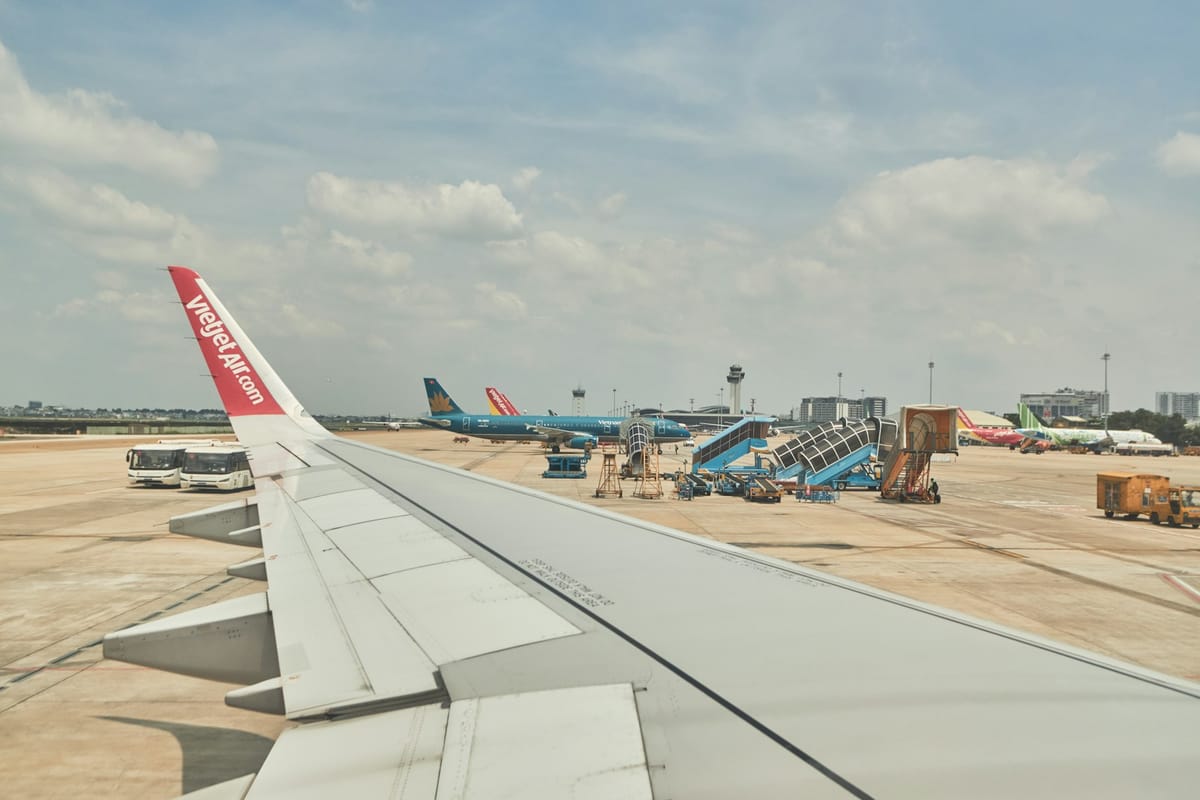
VietJet offers a ready-made test case. On April 20 and 21, 2025, its flights out of Tan Son Nhat airport in Ho Chi Minh City saw delays spike. VietJet had just brought ground handling in-house from its outside contractor, Saigon Ground Services (SAGS), and blamed the disruption on that transition colliding with peak hours. The airport authority saw it differently: the handover was only a minor factor, and the main cause was VietJet's own operating capacity.
Under that reading, this kind of delay falls squarely into "the carrier's fault," and passengers should be entitled to a refund and compensation. But delays can also genuinely stem from factors beyond an airline's control. When the 2026 Middle East conflict pushed Jet A-1 fuel supplies into a crunch, VietJet trimmed and suspended some routes in response. The same stretch of delay counts as the airline's fault — and triggers a payout — if it's blamed on operating capacity, but is exempt if it's blamed on fuel and other external causes.
To be fair, VietJet's punctuality has been improving. According to flight-data service NextFly, VietJet's on-time rate in January 2026 was 75.49%, up nearly 17 percentage points from a year earlier — though it still cancelled 368 flights that month, slightly more than the year before. An on-time rate of 75% means roughly one flight in four still runs late.
So whether the new rules actually reach VietJet depends less on the text of the law than on how each delay ends up being attributed. For anyone who flies Vietnam often, the practical takeaway is this: water and meals are care obligations you can simply ask for when a flight is delayed. Whether you get a refund or compensation, though, comes down to how the airline explains the cause that time.
(This article is an explainer on Vietnamese aviation regulation and current events, not individual legal or claims advice.)
Buying a Home in Vietnam: A Taiwanese Buyer's Full Playbook from Hanoi
Maggie of "Maggie's Lonely Planet" has lived in Vietnam since 2017 and traveled to more than 40 provinces. In this online talk she opens up the full ledger of buying her Hanoi apartment: location, pricing, cross-border transfers, renovation, and the legal rules for foreign buyers — all the hidden costs nobody warns you about.
Pure experience sharing, no sales pitch.
Time: Tuesday, June 23, 2026 — 9 pm Taiwan / 8 pm Vietnam