A 70-Year El Niño Is Forming, and Vietnam's Coffee Belt Holds the Key to Global Prices
Vietnam's weather agency puts the odds of a "very strong" El Niño at 60-65%, with the drought zone centered on the Central Highlands — the engine of the world's largest robusta supply.
[A 70-Year El Niño Is Forming, and Vietnam's Coffee Belt Holds the Key to Global Prices]
On June 17, Vietnam's Ministry of Agriculture and Environment held a press conference. Mai Van Khiem, director of the National Center for Hydro-Meteorological Forecasting, announced that El Niño had officially formed in the Pacific, and the chance of it turning "very strong" now stands at 60 to 65%.
That probability has climbed fast — from a fifth just three months ago. Khiem said that if the event does reach "very strong," its intensity would approach the most powerful El Niños since 1950. The agency expects it to keep strengthening through the second half of 2026 and possibly last into early 2027.
Pure heat and drought would be a weather story. What turns this into an economic one is where the dry weather lands.
The forecast covers the whole country: sharply below-average rainfall and above-normal temperatures in the second half of the year, worst along the south-central coast. But the region the agency singled out is the Central Highlands, warning of a shortage of irrigation water for industrial crops — coffee above all — through the 2026-2027 dry season. And the Central Highlands is Vietnam's coffee belt.
The last big El Niño offers a preview. In 2015, heat waves in central Vietnam ran for more than a month at a stretch. But drought is not the only danger in an El Niño year. Dang Thanh Mai of the National Hydro-Meteorological Administration cautioned that these years often pair extreme heat with violent rain and flooding — the record downpours in Quang Ninh in 2015 and the post-typhoon floods in Quang Nam and Quang Ngai in 2009 all struck during active El Niño conditions. For the Central Highlands, the worry is drought when there is no water, and flooding when it comes too hard.
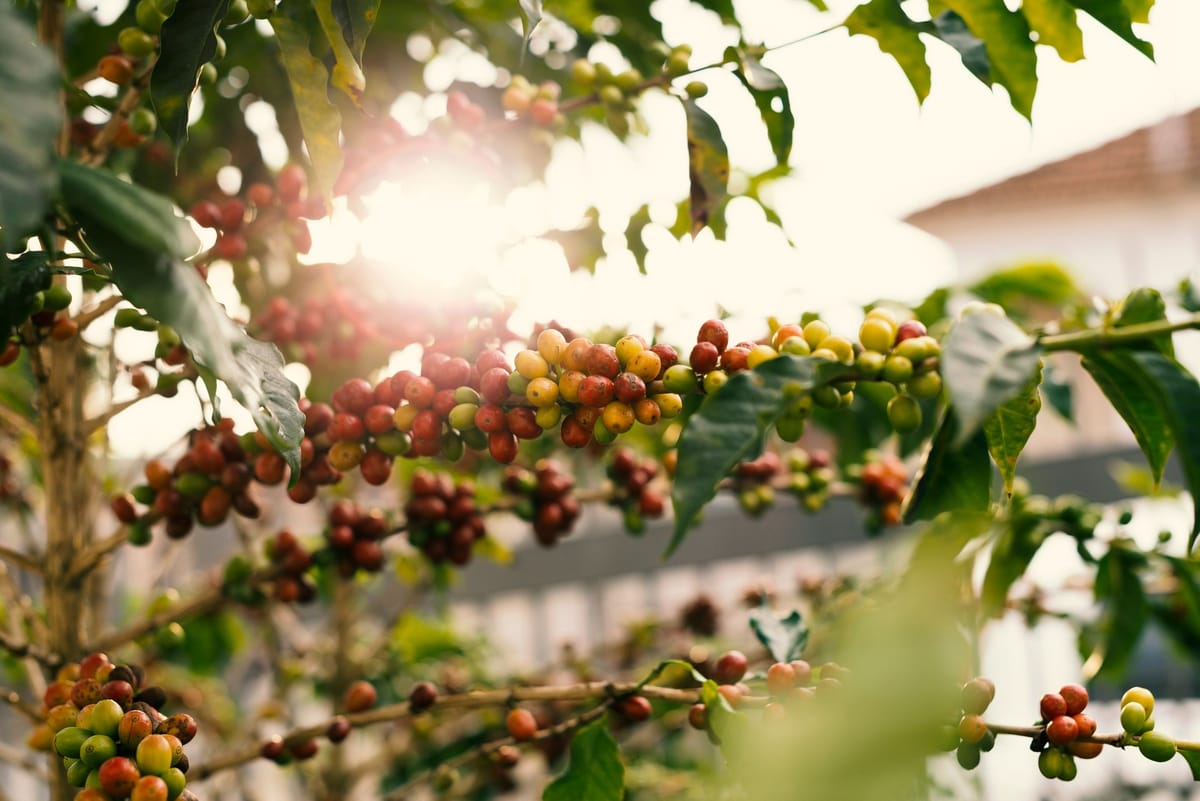
The bigger issue is that this coffee belt does not just feed Vietnam. Vietnam is the world's largest supplier of robusta, the bean behind most instant coffee and espresso blends, and robusta makes up about 95% of the country's coffee output, according to the U.S. Department of Agriculture. A large share of the instant coffee poured worldwide depends on the rainfall in these few highland provinces. When they run dry, the effect does not stop at Vietnam's export figures — robusta futures in London move too.
That chain was on display only recently. Robusta hit historic highs in 2024 and early 2025, with London futures topping $5,800 a tonne after drought hammered rival producers. Prices then eased to around $3,470 by April 2026, as the market priced in a record Brazilian harvest and the first global surplus in four years. By that script, coffee should have kept falling.
Then the El Niño news arrived. According to Thanh Nien, world coffee prices rebounded about 9% in a single week, and domestic Vietnamese prices climbed back up for the first time in three months. The trigger was the "super El Niño" assessment, on top of already-low inventories on international exchanges. At the same time, supply from Brazil, the world's biggest producer, is shrinking, with coffee exports down sharply and robusta falling the most. Squeezed from both ends, a price that was supposed to drop was pushed back up by a weather forecast.
To judge where it goes next, you have to look at both Vietnam's export performance and its production outlook — and the two point in opposite directions.
Start with exports. Vietnam's coffee export earnings hit a record of nearly $9 billion for 2025. But this year opened with a split between volume and value: in the first five months, export volume ran higher than a year earlier, yet earnings shrank, because the average export price dropped by more than 20%. Selling more and earning less is the classic shape of a market sliding back from a peak.
Now production. The USDA's latest report is distinctly optimistic, raising its estimate for Vietnam's output this crop year and forecasting another increase next year. That confidence rests on the 2021-2023 replanting program and the gradual rollout of drought-resistant varieties — those replanted trees are just entering their stable, high-yield phase.
The odd part is that the same USDA report also flags a warning. It notes that in the first quarter of 2026, rainfall in several main Central Highlands provinces already fell below normal, with El Niño expected to arrive mid-year and last at least until year-end. The report points to a deeper concern, too: to capture high prices, farmers irrigate early or excessively, which boosts yield in the short term but drains groundwater and raises costs over time. This is also the continuation of four straight years of declining output — when prices were low in earlier years, many growers switched to durian, macadamia and passion fruit, pulling land away from coffee.
The USDA's optimism is built on the assumption that no major drought hits. The signal Vietnam's weather agency is seeing right now points the other way. That gap is the single biggest uncertainty hanging over the global coffee supply chain in the second half of this year.
So what does Vietnam have to work with? In the short term, the Ministry of Agriculture and Environment has asked the weather agency to assess damage scenarios and prepare a response plan for the government, to be carried out across the agriculture, hydropower and disaster-prevention sectors, while urging localities and businesses to store water early and adopt drought-tolerant farming. In the longer term, the steadier footing comes from drought-resistant varieties and a shift from chasing volume toward quality and processed coffee. This year's split of rising volume and falling value already shows that relying on raw bean exports and the swings of the spot price is not a stable way to earn.
Whether El Niño actually reaches its strongest setting will only be clear later this year. But one thing was already settled in June: when the world asks whether coffee is about to get more expensive, much of the answer rides on how much rain falls in Vietnam's Central Highlands over the coming months.
Buying a Home in Vietnam: A Taiwanese Buyer's Full Playbook from Hanoi
Maggie of "Maggie's Lonely Planet" has lived in Vietnam since 2017 and traveled to more than 40 provinces. In this online talk she opens up the full ledger of buying her Hanoi apartment: location, pricing, cross-border transfers, renovation, and the legal rules for foreign buyers — all the hidden costs nobody warns you about.
Pure experience sharing, no sales pitch.
Time: Tuesday, June 23, 2026 — 9 pm Taiwan / 8 pm Vietnam