Vietnam's Rate Cut Is an Industrial Subsidy, and Banks Are Paying for It
Vietnam's central bank didn't make money cheaper. It ordered banks to cut rates by set amounts and give up part of their profit to subsidize sectors the state picked.
[Vietnam's Rate Cut Is an Industrial Subsidy, and Banks Are Paying for It]
In most economies, a rate cut starts at the central bank. It lowers its policy rate, banks get cheaper funding, and deposit and lending rates follow.
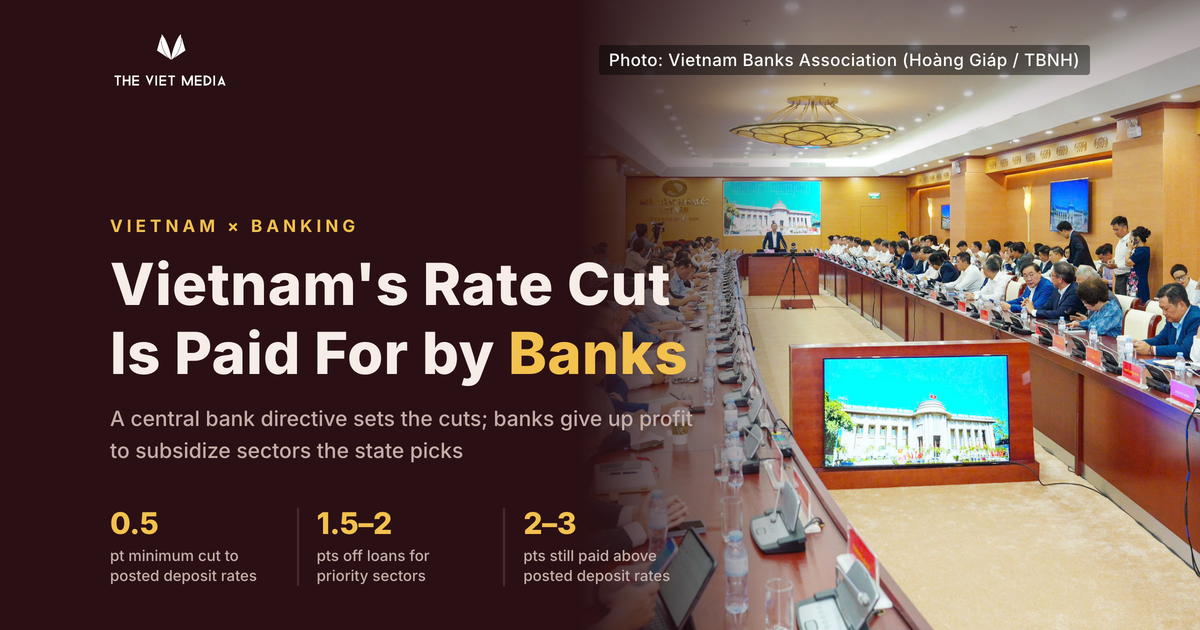
Vietnam did it differently this week. The State Bank of Vietnam kept its policy rates unchanged through the first half of the year. Instead, it sent banks a directive with the cuts already spelled out: posted rates on deposits of six months or longer must fall by at least 0.5 percentage points, and lending rates for production and business loans and for government priority sectors must fall by 1.5 to 2 points. The central bank sets each bank's annual credit growth cap, and the directive says banks that don't comply may have their quota reviewed and get a lower one next year. Many banks published new rates the next day.
Deposit rates fall a little, lending rates fall a lot, and banks' funding costs don't drop at the same speed. Banks have to give up part of their profit to cover the gap. In effect, the rate cut is a subsidy: the sectors the government picked get cheaper money, and the banks pay for it.