Trump 2.0 Trade War Begins — A Primer on 4 Types of Tariffs
Trump slaps 25% tariffs on imported steel and aluminum. Before analyzing Vietnam's exposure, here is a primer on four basic tariff types.
[Trump 2.0 Trade War Begins — A Primer on 4 Types of Tariffs]
Aboard Air Force One, Trump signed an executive order and casually told the cameras: "We're putting 25% on imported steel and aluminum." The dramatic announcement made headlines worldwide. Trump 2.0's trade war is officially on, and global markets are on edge.
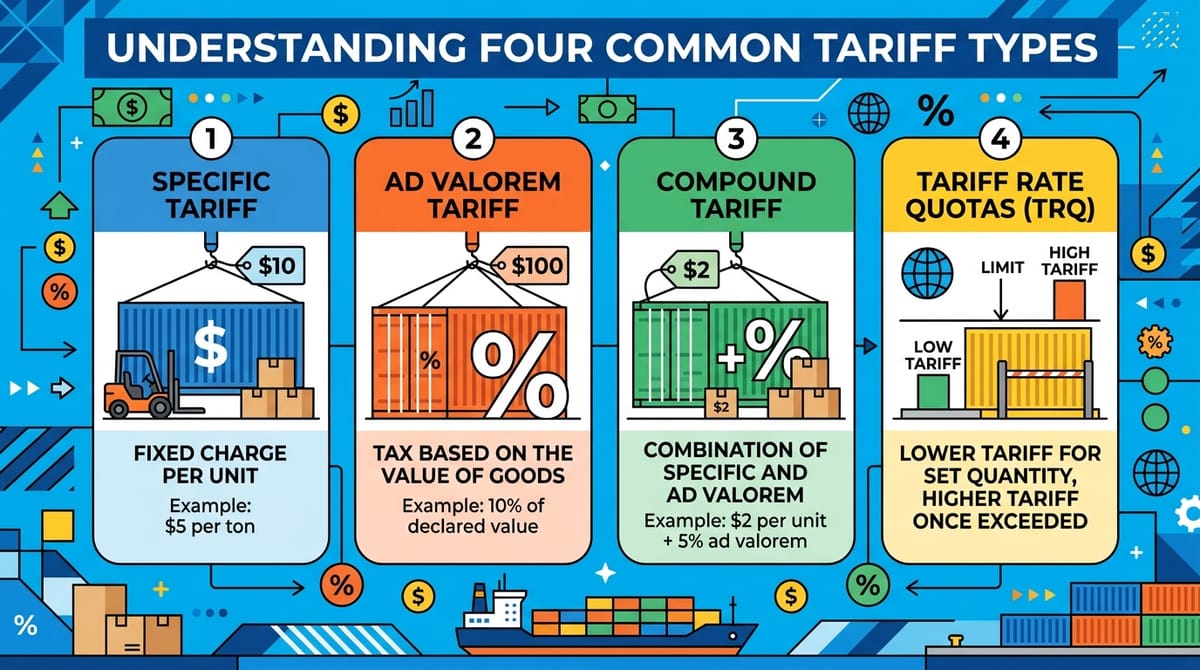
Before we analyze what this means for Vietnam's steel and aluminum sectors, here is a breakdown of the four basic tariff types: specific tariff, ad valorem tariff, tariff-rate quota (TRQ), and compound tariff.
▍ Specific Tariff
A fixed fee based on quantity, weight, or volume.
Example: $10 per kilogram of steel.
Common use: raw materials, agricultural commodities, and other standardized goods.
Pros and cons: simple to calculate, but the tax burden is proportionally heavier on lower-priced goods, potentially hurting competitiveness.
▍ Ad Valorem Tariff
A percentage of the imported product's declared value.
Example: 15% on imported cars.
Common use: high-value goods like electronics and luxury items.
Pros and cons: reflects product value fairly, but requires accurate price assessment and can invite valuation disputes.
▍ Tariff-Rate Quota (TRQ)
A dual-rate system: imports within a set quota face a lower rate; anything above the quota triggers a higher rate.
Example: the U.S. sets a sugar import quota at 5%; above the quota, the rate jumps to 25%.
Common use: sensitive domestic industries such as agriculture and metals.
Pros and cons: balances imports with domestic protection within a range, but demands strict quota management.
▍ Compound Tariff
A combination of specific and ad valorem tariffs applied simultaneously.
Example: $5 per kilogram of fabric plus a 10% ad valorem duty.
Common use: products where both quantity and price matter.
Pros and cons: balances different product characteristics, but calculation is more complex.
▍ What This Means for Vietnam's Exports
U.S. tariff policy shapes global trade flows, and different tariff types directly affect product costs and market competitiveness. For industries like steel and aluminum that rely heavily on raw material costs, miscalculating tariff exposure can wipe out margins.
Vietnam's key exports to the U.S. — steel, aluminum, electronics, and agricultural products — all face specific challenges and opportunities in this new trade war. The stakes are high.