Ten Years After Vietnam's Fish Kill Protests, Formosa Ha Tinh Is Its Province's Top Taxpayer
A steel plant first meant for Taiwan is now Hà Tĩnh's top taxpayer a decade after the 2016 fish kill, but most of its tax is paid at customs and goes to the central government.
[Ten Years After Vietnam's Fish Kill Protests, Formosa Ha Tinh Is Its Province's Top Taxpayer]
In April 2016, a reporter put a question to Chu Xuân Phàm, who headed Formosa Ha Tinh Steel's representative office in Hanoi. Fish and shrimp had vanished near the outfall of the plant's discharge pipe since it started running. What did he make of that? "You have to choose," he said. "Do you want to catch fish and shrimp, or build a modern steel industry?" Two days later the company fired him, and he apologized publicly to the Vietnamese people.
By then, dead fish had been washing up for almost three weeks along the coasts of Hà Tĩnh and three neighboring provinces in central Vietnam. Thousands of people marched in Hanoi, Ho Chi Minh City and elsewhere, demanding a public investigation. More than two months later, the government concluded that the pollution came from violations and incidents during the plant's trial run. Formosa Ha Tinh admitted fault and promised USD 500 million in compensation.
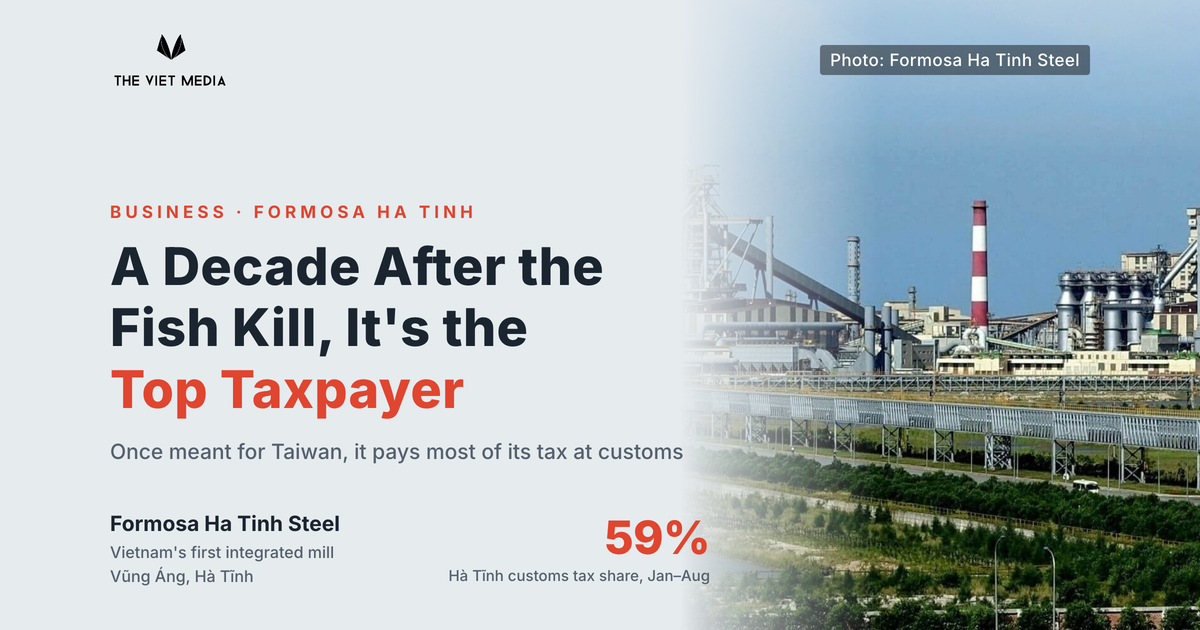
Ten years on, the plant is still producing. This year Hà Tĩnh's provincial government said Formosa Ha Tinh had always been the province's top taxpayer. Customs data show that 59% of the tax collected by customs in Hà Tĩnh this year came from this one company.
The plant was first meant to be built in Taiwan. Vietnam gave it unusually generous terms, then lived with a halt to inshore fishing and a full year of economic contraction in Hà Tĩnh. Today the plant is losing money year after year, and most of the tax it pays is collected at customs on imported raw materials. Vietnam also cited the disaster when it rewrote its environmental law. So what did Vietnam give up, what did it get, and who ended up bearing the cost?