Vietnam's $680-per-Tael Gold Premium: The SJC Monopoly Is Gone, but the Price Gap Isn't
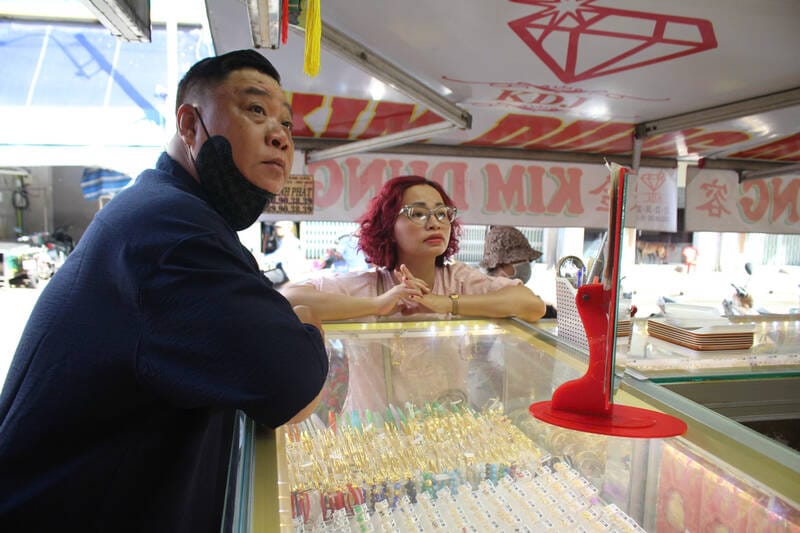
On April 17, 2026, SJC gold bars in Vietnam traded at 18 million VND per tael above world prices — roughly US$680, or NT$20,000. The 13-year monopoly was officially ended in October 2025. Six months later, the premium is still here. Why?
[Vietnam's $680-per-Tael Gold Premium: The SJC Monopoly Is Gone, but the Price Gap Isn't]
On the morning of April 17, 2026, Vietnamese daily Thanh Niên ran a business headline: "Gold Prices Drop for a Ninth Session, Still 18 Million VND Above World Price."
Eighteen million VND. Roughly US$680.
To put that in perspective: in Taiwan, a tael (37.5 grams) of standard gold bar typically carries a premium of 1% to 3% over spot — a few hundred US dollars at most. In Vietnam, a tael of SJC gold costs $680 more than the world price. Same 37.5 grams. Same 99.99% purity. The unit is literally called "một lượng" in Vietnamese, identical to Taiwan's "台兩."
So why does the same chunk of gold cost six times more in premium on the other side of the South China Sea?
The answer sits in one of Vietnam's most distinctive financial arrangements: the SJC brand monopoly.
▍ A Gold Brand Designated by the State
Rewind to 2012.
That year, Vietnam issued Decree 24/2012/ND-CP, centralizing gold bar production and gold imports/exports under the State Bank of Vietnam (SBV). At the same time, Saigon Jewelry Company (SJC) was designated as the sole legal producer of gold bars in the country.
What did that mean in practice? If you wanted to buy a gold bar in Vietnam that could circulate legally in shops, banks, or exchanges, you bought SJC. Bars produced by anyone else weren't legally classified as "vàng miếng" — they had to be treated as raw gold or jewelry.
The stated goal was to curb the "goldization" of the economy. In Hanoi's view, Vietnamese households held too much gold, which diluted the dong's role as the unit of account and amplified speculation. Centralize the supply, let the state control it, and in theory you stabilize the currency and squeeze the gray market.
In practice, this produced 13 years of market distortion. Private gold bar producers were locked out. Domestic supply depended on SBV auctions. Import quotas were rationed by the central bank, and what actually made it to market fell short of demand. Local and international prices began to drift apart.
By 2024 and 2025, the gap had reached historic levels. The spread between SJC gold and world prices hit 18 to 20 million VND per tael — about US$770 — and could swing sharply within a single session.
▍ October 2025: The 13-Year Monopoly Ends
In September 2025, the government issued Decree 232/2025/ND-CP. It took effect on October 10, 2025.
Structurally, the decree did one thing: it ended the state monopoly on gold bar production, raw gold imports and exports, and gold raw material imports used in bullion production.
In other words, SJC is no longer the only legal gold bar maker.
The new regime is built on licensing. Companies and banks that want to produce gold bars can apply to the SBV, but the thresholds aren't low:
➤ For enterprises: minimum charter capital of 1 trillion VND (about US$38 million) and a clean administrative record
➤ For commercial banks: minimum charter capital of 50 trillion VND (about US$1.9 billion), same clean-record requirement
Alongside the licensing rule, Decree 340/2025/ND-CP took effect on February 9, 2026, raising penalties for unlicensed gold trading and smuggling to 300 to 400 million VND — an enforcement signal against the gray market. On January 30, 2026, the government issued a notice urging agencies to speed up the establishment of a national gold exchange as a centralized trading platform.
On paper, it's a complete package: open up supply, tighten enforcement, build an exchange. The reasonable expectation was that once the SJC monopoly was gone, the domestic-global price gap would quickly narrow toward something resembling international norms.
It didn't.
▍ Six Months In: Why the Premium Persists
On April 17, 2026 — just over six months after Decree 232 took effect — SJC gold still sold for more than 18 million VND per tael above the world price. In percentage terms, a roughly 12% premium.
The reason isn't mysterious: opening up supply doesn't mean supply actually arrives.
The World Gold Council's full-year 2025 report, published in February 2026, spelled out the key detail. Vietnam's investment demand fell to just 7 tonnes in Q4 2025, marking the sixth consecutive quarter of year-on-year decline and the weakest fourth quarter since 2021. Global gold demand over the same period hit a record 5,002 tonnes. Vietnam was the ASEAN outlier.
The WGC's explanation is direct: a chronic SJC bar shortage pushed the domestic-to-global premium past US$550 per ounce. Buyers who wanted to buy couldn't. Buyers who could were paying too much.
The new regime hasn't fixed the shortage yet. As of April 14, 2026, 11 entities (two more than at the start of the year) had filed applications with the SBV for gold bar production and raw gold import licenses, but approvals were still in process. Not a single license had been formally issued. The shortlist includes the former monopolist SJC, private jewelers PNJ and DOJI, and seven commercial banks: Vietcombank, VPBank, Techcombank, BIDV, MB, VietinBank, and Agribank.
That shortlist tells its own story. The 1-trillion-VND and 50-trillion-VND capital thresholds mean only the largest enterprises and banks can play. Smaller gold traders are structurally excluded, and competition will remain narrow.
The national gold exchange also isn't live. Without a centralized price discovery mechanism, without account-based gold trading, the market runs on physical inventory. Supply-demand mismatches can't be rapidly arbitraged away.
The realistic expectation: once those 11 licenses roll out, the exchange goes operational, and account-based gold trading is introduced, the premium should converge. That's a six-month to two-year project. The headline-grabbing decree isn't going to change the price the morning after it takes effect.
▍ What This Means for Taiwanese Readers
For Taiwanese working or doing business in Vietnam — and for anyone watching cross-strait financial differences — there are a few practical takeaways.
First, buying gold in Vietnam doesn't mean buying at the international price. Every SJC gold transaction carries about a 12% structural premium. Whether you're planning to store gold in Vietnam or convert gold you brought from Taiwan, that premium has to be in the math.
Second, the premium won't vanish overnight. The laws have moved in the right direction, but financial system reform runs on a much slower clock than legislation does. Indicators to watch over the next 6 to 24 months: whether the 11 license applications get approved, when the national gold exchange actually launches, and how quickly account-based gold trading rolls out.
Third, why are Vietnamese households still willing to absorb a premium this large? That's a separate article. The short version: Vietnamese families have long treated gold as the last line of defense against dong depreciation, inflation, and financial-system instability. Demand-side stickiness is real. Supply-side reform is lagging. Where those two meet is the NT$20,000-per-tael premium you see today.
For Taiwanese businesses eyeing Vietnam — especially in financial services, jewelry, and investment — this 12% premium is an index. When it drops below 5%, it'll mean Vietnam's financial deepening has reached a new stage. Until then, Vietnamese trust in "gold you can hold in your hand" won't be easily transferred to any financial instrument.
The Viet Media Monthly
A curated monthly digest of the most important political, economic, tech, and industry developments in Vietnam.
Designed for reading on desktop or tablet — no algorithm, no noise. Just the stories that matter.
Delivered before the 10th of each month. Cancel anytime.