Vietnam Salary Guide 2026: Average Pay, Minimum Wage, and How It Compares to Taiwan
Average pay of VND 9 million, salaried average of VND 10 million, minimum wage of VND 5.31 million — Vietnam's salary statistics look contradictory. This guide untangles what each number measures, then benchmarks Vietnamese pay against Taiwan.
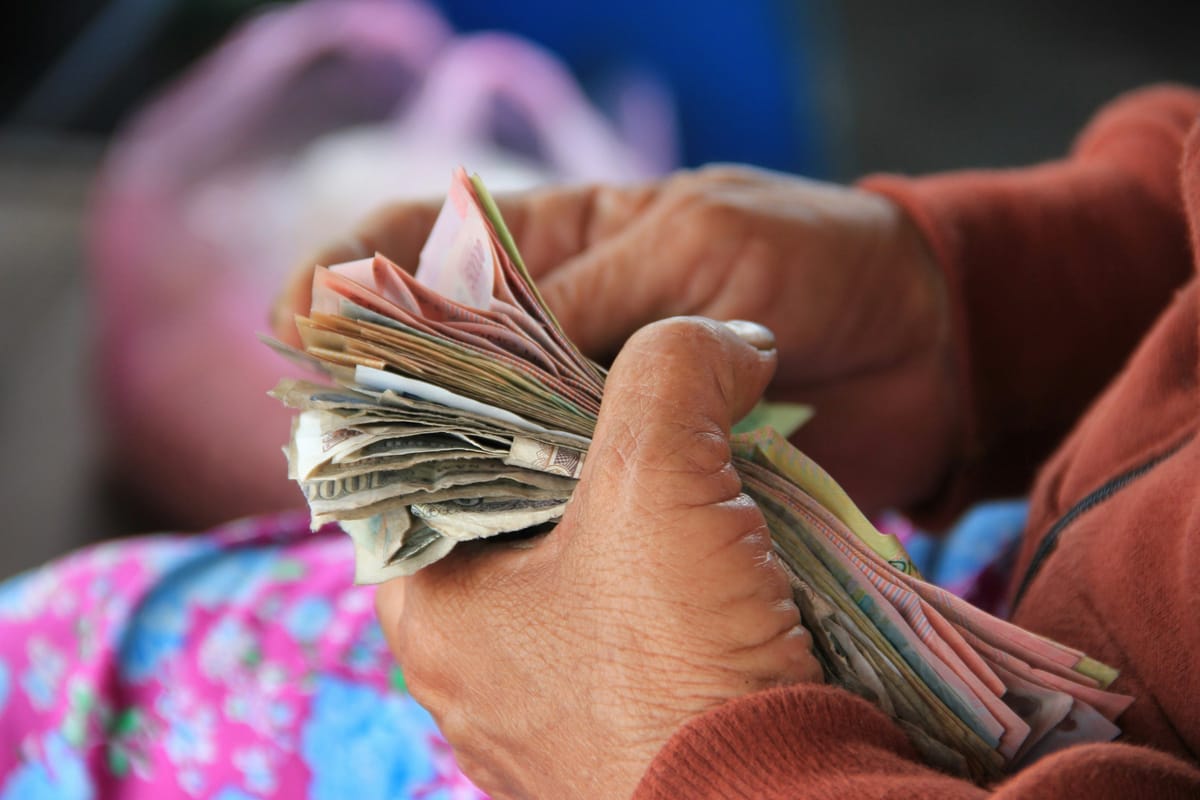
[Vietnam Salary Guide 2026: Average Pay, Minimum Wage, and How It Compares to Taiwan]
Let's start with the answers. As of mid-2026, the average Vietnamese worker earns 9 million dong a month, or roughly NT$11,000. Count only salaried employees — people with an employment contract and a monthly paycheck — and the average rises to 10 million dong, about NT$12,200. The "minimum wage" people often search for is something else entirely: from 2026, the highest statutory tier is 5.31 million dong a month, around NT$6,500. What each number means, and why they sit so far apart, is what this guide unpacks.
Start with the market picture. Vietnam's statistics office released its latest quarterly data in early July: in the second quarter of 2026, workers earned an average of 9 million dong a month, up 720,000 dong from a year earlier — an 8.7% increase. The full-year 2025 average was 8.4 million dong, up 8.9%. That makes two consecutive years of income growth above 8%.
Second-quarter income actually came in slightly below the first quarter. That is not a downturn — Q1 includes Lunar New Year bonuses, so the number runs seasonally high.
The average hides some wide gaps. For the first half of 2026:
➤ Urban vs. rural: city workers averaged 10.6 million dong; rural workers 7.9 million
➤ Men vs. women: 10.1 million versus 7.8 million
Big cities sit another notch higher: workers in Hanoi averaged 12.3 million dong a month in the fourth quarter of 2025 (about NT$15,000), against a national average of 8.7 million that quarter.
One more piece of context: 63.1% of Vietnam's employed population works informally, and the statistics count large numbers of self-employed people and farmers. That is exactly why the all-worker average (9 million) and the salaried-employee average (10 million) diverge — the latter only counts people drawing a paycheck. Unemployment stands at 2.23%, which is low, but youth unemployment for ages 15–24 runs close to 8.7%, well above the overall rate.
Beyond market pay sits a second set of numbers: the statutory minimum wage. Vietnam does not have a single national minimum wage — it is set across four regions according to living costs, and the latest adjustment took effect on January 1, 2026:
➤ Region I: 5.31 million dong a month (about NT$6,500); hourly 25,500 dong
➤ Region II: 4.73 million dong (about NT$5,800); hourly 22,700 dong
➤ Region III: 4.14 million dong (about NT$5,100); hourly 20,000 dong
➤ Region IV: 3.7 million dong (about NT$4,500); hourly 17,800 dong
This round added 250,000 to 350,000 dong per region, an average increase of 7.2%.
What counts as Region I? The urban cores of Hanoi and Ho Chi Minh City — Hoàn Kiếm and Ba Đình in Hanoi, the Sài Gòn and Bến Thành areas in HCMC — plus the former Bình Dương and Vũng Tàu urban districts folded into HCMC after the administrative merger. The zoning is fine-grained, so a single city can span two or three tiers: outer Hanoi falls under Region II, and parts of outer HCMC sit in Region III.
Many people searching for "Vietnam minimum wage" actually want to know what people typically earn. The two are far apart: the minimum wage is the legal floor for employment contracts, and the 2026 national average income of 9 million dong runs about 70% above the Region I minimum.
Salary figures in Vietnamese news reports often seem to contradict each other, and it is usually a matter of scope. At least four numbers are in circulation:
➤ Average income, 9 million dong (H1 2026): from the labor force survey, covering all workers including the self-employed and farmers
➤ Average salaried income, 10 million dong: only people with employment contracts — the closest thing to what most readers mean by "monthly salary"
➤ Per capita income, 5.9 million dong (about NT$7,200): the denominator is the entire population, children, retirees, and the jobless included, so the number is naturally the lowest
➤ Statutory minimum wage, 5.31 million dong (Region I): a legal floor, not the market rate
Each has its use: per capita income for gauging living standards, salaried income for estimating what office workers make, and the minimum wage for calculating employment compliance costs. Headlines occasionally compare figures across different scopes, which is why the numbers never seem to add up.
Compared with Taiwan:
➤ Average pay: Taiwan's average regular monthly wage for all employees was NT$47,884 in 2025. Vietnam's salaried employees earn the equivalent of about NT$12,200, putting Taiwan at roughly 3.9 times. Use the all-worker average instead (about NT$11,000, self-employed included) and the multiple exceeds four
➤ Minimum wage: Taiwan's rose to NT$29,500 a month and NT$196 an hour in 2026; Vietnam's Region I converts to about NT$6,500 — a gap of roughly four and a half times
➤ Growth runs the other way: Vietnam's average income rose 8.7% year on year and its minimum wage 7.2%, while both Taiwanese figures grew just over 3%
Of course, exchange-rate conversion says nothing about relative living standards, and the two sets of statistics don't cover quite the same things — treat the comparison as an order-of-magnitude reference.
This guide will be updated annually as official data comes out (last updated: July 2026). For the longer arc and regional differences, see our earlier pieces on Vietnam's decade of salary growth and the north–south pay gap.
The figures in this article are compiled from official statistics and regulations. For actual hiring terms, consult the latest regulations and professional advisers.
The Viet Media Monthly
A curated monthly digest of the most important political, economic, tech, and industry developments in Vietnam.
Designed for reading on desktop or tablet — no algorithm, no noise. Just the stories that matter.
Delivered before the 10th of each month. Cancel anytime.