Vietnamese Workers Aren't Fleeing Japan. They Just Have Better Options
A Japanese outlet framed the drop in Vietnamese workers as a reaction to xenophobia. The original Vietnamese report never mentioned it. What actually changed is that factories back home now pay about what Japan does.
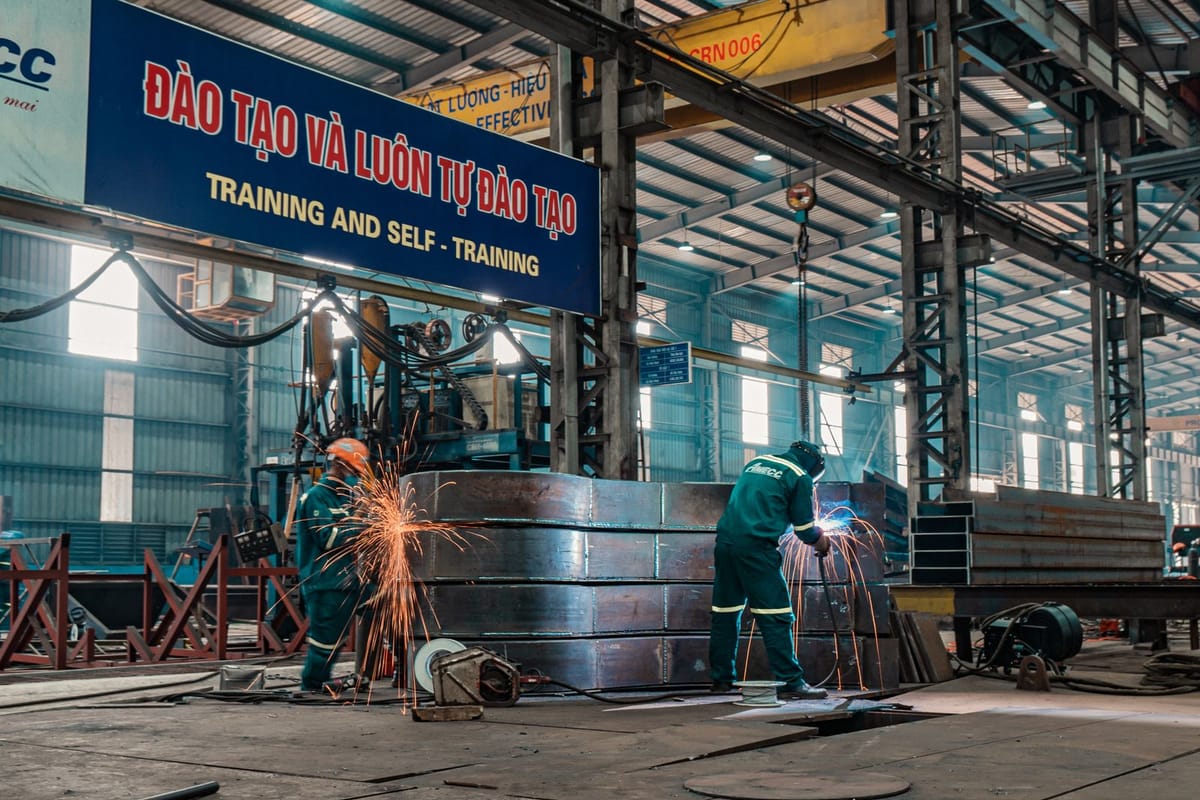
[Vietnamese Workers Aren't Fleeing Japan. They Just Have Better Options]
In June, a 29-year-old man from Bac Ninh province wrapped up six years of farm work in Japan and went home. He had been earning 170,000 yen a month, roughly 27.5 million VND, and could save a little over half of it after expenses. The plan had been to stay a few more years and put away enough to build his parents a house. With costs climbing, he told reporters, that would now take another 10 to 20 years. He went back to Bac Ninh with his savings and plans to open a shop selling Japanese goods.
He is not an outlier. According to Vietnam's Department of Overseas Labour, 28,488 Vietnamese went to Japan for work in the first half of this year, down nearly 20% from a year earlier. Taiwan took 28,205, a difference of exactly one person from last year. South Korea fell by an even steeper share, though that market is far smaller to begin with. Vietnam sent about 10% fewer workers abroad overall, and 80% of that decline came from Japan alone.
Vietnamese media covered this man and several other returnees. Two weeks later, the Japanese outlet Courrier Japon republished a translated version. Its introduction attributed the departures to Japan's rightward political drift and a rising climate of xenophobia.
The original Vietnamese report contains no such claim. It never uses the words xenophobia, discrimination, or far-right. What it discusses is Japanese language requirements, administrative fees, rising prices, household budgets and school fees for children.
Both versions cite a survey by the staffing firm Mynavi. Among respondents who said they wanted to work in Japan for five years or more, the Vietnamese share dropped 18.4 percentage points, the sharpest decline of any nationality. But in the same survey, the equivalent figures for Myanmar and Nepal went up. Mynavi's own explanation points to the weak yen and rising wages back home.
Vietnamese readers read it the same way. In a poll on the original article, close to 60% picked the weak yen and Japan's cost of living. Fewer than 20% chose tighter visa rules and fees.
Vietnamese officials have said as much themselves. At a mid-year review meeting in June, Nguyen Truong Giang, deputy head of the Department of Overseas Labour, listed several causes: traditional markets are recruiting less, political instability in some countries has made firms cautious about hiring, and the economy is soft. He then added something happening domestically. Competition for workers inside Vietnam has intensified and pay has risen, with companies now advertising monthly wages of 20 to 30 million VND. Interest in working abroad has fallen accordingly.
Set that against the man from Bac Ninh. Six years in Japan earned him 27.5 million VND a month, which lands squarely inside that range. He wasn't pushed out of Japan. The reason to stay simply disappeared.
Incomes at home really are rising. The General Statistics Office reports average monthly worker income up almost 10% year on year in the first half. Over the same period, employment in agriculture, forestry and fisheries shrank while industry and services each added hundreds of thousands of jobs.
Those gains are not evenly spread. The same data show youth unemployment up from a year earlier, with more than 10% of young people in rural areas neither working nor studying, and rural youth are exactly who the overseas labor pipeline draws from.
Japan's market has not collapsed either. What has given way is the middle. MD Vietnam Human Resources Development processed 30% to 50% fewer trainee visa applications in the first half. Its general director says middle-income families are the first to leave, because living costs have outrun what they can absorb. By his estimate, supporting a family in Japan now takes a household income of 500,000 to 700,000 yen a month, plus at least one member with N2-level Japanese and a university degree.
One other person in the report sits right at that threshold. She is 28, works in communications, holds a university degree and N2 certification, and her husband is a civil engineer. Her employer also covers housing and transport.
Yoshimizu Jiho, who heads a Japan-Vietnam mutual support NPO, argues that Japan is no longer a place where ordinary laborers get rich quickly, but that it remains a high-income market for anyone who arrives with the right skills and language. Vietnamese officials describe the shift the same way: destination countries now want skilled technical workers rather than low-skilled labor, and Vietnam's strategy should chase quality over volume.
Which brings us back to Taiwan. Of the three main destinations, it is the only one where the numbers did not fall.
That is not because conditions there improved. Vietnam caps broker fees for Taiwan-bound workers at USD 1,500. Taiwan's Control Yuan has found that Vietnamese workers actually pay between USD 4,500 and just over USD 7,000, with cases reaching USD 8,000. Investigators identified excessive broker fees as a leading reason workers go missing from their assigned jobs. We covered how this fee structure took shape over four decades of Vietnamese labor export in [290,000 Vietnamese Workers in Taiwan: The Story Starts Back Home].
In 2019, Taiwanese outlet The Reporter traveled to Vietnam and came back with a warning: Vietnamese workers were choosing Japan first, and Taiwan could not fill its openings. Seven years on, fewer Vietnamese are going to Japan, and the number going to Taiwan has neither grown nor shrunk. The path Japan is closing is the low-skill, high-debt one. For Vietnamese heading to Taiwan, it is still the only path on offer.
The Viet Media Monthly
A curated monthly digest of the most important political, economic, tech, and industry developments in Vietnam.
Designed for reading on desktop or tablet — no algorithm, no noise. Just the stories that matter.
Delivered before the 10th of each month. Cancel anytime.