Vietnam Has a Labor Shortage? Cần Thơ Businesses Look to Cambodia
Cần Thơ firms propose recruiting in Cambodia even as people in Vietnam seek work, exposing the gap between available workers and jobs they will accept.
[Vietnam Has a Labor Shortage? Cần Thơ Businesses Look to Cambodia]
Factories in Cần Thơ need workers. The city's business association has proposed looking for them across the border in Cambodia.
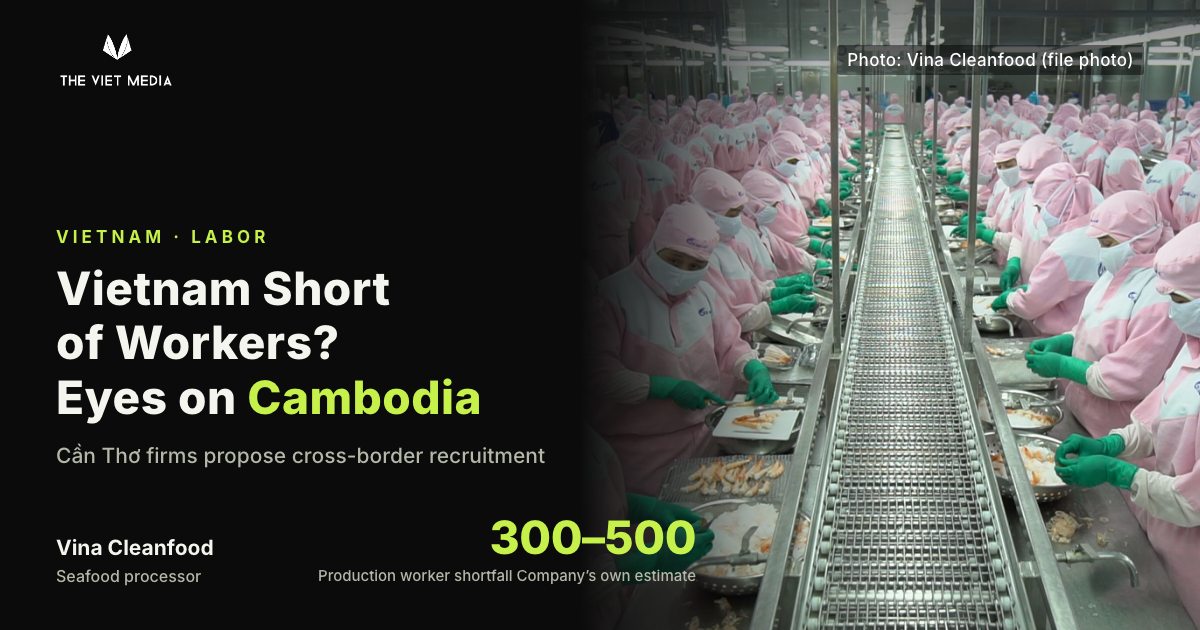
The vacancies include production jobs. The general director of local seafood processor Vina Cleanfood said in an interview that his factory was short of about 300 to 500 workers, despite offering transport and meal benefits. Local media reported that, at a meeting with businesses, the chairman of the Cần Thơ Business Association said Cambodia had ample labor and called for policies allowing companies to recruit there.
Why would factories struggle to hire when people in Vietnam are still looking for work?
Vietnam's statistics office reported more than a million unemployed people of working age in the first nine months of 2026. But whether a vacancy gets filled also depends on where job seekers live, what work they want and whether they accept the employer's terms. They may not have the skills a particular job requires, either.
The Mekong Delta illustrates the geographical problem. World Bank research shows that young workers continue to leave for better opportunities in Ho Chi Minh City and southeastern Vietnam. Seafood industry employers point to the narrower range of jobs at home and the appeal of city wages and lifestyles. Someone who has spent years working and building a life elsewhere may not want to return just because a hometown factory is hiring.
Meanwhile, expansion creates more vacancies. TKG Taekwang's shoe factory in Cần Thơ said it was recruiting production workers to expand output, while facing the challenge of young people leaving for study and work in larger cities. The business association's chairman said local employers were already competing on pay and warned that new industrial parks would add to demand for workers.
Workers are comparing the jobs on offer, too. One seafood processor had advertised monthly earnings of VND 7 million to VND 15 million, depending on the role and productivity, but still had not hired enough people. A former seafood processing worker described spending long hours standing on wet floors in a cold environment. Pay is only part of the decision about whether to take that job.
Similar choices appear in other industries. A former garment worker interviewed by local media had left because earnings were unstable and overtime was frequent. She wanted more predictable hours, even if that meant slightly lower pay. A skilled mechanical worker placed greater weight on full insurance coverage and a clear system for pay rises.
A former deputy director of Vietnam's Department of Employment has urged employers to stop assuming that production workers are plentiful and cheap. Younger workers also care about working conditions, opportunities to develop skills and long-term stability.
Recruiting in Cambodia is another option employers want to explore. Yet even if workers are available there, they may not want the jobs Cần Thơ companies offer. The reporting has not set out a recruitment target or timetable, either.
The head of the Mekong Delta branch of the Vietnam Chamber of Commerce and Industry has also suggested upgrading production equipment to reduce the need for workers.
Cần Thơ's experience highlights a distinction in Vietnam's labor shortage debate: the number of workers in the country does not tell an individual factory how many people it can recruit. Migration, expanding production and workers' choices about earnings and conditions all affect hiring.
The Viet Media Pro: at least four in-depth articles a month, access to every paid article, building into a knowledge base on Vietnam's policy, industries, companies, and people.