Vietnam's Biggest Companies Are Racing to IPO — and the Timing Isn't Accidental
Less than two months into 2026, Vietnam's IPO pipeline is the fullest it has ever been. Điện Máy Xanh, Hòa Phát Agriculture, Highlands Coffee — they're all in motion. The catalyst: FTSE Russell's September upgrade could funnel billions of dollars into Vietnamese equities.
Two months into 2026, Vietnam's stock market is seeing a wave of IPOs and listings unlike anything in its history. Major companies across retail, agriculture, banking, and consumer brands are all moving at once. The timing is no coincidence.
The Lineup
On February 6, two companies debuted on the Ho Chi Minh Stock Exchange (HOSE) on the same day: Hòa Phát Agriculture (HPA) and Gelex Infrastructure (GEL).
Hòa Phát Agriculture is the farming arm of steel conglomerate Hòa Phát Group. It issued 285 million shares and booked VND 1.6 trillion in profit in 2025. Gelex Infrastructure completed its IPO of 100 million shares in late 2025 and hit the price ceiling on its first trading day.
The biggest name in the pipeline is Điện Máy Xanh — the electronics and appliance retail business of Mobile World (MWG), Vietnam's largest retail group. It runs roughly 3,000 stores under the Thế Giới Di Động and Điện Máy Xanh brands. Revenue hit VND 106 trillion in 2025, up 18%. The business accounts for about 65% of MWG's consolidated revenue and 80% of its profit.
MWG kicked off the IPO roadmap on January 19, aiming to complete it this year. Once listed, Điện Máy Xanh will be one of Vietnam's largest-ever IPOs.
LPBank Securities (LPBS) has shareholder approval to issue about 142 million shares at VND 30,000 each and list on HOSE.
And there's more in the queue. Hoa Sen (HSG) plans to spin off its Hoa Sen Home building materials retail brand for a separate IPO. Highlands Coffee is talking to exchanges in Singapore and Hong Kong about listing overseas.
Dragon Capital estimates Vietnam's IPO pipeline over the next three years could reach $47 billion.
Why Everyone Is Moving Now
One event explains the rush: FTSE Russell announced last October that it will reclassify Vietnam from a frontier market to a secondary emerging market, effective September 21, 2026.
The upgrade isn't guaranteed yet. Vietnam must pass FTSE's interim review in March, which will check whether the "global broker mechanism" works — meaning foreign investors can trade through international brokers without opening local Vietnamese brokerage accounts. In February, Vietnam pushed out new rules (Circular 08/2026) to make this possible.
If March goes well, the September upgrade proceeds on schedule. And when that happens, every passive fund tracking the FTSE Emerging Markets Index will automatically start buying Vietnamese stocks. Brokerages estimate passive inflows alone at $600 million to $1.6 billion. VinaCapital calculates active capital usually runs five times the passive amount, putting total potential inflows in the billions.
There's also a practical change. The gap between completing an IPO and actually starting to trade has been compressed from about 90 days to 30 days under new regulations. For companies, listing before the potential September upgrade means catching the foreign capital wave right as it arrives.
Where the Market Stands
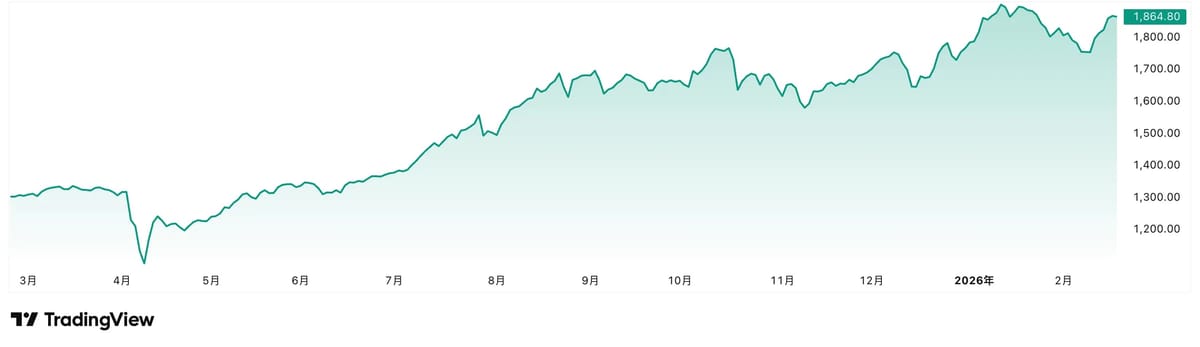
As of February 24, the VN-Index sits at 1,867, up over 40% for full-year 2025. Forward price-to-earnings is about 12.7–13x, below the five-year average of 14.5x and below regional peers like Thailand and Indonesia.
Multiple brokerages are targeting 2,000–2,100 by year-end 2026.
There's a catch, though: foreign investors were net sellers of over $5 billion in Vietnamese equities in 2025, even as the index gained 40%. The rally has been powered almost entirely by domestic money. A major foreign capital return hasn't happened yet.
Whether the FTSE upgrade can flip that trend is the single most important variable for Vietnam's stock market this year.