How Much Do Vietnamese Love Gold? Prices Doubled, and They're Still Buying
Vietnam's domestic gold price surged over 100% in a year, but the appetite for gold hasn't cooled. Long queues, wedding cost crises, and gold-denominated debts — rising prices are changing how Vietnamese people live.
Over the past year, international gold prices climbed nearly 70%. In Vietnam, the jump was far more dramatic — domestic gold shot from VND 85 million per tael to nearly VND 190 million, a gain of over 100%. The gap between Vietnamese and global prices has widened because the country's gold supply has been tightly restricted for years.
And yet, the buying hasn't slowed down one bit.
Lining Up for Gold Is Just Another Day
Whenever prices spike, gold shop streets in Hanoi and Ho Chi Minh City see long queues form almost immediately. Some office workers take half a day off every month just to stand in line. Others pay upfront and wait weeks for delivery. Shops regularly hang "sold out" signs.
Behind this is a deep-rooted gold culture. Government audit data shows Vietnamese households hold roughly 400 metric tons of gold privately. Nearly 30% of families keep gold as a savings tool. Gold bars and jewelry aren't just investments — they're heirlooms, wedding gifts, and the most intuitive hedge against inflation.
Buying Less, Spending More
Behavior is shifting, though. The World Gold Council's latest report shows Vietnam's gold jewelry demand fell 29% year-on-year in Q4 2025, dropping from 3.3 tons to 2.4 tons.
The twist: total spending actually went up. Global gold jewelry consumption rose 18% in value to USD 172 billion. People are paying more money for less gold.
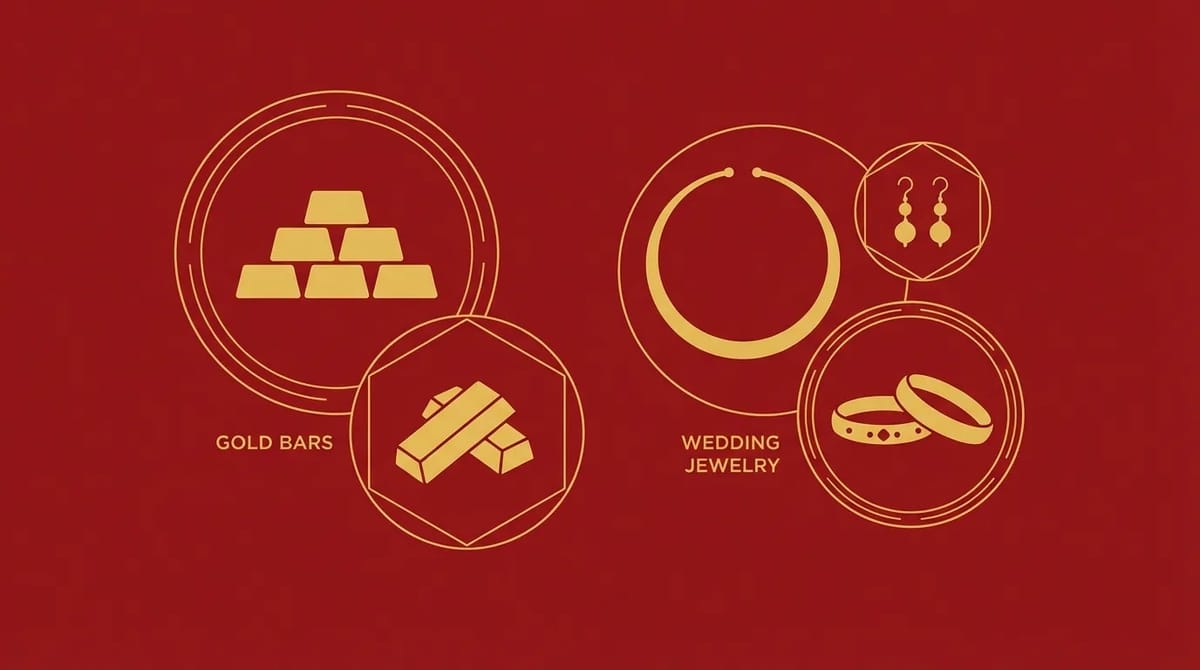
Another clear trend is the shift from jewelry to investment-grade gold bars. Jewelry makers are feeling the squeeze. And when SJC-branded bars run short, Vietnamese buyers pivot to 24K gold rings (vàng nhẫn) as substitutes. One way or another, they'll find a way to buy gold.
Weddings Are Becoming a Financial Disaster
The most direct hit from soaring gold prices falls on families preparing for weddings.
In Vietnamese tradition, the groom's family typically prepares one to five taels of gold as a bride price, not counting jewelry for the bride herself. Two years ago, one tael cost around VND 65 million. Now it's approaching VND 190 million.
Wedding industry data paints a grim picture: cancellations and postponements rose by over 30% in 2024, driven primarily by gold prices. Some brides have publicly said they no longer expect matching jewelry gifts because the cost has become a burden. Young people are starting to question the tradition entirely, arguing that life would be much easier without being held hostage by gold prices.
Gold Loans That Became Unpayable
In rural Vietnam, there's a longstanding practice of borrowing gold bars — not cash — between families, often to build a house.
One homeowner borrowed four gold bars in 2022, worth about USD 10,000 at the time. Three years later, that debt has ballooned to USD 29,000, while his monthly income remains under USD 700. Stories like this are far from rare.
But there are winners too. A 74-year-old retired woman spent decades steadily buying and hoarding gold. Her children used to tease her about the obsession. Now her wealth has multiplied several times over, and those same children have newfound respect for her old-school wisdom.
How Younger Generations See Gold
Vietnam's jewelry market is undergoing a generational shift. Traditional buyers still treat gold as a family safety net, but millennials and Gen Z see things differently — for them, jewelry is a form of self-expression, not an asset to lock away in a safe.
These younger consumers prefer diamonds, minimalist designs, and even gender-neutral styles. TikTok, Instagram, and Shopee livestreams are their main channels for discovering jewelry brands. Local market leader PNJ (Phu Nhuan Jewelry) has noticed the trend, partnering with Emoji Company to launch emoji-themed gold and silver accessories.
Vietnam's jewelry market hit USD 1.13 billion in revenue in 2025, with nearly 90% in the non-luxury segment. Growth is being driven by this new generation of buyers.
The Government Steps In
Facing mounting chaos in the gold market, Vietnam's government has made several moves.
First, Decree 232 ended SJC's long-held monopoly as the only nationally recognized gold bar brand, opening the market to more competitors and narrowing the gap between domestic and international prices.
Second, officials are studying the creation of a gold exchange, drawing on international models to improve transparency.
Third, a draft amendment to the personal income tax law proposes a 0.1% tax on gold bar transfers for the first time, aimed at curbing speculation.
Whether these policies will actually cool things down remains to be seen. The State Bank of Vietnam has tried auctioning gold bars to boost supply before, but results were limited — only 15% of auctioned gold was actually sold.
Will Gold Prices Keep Rising?
Most major investment banks say yes. Gold broke through USD 5,000 per ounce in late January. Deutsche Bank, Bank of America, and Societe Generale have all set year-end targets at USD 6,000. Goldman Sachs raised its forecast from USD 4,900 to USD 5,400 in late January, acknowledging prices could go even higher.
As of late January, Vietnam's SJC gold bar had surpassed VND 190 million per tael. A return to affordable gold buying seems unlikely anytime soon.
For the Vietnamese, gold is both a faith and a source of anxiety. As prices climb, the number of buyers doesn't necessarily shrink — but the way they buy, and the mindset behind it, has already changed.