Two Price Hikes in Two Days: Vietnam's Fuel Prices Surge 30% as Diesel Breaks VND 30,000
The Strait of Hormuz blockade reaches Vietnam's gas stations — fuel prices jumped twice in two days, with diesel breaking VND 30,000 per liter.
The Strait of Hormuz blockade has arrived at Vietnam's gas pumps.
On March 5 and 7, Vietnam's Ministry of Industry and Trade raised fuel prices twice in rapid succession. Both increases were the largest in recent memory.
RON95 gasoline jumped from roughly VND 20,000 per liter to over VND 27,000 in two days. Diesel was even more dramatic, blowing past VND 30,000.
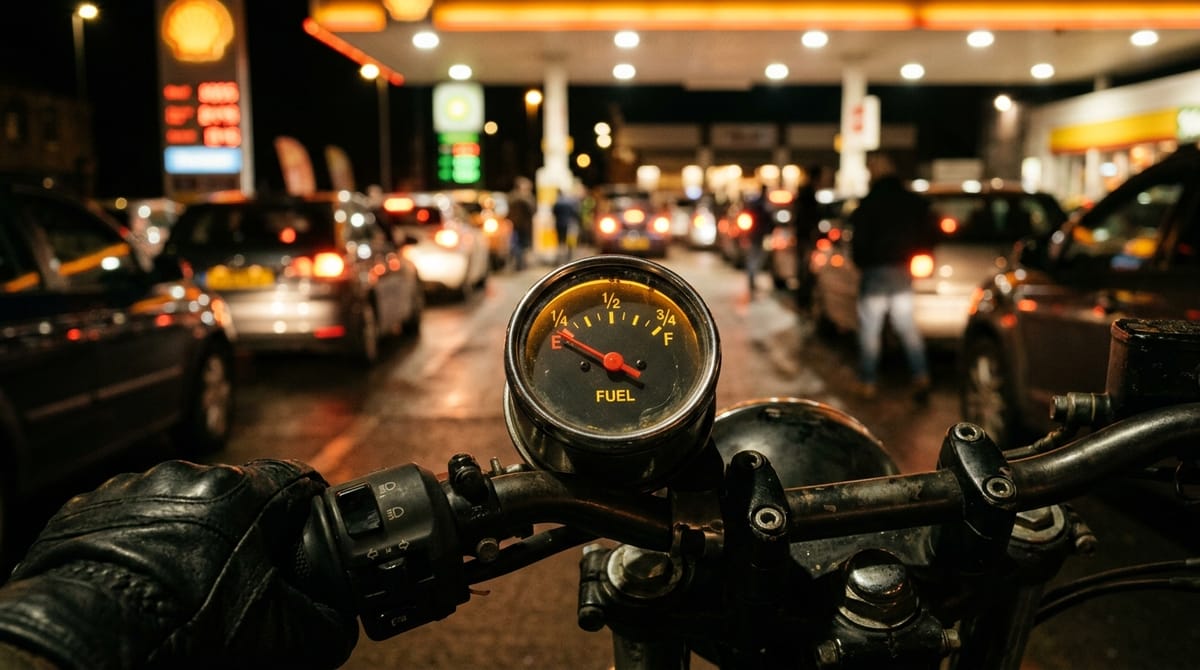
Some gas stations saw long lines before the adjustments. A few temporarily shut down.
Two Adjustments, Both Record-Breaking
Vietnam normally adjusts fuel prices once a week, on Thursdays, based on international benchmarks. The Ministry of Industry and Trade and the Ministry of Finance decide jointly.
March 5 was a Thursday. At 3 PM, the first increase hit. RON95 rose VND 2,189 to VND 22,340 per liter. Diesel jumped VND 3,758 to VND 23,037. Kerosene saw the biggest single move — up VND 7,132 to VND 26,601.
Just two days later, on Saturday, March 7, at 3 PM, the second wave arrived. This was not a regular adjustment day. The government had issued Emergency Resolution 36 on March 6, authorizing immediate price changes whenever the international benchmark moves more than 7%.
RON95 climbed another VND 4,707 to VND 27,047. Diesel surged VND 7,207 to VND 30,239, breaking the VND 30,000 barrier. Kerosene added VND 8,490 to hit VND 35,091.
Combined, RON95 rose about 34%. Diesel was up nearly 57%. Kerosene gained 80%.
These were the sharpest fuel price increases in Vietnam since the 2022 Russia-Ukraine war spike.
What's Driving It
The direct cause is the Strait of Hormuz blockade.
After the US and Israel struck Iran on February 28, Iran's Revolutionary Guard shut down the strait. About 20% of global oil consumption passes through this chokepoint. After the closure, tanker traffic dropped 70%.
International oil prices spiked. Between March 5 and 7, the international benchmark for RON95 refined products averaged USD 116 per barrel — up 26% from pre-conflict levels.
Vietnam's fuel pricing mechanism tracks international prices directly. When global prices rise, domestic prices follow. A weakening Vietnamese dong against the dollar pushed import costs even higher.
And here's the critical detail: 88% of Vietnam's crude oil imports come from Kuwait. Kuwaiti tankers must pass through the Strait of Hormuz to leave the Persian Gulf. With the strait blocked, getting that oil to Vietnam became a serious logistical problem.
Long Lines and Temporary Shutdowns
Consumers reacted predictably: they rushed to fill up.
Gas stations across the country saw queues in the days before the price hikes, as drivers topped off their tanks.
In Lam Dong province, station operators reported that their usual four deliveries per week (19 cubic meters each) had dropped to just one, as distributors slowed shipments in anticipation of further price increases.
In Ho Chi Minh City, gas stations under Tan Cang (Tân Cảng) briefly announced they would stop selling fuel to the public, citing concerns about supply chain disruption from a prolonged Middle East conflict. They reversed the decision the next day after securing alternative suppliers.
What the Government Says
The Ministry of Industry and Trade says March fuel supplies are "fundamentally secured."
State oil groups Petrolimex and PetroVietnam both confirmed adequate inventories and said they are diversifying import sources.
The ministry also urged the public to conserve fuel, use public transit or electric vehicles, and warned sellers against hoarding.
Since the start of the year, Vietnam has raised fuel prices seven times and cut them four times. The trend is clearly upward.
What happens next depends on the Middle East. If the Strait of Hormuz reopens soon, prices could ease. But if the blockade extends into April, Vietnam faces mounting pressure on both fuel supply and consumer prices.