What Foreigners Can and Can't Buy in Vietnam's Property Market
Foreigners can buy property in Vietnam — but never the land. What you get is a 50-year ownership certificate known as the pink book. Understand that, and every other rule makes sense, from the 30% quota to the ban on condotels to what happens when the term runs out.
[What Foreigners Can and Can't Buy in Vietnam's Property Market]
Go apartment hunting in Hanoi or Ho Chi Minh City and the agent will reassure you early: foreigners can buy, and the paperwork is simple. That part is true. Under current rules, the entry bar is as low as a passport with a valid entry stamp — no residence card, no work permit. But what you can buy and what you think you are buying are two different things. Here is how the rules actually work: what's available to you, what's off limits, and what happens after you sign.
01 | You're Not Buying Land — You're Buying a Pink Book With an Expiry Date
Start with the foundation. Vietnam's Land Law states that land belongs to the entire people, with the state managing it as their representative. This isn't a rule aimed at foreigners — Vietnamese citizens don't own land either. What they hold are land use rights granted by the state. The difference sits one layer down: the Land Law lists seven categories of "land users," covering domestic organizations, Vietnamese citizens, overseas Vietnamese, foreign-invested companies, even foreign embassies. Foreign individuals are not on the list. A foreigner in Vietnam doesn't even qualify for land use rights.
So what a foreign buyer gets is home ownership: a certificate with a term printed on it, known in the market as the pink book. The term is 50 years from the date of issue, and it can be extended once, for up to another 50 years. The extension is not automatic. You must apply to the provincial People's Committee at least three months before expiry, attaching the certificate and a valid passport with an entry stamp, and the authorities have 30 days to decide once the dossier is complete.
These rules come from the Housing Law passed in 2023, which was originally due in 2025 but took effect early, on August 1, 2024. It is the legal baseline for every transaction today.

02 | What You Can Buy: A Short List
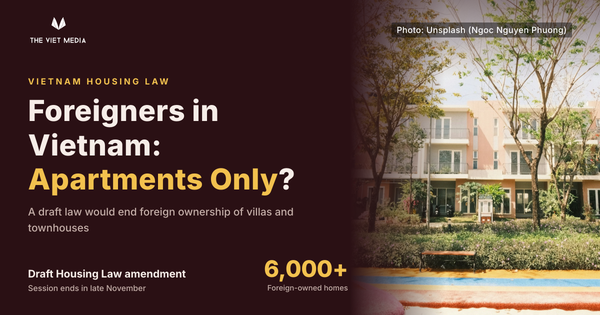
The law opens exactly one category to foreign individuals: housing inside licensed commercial housing projects — both apartments and landed homes such as villas and townhouses. There are only two kinds of sellers: the project developer, or another foreigner who already owns legally. Foreigner-to-foreigner resale is written explicitly into the new Housing Law, which gives owners a way out they didn't always have.
The buyer requirements are loose: you must be lawfully admitted into Vietnam, hold a passport with a valid entry stamp at signing, and not be covered by diplomatic immunity. The law asks only that you were "permitted to enter" — it doesn't specify a visa type or require residency.
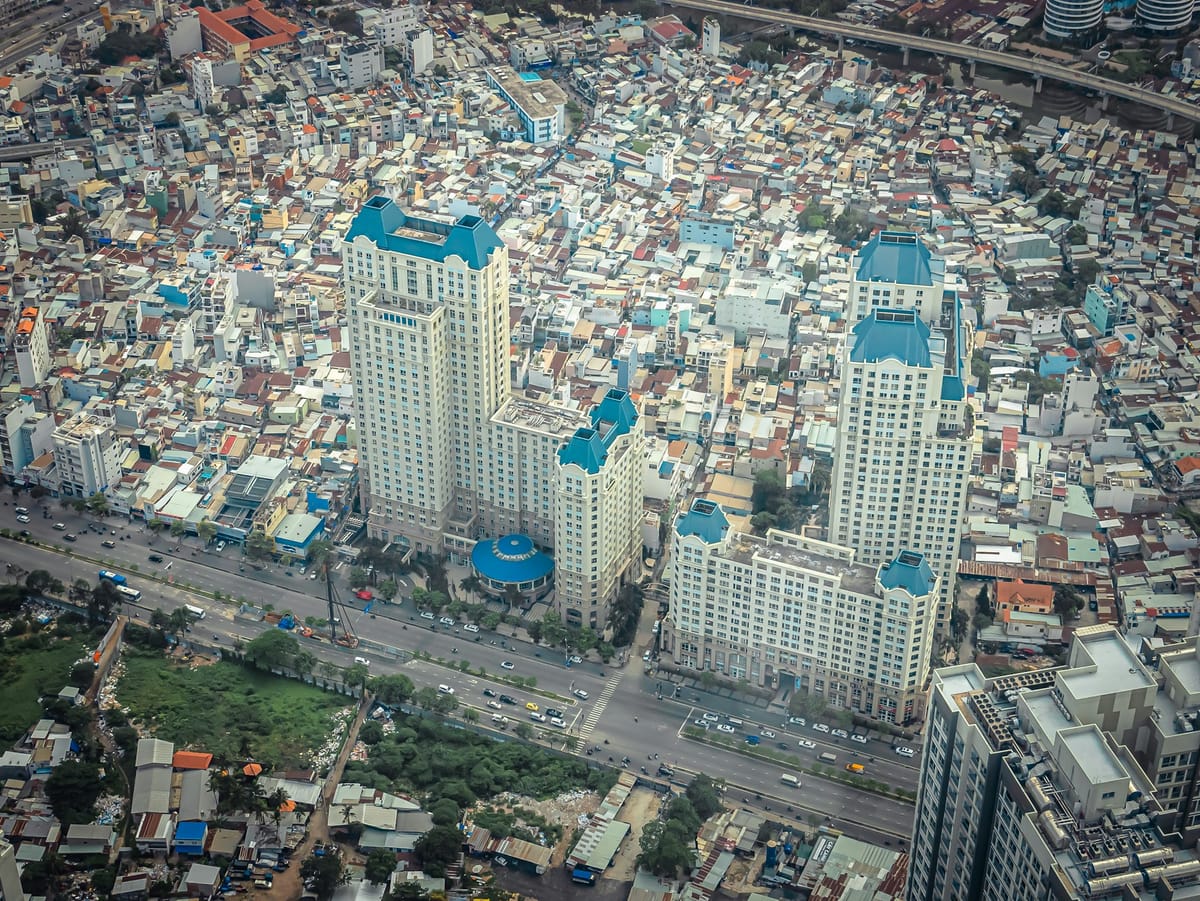
But not every project can sell to foreigners. The defense and public security ministries designate areas deemed sensitive for national security, and projects there are excluded outright. Each provincial People's Committee must publish an official list of projects where foreign ownership is allowed. That list moves fast. Before writing this piece we went through Ho Chi Minh City's announcements batch by batch: the figures still circulating online — 24 projects, then 88 — are all snapshots from earlier rounds. After the ninth batch was announced in July 2026, the running total reached 144 projects. Don't memorize the number; check the provincial government portal before you commit.
03 | What You Can't Buy: Land, Old-Town Houses, Condotels
Lay out the exclusions and you'll notice a lot of what's on the market is untouchable:
➤ Land. Buying a plot to build on — or buying land use rights — is not an option, for the reason above: you're not on the land users list.
➤ Anything outside licensed projects. Shophouses in the old quarters, houses in the alleys, ordinary resale homes owned by locals: all off limits. Foreigners can only transact inside the commercial-project perimeter.
➤ Condotels and officetels. These sit on commercial-service land and don't count as "housing" under current law, so a foreign buyer cannot get an ownership certificate. However glossy the beachfront brochure, the title can never be registered to a foreign buyer.
➤ Projects in security-sensitive areas. The military and police draw those maps and buyers don't see the logic — the provincial list of eligible projects is the only reliable reference.
04 | The Invisible Ceilings
Even inside the legal perimeter, quotas apply. Foreigners collectively may hold at most 30% of the apartments in any single building; in multi-tower developments sharing one podium, each tower gets its own 30% cap. Landed homes are tighter. The counting unit is an area with a planned population of 10,000 — roughly one ward's worth of people, independent of actual administrative boundaries. Within each such area, foreigners may hold no more than 250 landed homes combined, across all projects.
The quota is policed in real time. Before selling to a foreigner, the seller — developer or private owner alike — must check the remaining allowance on the provincial housing authority's portal; within three working days of signing, the sale must be reported, and the portal updates each project's foreign-owned count. When a hot project's foreign quota sells out, your only route in is buying from another foreign owner.
Money comes with hard rules too. Purchase payments must go through banks operating in Vietnam — no private cash settlements. And in practice, mortgages are very hard for foreigners to get; most banks won't lend, and deals are usually done in full cash. Having the funds ready is something to sort out before you ever visit a showroom.
05 | After You Buy: Renting, Selling, Expiry, Inheritance
Holding a pink book doesn't put you on equal footing with locals. Every stage has its own rules.
Renting out is legal, but you must notify the local housing authority in writing first, and rental income is taxable. The regime that took effect in 2026 is generous to small landlords: annual rental income up to VND 1 billion (roughly US$38,000) is exempt from personal income tax and VAT — the threshold was originally set at VND 500 million, but Decree 141, issued in late April 2026, doubled it retroactively to January 1, and tax already paid under the old threshold can be credited or refunded. Above that threshold, personal income tax of 5% applies to the excess only, while the 5% VAT applies to the full rent — the two taxes use different bases, and that asymmetry comes straight from the government's published formula. One caveat: below the threshold you are exempt from tax, not from filing — landlords must still report annual rental revenue and the receiving bank account to the tax authority each year.
Selling offers two paths. Sell to a Vietnamese buyer and the home exits the foreign-ownership framework entirely, reverting to open-ended tenure. Sell to another foreigner and they get the same kind of time-limited ownership — but not your remaining years: the new buyer's term is set by agreement and runs afresh from the date their own certificate is issued, capped at 50 years. Either way, the seller pays a 2% personal income tax on the gross sale price.
Expiry is the part almost nobody thinks about: if the term runs out and you haven't extended, sold, or gifted the home, it becomes state property. That is written plainly into the Housing Law. Separately, anyone deported or expelled from Vietnam loses the right to extend.
Inheritance hits the same ceilings. If an inherited home sits outside a commercial project (a family house in an ordinary neighborhood, say), exceeds the quota, or falls in a restricted area, the heir cannot get a certificate — the only option is to sell or gift it to someone eligible and take the proceeds.
The law does leave one special channel: a foreigner married to a Vietnamese citizen living in Vietnam holds property on the same terms as a citizen, with no 50-year limit. It's a status-based provision — it applies when the marriage is real.
Buying through a company is more restrictive, not less: foreign organizations may only house their own employees in the property, cannot rent it out for profit, and the term follows the company's investment certificate.
06 | The Traps That Catch Foreign Buyers
Three things the statutes won't tell you.
First, the foreigner markup. The same project often sells to foreigners at higher prices than to locals. A Taiwanese-run research site tracking Hanoi, Vietnam Real Estate Investment Network, documented examples a few years back: about 20-30% at Mipec Rubik 360 in Cau Giay, and as much as 30-40% at The Matrix One in Nam Tu Liem. These are the firm's own observations, not official statistics, but the direction is consistent — buyers who don't do their homework are the market's acknowledged source of premium.
Second, the costs beyond the sticker price. Buyers pay roughly 10% VAT, a 2% maintenance fund on apartments, a 0.5% registration fee, plus notary and sundry charges — together more than 10% of the price. Ask upfront whether the developer's quote already includes these items, so the final bill doesn't surprise you at handover.
Third, the 50-year clock is younger than it sounds. Vietnam only fully opened foreign home buying in 2015, so the earliest terms won't start expiring until around 2065 — which is why no property has yet reached the end of its term, as a Century 21 manager noted to Taiwan's United Daily News. The extension procedure is already written into the regulations; just remember to apply at least three months before expiry.
One last warning. Because the restrictions are heavy, some buyers hold property through a Vietnamese spouse or local nominee. Legally, the named holder is the owner, and the property is never in the funder's name. If the relationship breaks down, recovering the money is uncertain — recovering the house is close to impossible.
This article summarizes current regulations based on Vietnam's Housing Law, Land Law, and implementing decrees. It is not legal or investment advice; rules and quotas change, so consult a licensed Vietnamese lawyer before any transaction.
The Viet Media Monthly
A curated monthly digest of the most important political, economic, tech, and industry developments in Vietnam.
Designed for reading on desktop or tablet — no algorithm, no noise. Just the stories that matter.
Delivered before the 10th of each month. Cancel anytime.