Vietnam's New Food Safety Law Lasted Ten Days Before the Government Hit Pause
A sweeping food safety overhaul choked Vietnam's ports within days. The government suspended the rules after 1,800 containers piled up — but a pause isn't a fix.
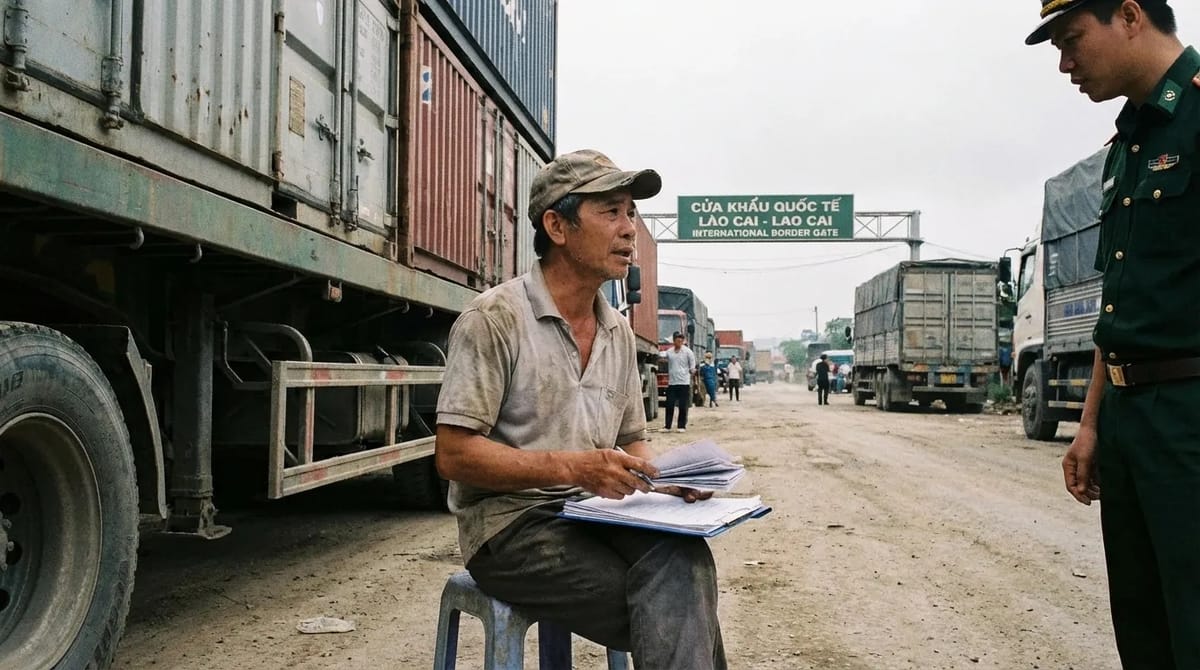
Three containers of American walnuts worth about VND 12.6 billion pulled into Cát Lái port in Ho Chi Minh City in late January. Normally, clearance takes a day or two. This time, customs officers turned the paperwork away. A new food safety law had just kicked in, they said — the old procedures no longer applied. But what the new procedures actually looked like? Nobody could say.
The walnuts sat there for days. They wouldn't spoil, but the contract had deadlines, and penalty charges were ticking.
It wasn't just walnuts. On January 26, Vietnam's Decree 46 (Nghị định 46/2026/NĐ-CP) replaced the eight-year-old Decree 15, overhauling how imported food gets inspected. Ten days later, ports and border crossings across the country were paralyzed.
What Decree 46 Changed — and Why It Broke Everything
The new rules did three big things at once.
They required every single batch of imported food to go through document review, physical inspection, and lab testing — results taking about seven business days. Under the old system, most imports only needed document checks. Industry groups estimated the inspection workload jumped 10 to 20 times overnight.
They pulled food packaging and utensils into the same strict regime for the first time. Previously a self-declaration was enough. Now containers — not just what's inside them — needed formal state clearance.
And they offered no mutual recognition of international certifications. Products with HACCP or ISO 22000 credentials still had to run Vietnam's full gauntlet from scratch.
The real problem: the decree was published on January 26 and took effect on January 26. Zero transition. Customs officers had a new law but no playbook. Unsure what to do, they blocked everything.
Within four days, over 700 shipments totaling roughly 300,000 tons sat stranded at land and sea crossings nationwide. Cát Lái port alone had more than 1,800 containers that couldn't move.
The Government Pulled the Emergency Brake
Credit where it's due: once the scale became clear, the response was fast.
On February 3, Prime Minister Phạm Minh Chính signed an emergency directive to unblock the ports. Two days later, the government issued Resolution 09 (Nghị quyết 09/2026/NQ-CP), formally suspending Decree 46 until April 15 and reverting to the old rules.
Ports sprang back almost immediately. That afternoon, three seafood containers stuck at Cát Lái cleared the same day. The Lào Cai border crossing was fully operational by 4 p.m.
Phạm Khánh Phong Lan, who runs Ho Chi Minh City's Food Safety Management Authority, put the problem simply: "Making certification more complicated doesn't make food safer."
Pausing the Rules Doesn't Fix Them
A February 7 commentary in CafeF was blunt: the decree needs a fundamental rewrite, not just a timeout.
The structural issues run deep. Inspecting every single batch before release — regardless of risk — is a system that can't scale. Without sorting imports by risk level and fast-tracking the low-risk ones, the same gridlock will return the moment Decree 46 is switched back on.
Then there's the international certification gap. Most trading nations accept each other's food safety systems. If Vietnam insists every import start from zero with local certification, costs go up across the board — and consumers pay the price.
And the most basic issue: capacity. There aren't enough inspectors, not enough accredited labs, and no cross-ministry coordination framework. Regulations only work when someone can execute them.
The government gave itself until April 15 to close these gaps. The Ministry of Health, Agriculture and Environment, Industry and Trade, Finance, and local governments all got their marching orders. Whether two months is enough to undo eight years of institutional habits is anyone's guess.
What This Means for Importers
Between now and April 15, it's business as usual under the old Decree 15 rules.
After April 16, Decree 46 is likely coming back — with potentially new inspection procedures, document requirements, and certification standards. The timing made things worse: this gridlock hit during the Lunar New Year import rush, the busiest stretch of the year for food shipments into Vietnam. Some businesses tallied losses in the tens of billions of VND — contract penalties, port storage fees, spoiled perishables.
The advice is straightforward: watch closely for the implementation guidelines Vietnam's government will issue over the next two months, and start preparing extra documentation now. The worst case is that mid-April arrives, the decree comes back, and the details are still missing. That means another jam.