Vietnam Legalizes Crypto — 17 Million Users' Underground Market Goes Above Board
In January 2026, Vietnam's Digital Technology Industry Law took effect, giving crypto assets legal status for the first time. The world's fifth-largest crypto market finally has rules.
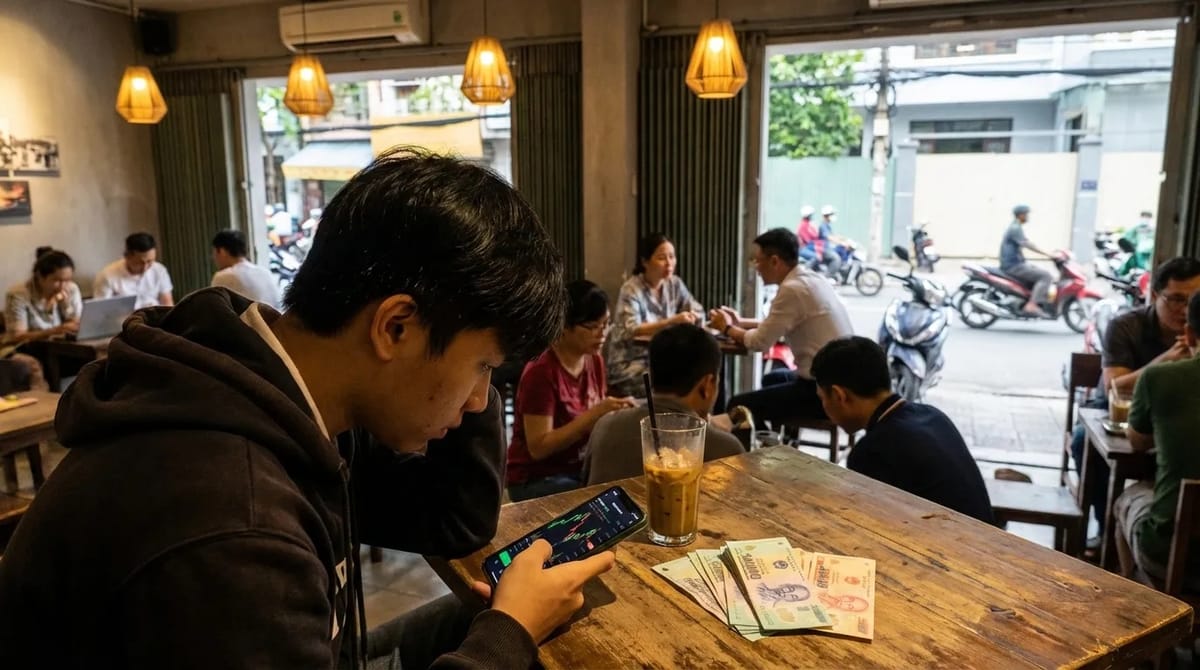
In January, Vietnam's Digital Technology Industry Law took effect. Bitcoin, Ethereum, and other crypto assets now have legal standing.
Sounds like dry regulatory news. It isn't. Behind the law sits a massive underground market — about 17 million Vietnamese hold crypto, over 20% of the population, making Vietnam the world's fifth-largest crypto market. For years, all of these people bought, sold, held, and even inherited cryptocurrency with no legal protection at all.
The rules have finally arrived.
From Gray Zone to Law
Vietnamese have been deep into crypto for a long time. Blockchain analytics firm Chainalysis has consistently ranked Vietnam near the top of its Global Crypto Adoption Index — fifth in 2024, behind India, Nigeria, Indonesia, and the United States.
But legally, crypto sat in a gray zone. The central bank said crypto was not a lawful means of payment. Holding it, though, wasn't a crime. So the market kept running — and when things went wrong, investors had almost no recourse.
In June 2025, the National Assembly voted 441 to 4 to pass the Digital Technology Industry Law, bringing crypto assets into a legal framework. Vietnam became the 46th country to legalize them.
What the Law Actually Says
The new law creates two categories. "Virtual assets" covers digital assets used for exchange or investment — game tokens, loyalty points, and the like. "Crypto assets" refers to assets verified through cryptography, such as Bitcoin and Ethereum.
Neither category includes securities, digital fiat, or central bank digital currencies. Stablecoins and CBDCs are out of scope.
The key change: crypto assets are now classified as property. They can be owned, traded, and inherited under civil law. But they're still not legal tender. You can't pay for coffee with Bitcoin.
Want to Run an Exchange? Bring USD 380 Million
With the legal framework set, the government launched a five-year exchange pilot in September 2025.
The bar is high. Minimum paid-in capital: VND 10 trillion (about USD 380 million). At least 65% must be held by domestic institutions. Foreign ownership capped at 49%. Only five licenses during the pilot. All trades settled in Vietnamese dong.
The message: exchanges stay in domestic hands.
First through the door was Military Bank (MB Bank). In August 2025, the defense-linked bank partnered with South Korea's Dunamu, which runs Upbit — one of the world's top five crypto exchanges. MB Bank handles compliance and clients; Dunamu provides the tech.
Why Now? The FATF Factor
Vietnam's rush to regulate isn't just about a market too big to ignore. There's a more pressing reason: international pressure.
In 2023, the Financial Action Task Force placed Vietnam on its "gray list," flagging serious gaps in anti-money laundering controls. One problem FATF called out: Vietnam's lack of oversight over virtual asset service providers.
Gray-listing has real costs. Foreign banks face stricter due diligence when dealing with Vietnam, raising transaction costs or killing deals entirely. For an economy built on foreign investment, that's a serious hit.
The new law forces crypto businesses to comply with anti-money laundering and counter-terrorism financing rules. Strict licensing and identity verification are designed to prove to FATF that Vietnam can govern this space.
Taxes Are Still Being Figured Out
The law passed. The tax code hasn't caught up.
The Ministry of Finance has floated a 0.1% transfer tax per transaction, matching the current securities tax rate. But that's still a draft.
For long-term holders, basics like cost basis calculations and cross-border tax treatment remain unresolved.
A USD 200 Billion Market
Vietnam's crypto market is big. Between 2024 and 2025, on-chain transaction volume topped USD 200 billion. Several research firms project the market will generate billions in revenue in 2026.
The government is building blockchain infrastructure to match. In 2024, it launched the Vietnam Blockchain and AI Innovation Academy with a target of training one million people. The national blockchain platform NDAChain has 49 validator nodes, co-managed by government agencies and large enterprises, with plans to expand to local governments and universities in 2026.
What Changes Now
Vietnam treats crypto as property, not currency. You can hold it and trade it legally, but you can't use it to pay for things. That's a different path from El Salvador, which made Bitcoin legal tender — then reversed course in early 2025 under IMF pressure.
Vietnam's approach: acknowledge the market exists, keep it inside a regulatory box.
For 17 million Vietnamese crypto holders, the biggest win is legal protection. Before, if you got scammed or your exchange vanished, you were on your own. Now there's a legal basis to fight back.
But new rules mean new constraints. Once the first licensed exchange goes live, users get six months to move assets onto compliant platforms. Anyone used to trading on offshore exchanges will need to adjust.
The real test is next: whether this framework gets Vietnam off the FATF gray list.