After Vietnam's Massive Administrative Merger, Google Maps Is Finally Catching Up
Vietnam shrank from 63 provinces to 34 over half a year ago. Google Maps is finally starting to update place names in mid-February.
Last July, Vietnam completed the largest administrative redistricting in its modern history: 63 provinces and municipalities were consolidated into 34. The county-level tier of government was eliminated entirely, replaced by a streamlined three-tier system of central, provincial, and commune. Nearly half the provinces disappeared overnight. Tens of thousands of civil servants were cut. The speed caught many off guard.
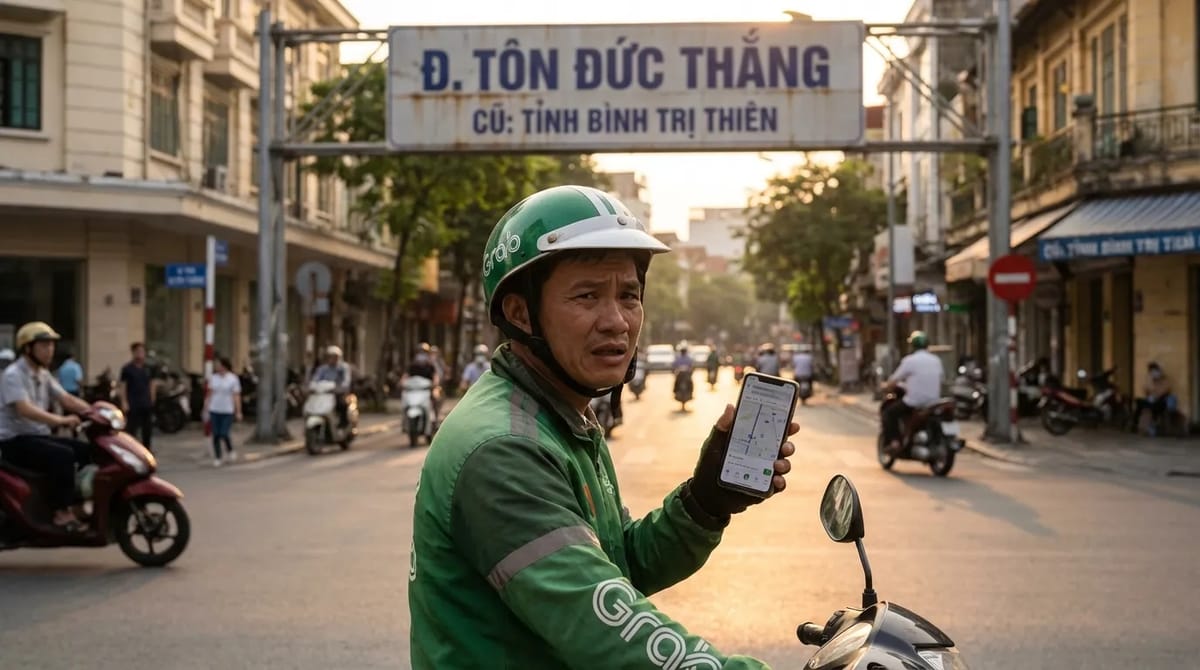
More than six months later, government documents use the new names, highway boundary markers have been swapped out — but open Google Maps, and you're still looking at the old Vietnam.
Why Google Maps Took So Long
According to technical documentation on Google Maps Platform's IssueTracker, Google is targeting mid-February 2026 to begin adjusting Vietnam's address recognition and classification system.
The delay is understandable, if frustrating. The scale of Vietnam's changes was enormous: 34 provincial-level units and over 3,300 commune-level units were renamed or merged. Google Maps is a global platform where every place name is wired into search, navigation, and address autocomplete algorithms. Mapping old names to new ones while ensuring nothing breaks for other countries takes time.
Vietnam's homegrown navigation company Vietmap moved much faster. On July 1 — the day the new system took effect — its Vietmap Live app updated all 34 provinces and 3,300-plus communes, complete with an old-to-new name lookup feature. When you only have one country to worry about, the job is a lot smaller.
Six Months of Address Chaos
It's been a rough half year for people on the ground.
The most immediate impact hit logistics. Delivery drivers and couriers rely on Google Maps for navigation, but the map still showed old names. Customers entered new addresses that the map couldn't find, forcing drivers to call and confirm — adding minutes to every delivery. Some logistics companies (GHN, GHTK, VNPost) didn't update their own systems fast enough either, leading to one- or two-day delays on orders.
E-commerce platforms were caught in the crossfire too. With provincial boundaries shifting, logistics providers had to overhaul their mapping systems, delivery databases, and automated routing algorithms. Address standardization became a major headache.
Then there was the everyday confusion: names on the map didn't match what locals actually called places. Tuoi Tre reported that delivery drivers would see one name on screen while residents used the old name in conversation, requiring multiple rounds of back-and-forth to find the right address.
How the Update Will Roll Out
According to Google Maps Platform IssueTracker (Issue #428879632), the target start date is February 17, 2026, with updates rolling out in four phases.
Google emphasized that this adjustment won't touch geographic positions or administrative boundaries — what's changing is how the system classifies place names internally. Old districts and towns (Quan, Huyen, Thi xa) will be removed from search results. Communes and wards (Xa, Phuong) will be reclassified to a higher tier. These changes will be applied sequentially to the geocoding API, address autocomplete, and street addresses, with full completion expected within weeks. The fourth phase has no set date yet.
For regular users, search results may show a mix of old and new names during the transition, and navigation suggestions may be bumpy. Google notes in its documentation that February 17 is a target date and technical issues could push it back.
Should Businesses Rush to Update Their Addresses?
If you have a company registered in Vietnam, don't panic.
Vietnam's Ministry of Finance issued a notice last April (No. 4370/BTC-DNTN): businesses and sole proprietors can keep using their existing licenses. There's no requirement to update your address just because of the administrative restructuring. Only if you're changing other information on the license do you need to update the address at the same time. Licensing authorities can't force you to reissue just because of the merger.
Old addresses on invoices and contracts are not considered erroneous, per the official guidance. But tax authorities have already updated enterprise addresses in their systems to reflect the new districts, so there may be discrepancies between what's on your registration and what's in the tax system. In the long run, proactively updating is advisable. The process is free and takes three business days through the online portal (dangkykinhdoanh.gov.vn).
What Business Operators in Vietnam Should Watch For
In the short term, a few things to stay on top of: review address clauses in logistics contracts, consider whether warehouse locations and delivery routes need replanning, and make sure employee work permits and residence documents use the new addresses when they come up for renewal.
Longer term, this merger is designed to break down the administrative walls between provinces. Take Ho Chi Minh City as an example: by absorbing Binh Duong and Ba Ria-Vung Tau provinces, factory-to-port logistics can now happen within a single administrative jurisdiction, which should theoretically speed up approvals.
But theory and practice are different things. Whether the new administrative structure actually improves efficiency depends on execution at the local level. Maps can be redrawn. Habits take longer.
Note: Policy details mentioned in this article (such as Notice No. 4370 and the business license exemption) are based on currently available official documents. Implementation may vary by locality. Before processing any related paperwork, confirm the latest requirements with your local authority.