Trung Nguyen Legend (Part 2): A Coffee Superpower's Brand Anxiety, and the 3,000-Store Ambition
Vietnam is the world's largest Robusta producer, with record coffee exports of $8.4 billion in 2025. But that's roughly what Nestlé's coffee business alone pulls in. Trung Nguyên Legend is chasing 3,000 stores worldwide — its latest step landed in Taoyuan, Taiwan.
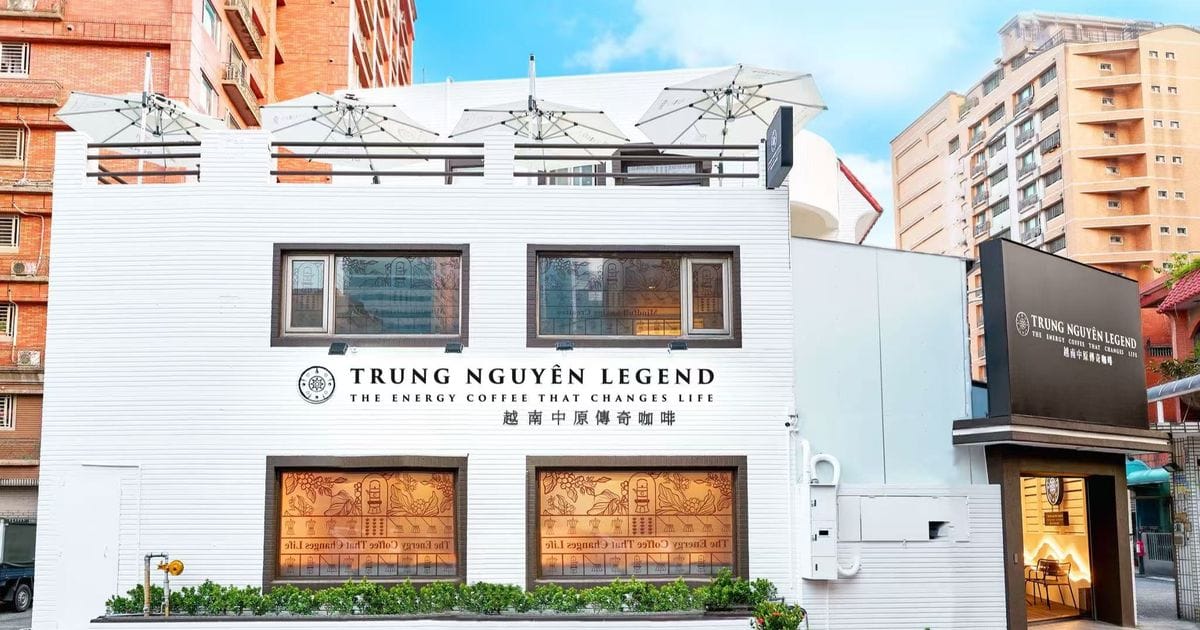
[Trung Nguyen Legend (Part 2): A Coffee Superpower's Brand Anxiety, and the 3,000-Store Ambition]
Part 1 covered Trung Nguyên's origin story and the divorce that nearly tore the group apart.
This one asks a bigger question. Why does the country that grows most of the world's Robusta not have a single world-class coffee brand?
▍ One Country's Exports, One Company's Coffee Line
Vietnam is the world's largest Robusta producer, accounting for more than 40% of global supply. In 2025, coffee exports hit a record $8.4 billion, up more than 60% year-on-year, with export volume exceeding 1.5 million tons. Processed coffee exports crossed the $1 billion mark for the first time the same year.
It is the best year Vietnamese coffee has ever had. And it still looks small next to the global market.
Nespresso — just one capsule brand inside Nestlé — posted CHF 6.5 billion in 2025 sales, roughly $7.2 billion. A single brand, almost equal to Vietnam's entire annual coffee exports.
On one side, a country's worth of farmers and processors working for a year. On the other, one product line inside one Swiss company.
The gap is in branding, in processing, in pricing power. Vietnam ships sacks of green beans. Nestlé sells metal capsules and café experiences.
This is Vietnam's coffee industry's structural anxiety: first in raw material, nowhere in global branding. Trung Nguyên is one of the country's most aggressive bets on closing that gap.
▍ 107 Stores at Home, 3,000 Worldwide
Trung Nguyên clearly gets it.
As of early 2026, its premium arm Trung Nguyên Legend has 107 stores in Vietnam — far behind the 985 stores run by Highlands Coffee. At home, Trung Nguyên isn't the leader. Its real battlefield is abroad.
In the United States, it has 10 stores (5 Legend and 5 E-Coffee), aiming for 100. In China, it runs about 27, targeting 130.
E-Coffee is Trung Nguyên's low-cost franchise model. It has signed more than 1,000 franchise contracts and is opening up to 30 new stores a month.
The ultimate goal: 3,000 cafés worldwide, spanning Australia, Canada, India, Japan, South Korea, Dubai, and France.
In March 2025, Trung Nguyên opened its fifth factory in Buôn Ma Thuột with a 2 trillion VND investment, pitched as Asia's largest coffee production base.
Going from 107 stores at home to 3,000 worldwide is a huge leap. But the company clearly isn't planning to take its time.
▍ Taoyuan Art District, the Latest Step
Taiwan is the most recent piece of that global plan.
On April 2, 2026, Trung Nguyên Legend opened its first Taiwan store in the Taoyuan Art District. Four floors, close to 260 square meters.
Taiwan has about 300,000 residents of Vietnamese origin, and Taoyuan is one of the densest areas for Southeast Asian migrant workers and immigrant spouses. Trung Nguyên products have been on Taiwanese supermarket and convenience store shelves since 2012, but this is the first time the company has put a branded storefront in front of Taiwanese consumers directly.
The menu goes beyond coffee. For the first time at an overseas store, it serves Vietnamese phở and bánh mì — selling a full Vietnamese eating experience, not just a drink.
At the opening, Trung Nguyên Group vice president Huỳnh Vang Cẩm Tú, Greater China general manager Lý Thanh Hải, and Phan Kiều Chung of the Vietnam Economic and Cultural Office in Taipei all attended. The company plans to open at least four more stores in Taiwan, including in downtown Taipei.
The Taoyuan store, on its own, isn't a big news story.
But it is an industry signal. Vietnamese coffee is going abroad not just in bags, but with branding, interior design, and a bowl of phở on the table.
Whether Trung Nguyên succeeds matters for a bigger question — whether Vietnamese coffee can stop being the world's biggest raw material supplier, and become a brand that global consumers actually recognize.