Trung Nguyen Legend (Part 1): From Highland Med Student to the Man Who Beat Nestlé
In 2003, a blind taste test at Reunification Palace handed Vietnam's upstart G7 instant coffee an 89-to-11 win over Nescafé. How founder Đặng Lê Nguyên Vũ went from a farmer's son in the Central Highlands to Vietnam's coffee king — and then nearly lost it all in a seven-year divorce.
[Trung Nguyen Legend (Part 1): From Highland Med Student to the Man Who Beat Nestlé]
November 23, 2003. Reunification Palace, Ho Chi Minh City.
An instant coffee blind tasting is underway. In front of each participant sit two cups — one is Nescafé, then the global market leader, the other is a new product from a little-known Vietnamese brand.
No labels. Just taste.
The nameless cup is called G7. It comes from a seven-year-old Vietnamese company called Trung Nguyên.
▍ The Highland Med Student
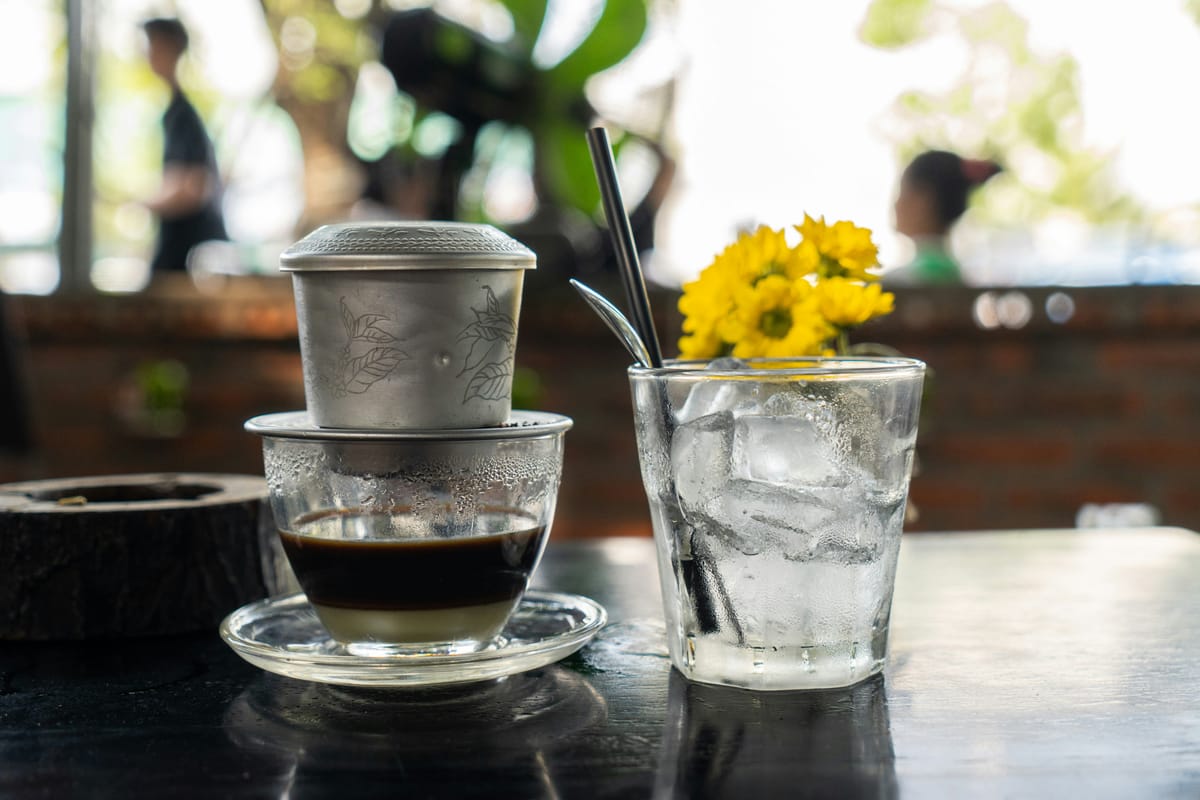
The story starts in the coffee capital of Vietnam.
Buôn Ma Thuột, the capital of Đắk Lắk province, is the biggest city in Vietnam's Central Highlands. At about 500 meters above sea level, with volcanic red soil and heavy rainfall, it is Robusta heaven. Vietnam became the world's largest Robusta producer because of this plateau.
Đặng Lê Nguyên Vũ was born in 1971 into a farming family in Khánh Hòa province. When he was eight, the family moved to Đắk Lắk.
In 1990, he enrolled at Tây Nguyên University to study medicine. At the time, medical school was the safest ladder up for a poor kid.
But he spent his college years surrounded by coffee farms, pulled into the world of growing, roasting, and processing beans. Medicine slowly dropped out of the picture.
In 1996, at 25, Vũ founded Trung Nguyên in Buôn Ma Thuột, buying beans from local farmers and roasting and packing them himself.
Two years later, he teamed up with his future wife, Lê Hoàng Diệp Thảo, and opened the first café in Ho Chi Minh City's Phú Nhuận district.
What followed was fast. Trung Nguyên rolled out a franchise model, and within a few years its cafés were in every major Vietnamese city. By the early 2000s, it was the country's best-known coffee brand. Forbes Asia and National Geographic would later call Vũ "Vietnam's Coffee King."
But running cafés was never the endgame.
▍ The Blind Test at Reunification Palace
In 2003, Vietnam's instant coffee market looked simple. Nestlé's Nescafé was the foreign heavyweight. Vinacafé, the state-owned veteran, held the rest. Nobody thought a local brand could take them head-on.
Vũ launched G7 instant coffee at Reunification Palace, the site where Saigon fell in 1975. The venue was deliberate — he wanted a Vietnamese brand fighting Nestlé on Vietnamese ground.
The result landed hard. 89 to 11, G7 over Nescafé. The test got recycled endlessly in Vietnamese business circles as a David-and-Goliath story.
G7's playbook was economic nationalism. Vietnam was about to join the WTO, patriotic consumption was rising, and G7 positioned itself as "coffee for Vietnamese." The price was right, the taste fit local palates, and it took market share fast.
Nielsen data at the time showed G7 briefly capturing 38% of Vietnam's instant coffee market, ahead of both Nescafé and Vinacafé.
G7 also became Trung Nguyên's passport to the world. The instant coffee now exports to more than 60 countries.
That blind test at Reunification Palace set the brand's playbook for the next two decades.
▍ Cracks in the Coffee Kingdom
Then the inside of the company started to fall apart.
In 2015, the founding couple's marriage ended. Thảo filed for divorce at the Ho Chi Minh City court.
This wasn't a private matter. Vũ and Thảo jointly owned the shares of the Trung Nguyên group — divorce meant redistributing control of the entire business.
Ten rounds of mediation failed. A first-instance ruling granted the divorce in 2019, setting off a long fight over assets.
The combined estate was valued at nearly 8 trillion VND (7,900 tỷ đồng). The final split gave Vũ roughly 4.7 trillion, Thảo roughly 3.2 trillion.
The real story was in how the split was structured. Vũ took 100% of the shares across the Trung Nguyên group, worth about 5.7 trillion VND, then paid Thảo the difference — roughly 1.3 trillion VND — in cash.
Trung Nguyên, as a company, stayed entirely in his hands.
In 2022, the Supreme People's Court rejected a petition to reopen the case. Seven years after it started, the thousand-billion-đồng divorce was finally closed.
Thảo didn't stop. In 2016 she launched TNI King Coffee, taking two decades of coffee industry experience and starting over. The brand now reaches more than 120 countries and territories.
A couple who once built Trung Nguyên from zero to Vietnam's number one brand, now running separate armies.
Part 2 looks at Trung Nguyên Legend's Taiwan debut, its 3,000-store global ambition, and why Vietnam's coffee industry is quietly anxious about all of it.