Saigon or Ho Chi Minh City? Both Are Correct, but They're Not Quite the Same
The airport code is SGN, the official name is Ho Chi Minh City, and locals just say Sài Gòn. In 2025, this "unofficial" name finally became an administrative place name again.
[Saigon or Ho Chi Minh City? Both Are Correct, but They're Not Quite the Same]
▍ SGN
Fly to Vietnam's largest city and the destination code on your boarding pass reads SGN.
SGN stands for Saigon. The city was renamed Ho Chi Minh City back in 1976, but the IATA airport code never changed. Tan Son Nhat International Airport has kept it for over fifty years.
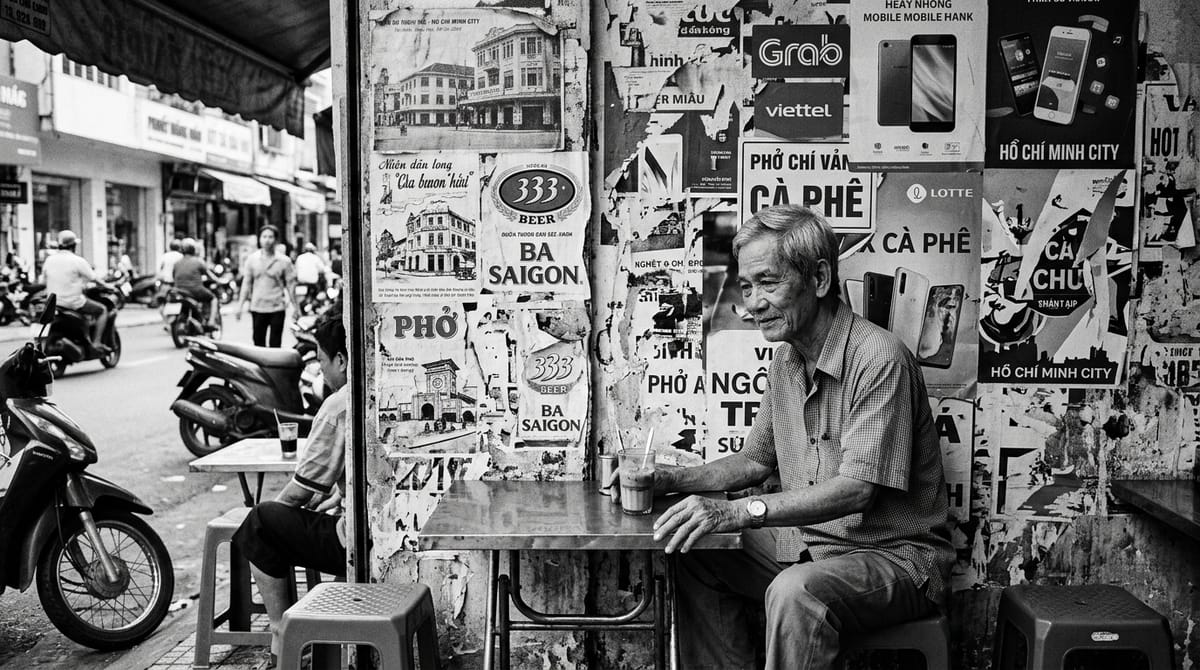
The airport is SGN. The river is the Saigon River. The train station is Ga Sài Gòn. The beer is Bia Saigon. The supermarket chain is Saigon Co.op. Ask locals where they live, and some will say "Sài Gòn," others "HCM." It depends on habit.
▍ The Forest City
The name Sài Gòn is older than the Vietnamese presence here.
This land once belonged to the Khmer Empire, where it was called Prey Nokor. In Khmer, Prey means forest and Nokor comes from Sanskrit, meaning city. Together: "the forest city."
In 1623, a Khmer king allowed Vietnamese settlers fleeing a civil war in the north to move into the area. They adapted Prey Nokor into their own sounds: Prey became Rai, then Sài. Nokor shortened to Kor, then Gòn. That's how "Sài Gòn" grew out of Khmer.
Early Saigon was small, just the core of what is now District 1. The Chinese commercial district next door was a separate city called Chợ Lớn. The larger administrative area encompassing both was Gia Định.
After the French seized the city in 1859, they Romanized the name as Saïgon and made it the capital of French Cochinchina. In 1931, they merged Saigon and Chợ Lớn into a single administrative zone. From then until 1975, "Saigon" grew from a name for a small city center into shorthand for the entire metropolis, and the capital of South Vietnam.
▍ The Name Disappeared. The Habit Didn't.
After reunification in 1975, the National Assembly voted on July 2, 1976 to rename the city Ho Chi Minh City, after the leader of Vietnam's independence movement.
Saigon was no longer the city's official name. But on the streets, it never stopped being used.
In formal settings, Vietnamese write "TP. Hồ Chí Minh," abbreviated as TP.HCM. In text messages, they type SG or HCM, depending on their mood. In casual conversation, they just say Sài Gòn because it rolls off the tongue.
Which name people use has something to do with their background. Southerners tend to say Sài Gòn naturally, and some rarely use the official name at all. Northerners who moved south are more likely to say Ho Chi Minh City. Among the overseas Vietnamese diaspora, many insist on Saigon only. For them, the name carries a deeper emotional bond. Younger generations care less about these distinctions and use both, depending on context.
In daily life, people rarely clash over the name. But it's not entirely neutral either. The name someone chooses quietly reveals where they grew up and what they remember.
Saigon never left the commercial world, either. Bia Saigon is one of Vietnam's oldest beer brands. Saigon Co.op is the country's largest retailer. The Saigon River, Saigon Port, and Saigon Railway Station all kept their names.
▍ 2025: Saigon Returns to the Map
On July 1, 2025, Vietnam launched its biggest administrative overhaul in nearly a century.
Ho Chi Minh City absorbed the neighboring provinces of Binh Duong and Ba Ria-Vung Tau. Its area tripled from about 2,100 to nearly 6,800 square kilometers. Its population jumped from 9.9 million to over 14 million. The old district system was scrapped, and the city was reorganized into 168 wards and communes.
As part of this reform, the former District 1 was split into four wards: Tân Định, Sài Gòn, Bến Thành, and Cầu Ông Lãnh.
The new Saigon ward covers the entire former Bến Nghé ward plus parts of Nguyễn Thái Bình and Đa Kao. Notre-Dame Cathedral, the Central Post Office, and Independence Palace all sit within its boundaries. This is the city's most iconic stretch of real estate.
Nearly fifty years after the renaming, "Saigon" is back on Vietnam's administrative map. It went from being the name of an entire city to the name of a 3-square-kilometer ward. Same name, different weight.
Chợ Lớn, the city's historic Chinatown, also got its name back in the same reform. For decades, the area had been identified only by numbered ward designations on official maps.
▍ Two Names, One City
Ho Chi Minh City is the name on government documents, international treaties, and official maps. Saigon is the name on street corners, late-night food stalls, and social media check-ins.
Vietnamese people use both and switch between them without feeling any contradiction.
If you're visiting or working in Vietnam, either name works. No one will correct you. In formal business or government settings, "Ho Chi Minh City" is the safer choice. The rest of the time, just say Saigon.
After all, even the airport is still called SGN.
The Viet Media Monthly
A curated monthly digest of the most important political, economic, tech, and industry developments in Vietnam.
Designed for reading on desktop or tablet — no algorithm, no noise. Just the stories that matter.
Delivered before the 10th of each month. Cancel anytime.