Peter Cường Franklin: Refugee, Banker, Michelin-Starred Chef
He was airlifted out of Saigon at 12, went to Yale, spent 15 years in investment banking. Then he quit, went to culinary school, and opened a Michelin-starred restaurant in a wet market.
A Helicopter Out of Saigon
In the last days of April 1975, twelve-year-old Peter Cường was loaded onto a U.S. military helicopter and flown out of Vietnam.
He grew up in Đà Lạt, a highland city where his mother ran a noodle stall selling mì Quảng and chả lụa. The neighbors called her the best cook on the street. After that helicopter ride, he didn't see or hear from her for twenty years.
An American Navy family took him in. He rebuilt his life in the United States — Yale, then Morgan Stanley's investment banking division. Roughly fifteen years in New York, London, and Hong Kong. On paper, everything worked. By his own telling, none of it made him happy.
"Like most Asian kids, the family expected doctor, lawyer, or finance. I picked finance."
Twenty Years, Then a Reunion
In 1995, a childhood friend tracked down Peter's birth mother. She was still in Vietnam. He went back for the first time in two decades.
He called the reunion "overwhelming." The connection hadn't broken. "To my mom, I'm always a kid. Every visit, she insists on feeding me."
That trip also unlocked something he'd been carrying since childhood: the memory of watching his mother cook. "I never forgot her food. She was my real culinary education."
Fine Dining in a Wet Market
Peter quit banking. He enrolled at Le Cordon Bleu in Paris, earning dual diplomas in cuisine and pastry. Then he staged at some of the world's best kitchens — Alinea in Chicago, Nahm in Bangkok, Caprice in Hong Kong.
He opened two Vietnamese restaurants in Hong Kong: Viet Kitchen and Chôm Chôm. When Chôm Chôm launched, a customer asked why Vietnamese food cost this much and came in such small portions. The reaction taught Peter something he already suspected. "Vietnamese food is famous for being cheap and delicious. Nobody sees it as fine dining."
In 2017, he moved to Ho Chi Minh City and opened Ănăn Saigon — "eat eat" in Vietnamese — inside the old market (Chợ Cũ) in District 1. Not a glossy shopping district. A narrow tube house: market vendors on the ground floor, a rooftop cocktail bar called Nhau Nhau, dining rooms in between. A graffiti wall at the entrance says it plainly — fine dining, no jacket required.
His signature is deconstructing street food: foie gras spring rolls, caviar shrimp crackers, truffle wagyu phở bites. Over 90% of the ingredients are Vietnamese. Only butter and milk come from abroad. When Michelin published its first Vietnam guide in 2023, Ănăn earned one star. It also made the Asia's 50 Best Restaurants list.
Twelve Ways to Eat Phở
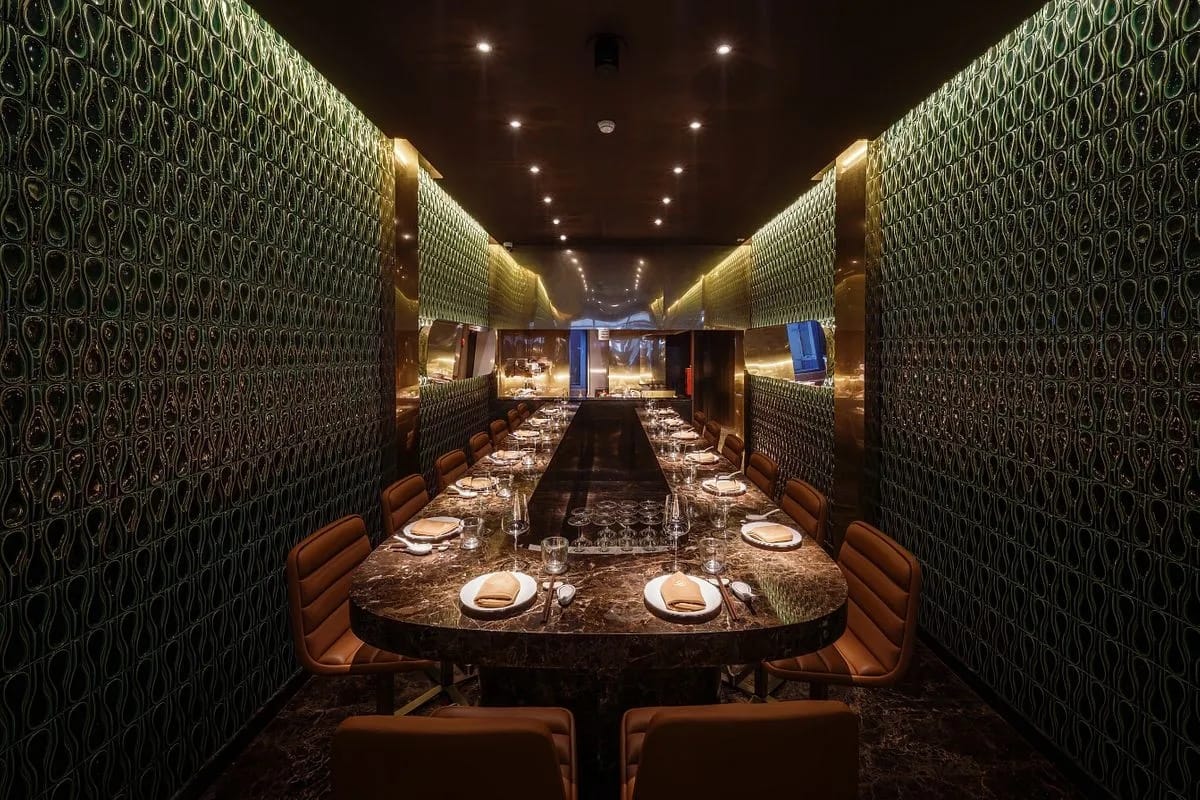
In late 2025, Peter opened Pot Au Phở 2.0 next door. The name smashes together French pot-au-feu and Vietnamese phở. Fourteen seats around an open kitchen, omakase-style. Twelve courses, two hours, VND 3.5 million per person (about USD 134), drinks extra.
He takes a single bowl of phở and stretches it into twelve forms. Caviar onsen egg phở. Molecular phở. Angus beef tartare phở. A tasting flight of three regional styles. The centerpiece — "Le Pot Au Phở" — pairs wagyu and foie gras under French puff pastry, a nod to Paul Bocuse's legendary truffle soup. The broth uses consommé technique: crystal clear, but every spice note of traditional phở is intact.
"I used to just want to make a great bowl of phở. Now I want to pull it apart and see what else it can be." He tried phở-flavored ice cream too. Scrapped it. "The line between savory and sweet is too thin."
Rice and Morning Glory
Peter lives full-time in Ho Chi Minh City now. He visits his mother in Đà Lạt regularly. Above the restaurant, he runs an R&D lab focused on fermentation — trying to apply sake-brewing logic to Vietnamese rice wine. He also sits on the board of Streets International, which trains disadvantaged Vietnamese youth for careers in hospitality.
A magazine reporter once asked what he eats most often. His answer: "Rice with morning glory. Those two things remind me who I am and where I came from."
Fifty years ago, a twelve-year-old boy was helicoptered out of Saigon. Fifty years later, he found his way home through a bowl of phở.