Ho Chi Minh City's First State-Led Venture Fund: Nine Conglomerates at One Table, Manager Liability Waiver in the Rules
HCMC's first state-initiated venture fund, HCM VIF JSC, launched April 17. Charter capital is VND 500 billion (about USD 20 million), with the city at 40% and nine private conglomerates at 60%. The enabling decision includes a 50% risk threshold and a manager liability waiver.
[Ho Chi Minh City's First State-Led Venture Fund: Nine Conglomerates at One Table, Manager Liability Waiver in the Rules]
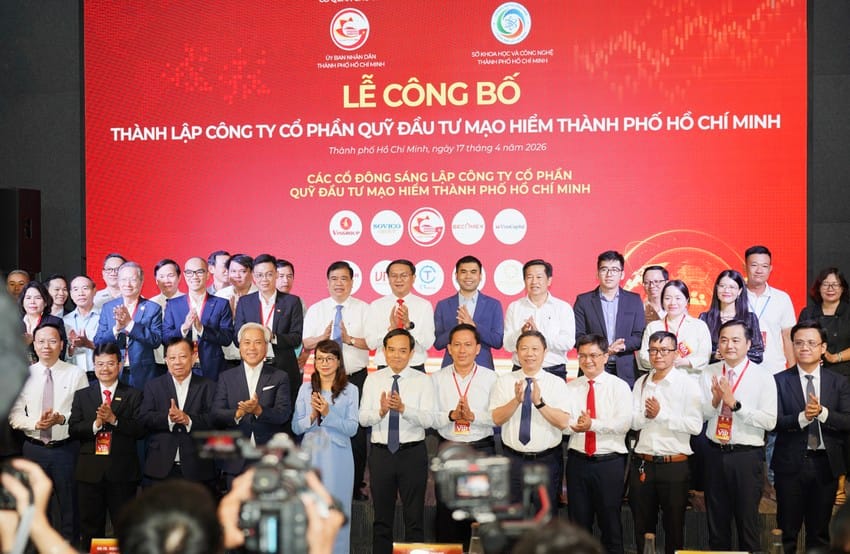
On April 17, 2026, Ho Chi Minh City launched a new venture capital fund at its SIHUB startup hub. The official name is HCM VIF JSC. City Party Committee Secretary Trần Lưu Quang hosted the ceremony. Nine of Vietnam's largest conglomerates sent representatives.
Charter capital is VND 500 billion, or roughly USD 20 million. By Southeast Asian VC standards, that's small — it wouldn't cover a single Series B round. The scale of the launch, the mix of conglomerates at the table, and the regulatory design behind it are more interesting than the dollar figure.
▍ Who Put In the Money
The funding structure is straightforward. The city government provides 40% (VND 200 billion). Nine private conglomerates split the other 60%.
Individual contributions vary widely:
➤ Sovico (finance and aviation): VND 100 billion
➤ Vingroup (property, automotive, tech): VND 60 billion
➤ Becamex (industrial park development): VND 50 billion
➤ VinaCapital (asset management) and Sunwah (Hong Kong conglomerate): VND 25 billion each
➤ VNG (internet and gaming), FPT (IT), CT Group (real estate), Hoa Sen (steel): VND 10 billion each
The list covers Vietnam's main business groups. The order of contributions doesn't track VC experience. Sovico and Vingroup put in the most, while VinaCapital — the only shareholder with real VC operating experience — only contributed VND 25 billion (around USD 1 million). VinaCapital's role is providing the fund manager: Hoàng Đức Trung, a partner at VinaCapital Ventures.
▍ The Policy Context: Resolution 57-NQ/TW
In December 2024, Vietnam's central leadership issued Resolution 57-NQ/TW, designating science, technology, innovation, and digital transformation as national breakthrough priorities. 2026 was labeled the "Year of Action," with a target of raising science-and-tech contribution to GDP to 16.4%. HCMC's fund launch lands in the middle of the central policy push.
▍ What USD 20 Million Buys in Vietnam's VC Market
Context helps here.
➤ Vietnam's VC market in 2024: USD 2.3 billion across 141 deals
➤ In 2025: USD 215 million across 41 deals (30% below the 2021 peak)
➤ This fund, USD 20 million, is about 9% of the 2025 full-year market
For a fund targeting Series A and B rounds, USD 20 million runs out after 3 to 5 deals. Against private VCs operating in Vietnam, it's also small: Golden Gate Ventures manages USD 300 million and puts about a third into Vietnam; VinaCapital's in-house Ventures arm manages USD 100 million.
The fund's 10-year targets are ambitious. Invest in 50 to 150 startups. Nurture at least five companies that can list publicly or engage in international M&A. Grow to VND 5 trillion (about USD 200 million) by 2035, with private capital making up over 60%.
Do the math on the upper bound: splitting VND 500 billion across 150 startups averages VND 3.3 billion (around USD 130,000) each. That's angel-round territory, not Series A or B. Closing the gap between target and current capital will take a decade of private capital expansion.
▍ The Real Design: 50% Risk Threshold + Manager Liability Waiver
If the dollar figure isn't the story, what is? The answer sits in the enabling document, Decision 1267, approved in March 2026. Two clauses stand out from standard Vietnamese state capital practice:
➤ A 50% risk threshold: state capital is allowed to lose up to 50% within a single investment cycle
➤ A liability waiver: fund managers are not personally liable for investment losses, provided decisions follow transparent procedures
In past Vietnamese state enterprise practice, public capital losses typically triggered accountability proceedings, which narrowed the room for high-risk investment decisions. Venture capital is high-failure-rate by nature. Without an explicit loss threshold and a manager liability waiver, government capital struggles to enter the market. Writing these two clauses into the enabling document is uncommon in provincial-government-led Vietnamese funds.
HCMC Vice Chairman Nguyễn Mạnh Cường called it a "breakthrough solution" and a "historic step in implementing major central directives." Department of Science and Technology director Lâm Đình Thắng framed the fund as planting "seedlings for future Vietnamese tech unicorns going global."
▍ What to Watch Next
A few things worth tracking:
➤ Whether Decision 1267's 50% risk threshold and manager liability waiver get copied by Hanoi, Da Nang, Hai Phong, or other local governments
➤ Whether the 10-year target (50–150 startups, 5 IPO/M&A-ready companies) can realistically match current capital scale
➤ How the management team's deal selection logic plays out once the first investments are announced
➤ The first exit performance window in 2028–2030