Gogoro Bets on Vietnam: A New Overseas Hand After the Reset
From building its own ecosystem to going asset-light. From expanding into multiple markets at once to focusing on just one. Behind Gogoro's Vietnam push is a 2028 deadline to break even on its vehicle business.
[Gogoro Bets on Vietnam: A New Overseas Hand After the Reset]
▍ What happened in the last 18 months
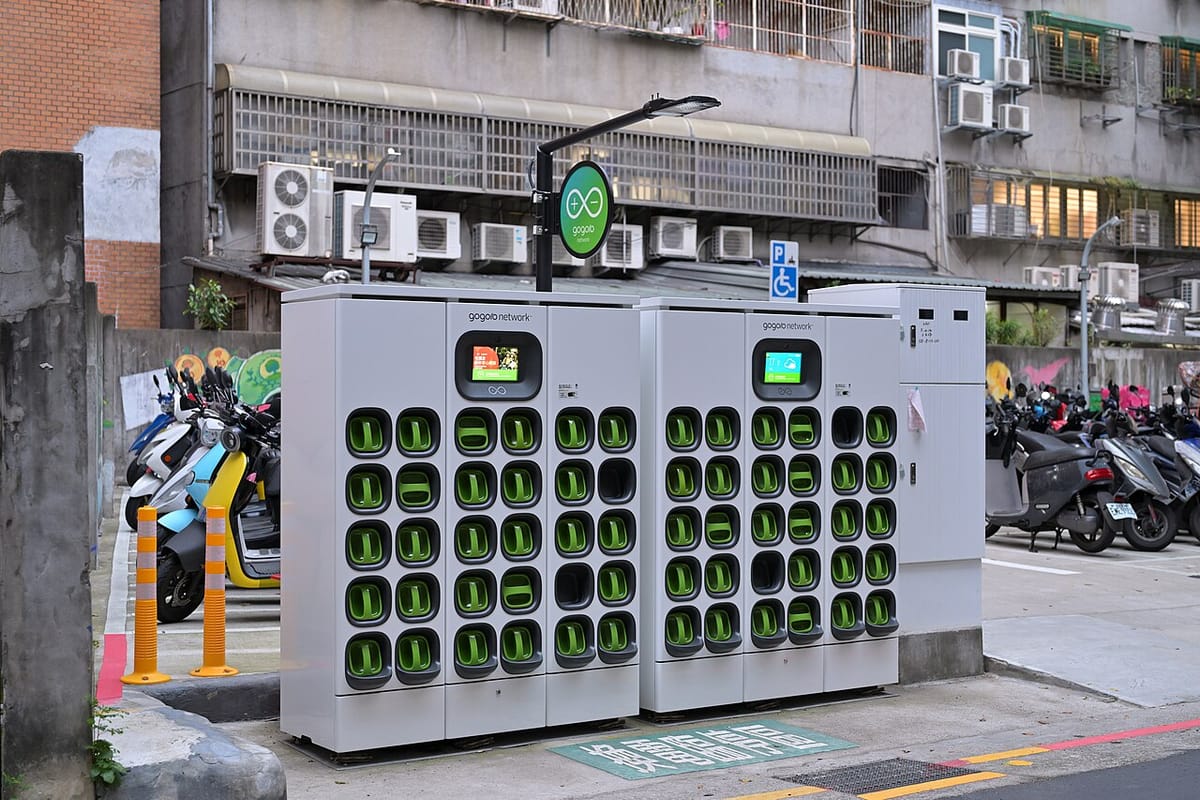
Gogoro and British lubricant giant Castrol have formed a joint venture called Castrol Gogoro Mobility. The plan: launch a commercial fleet pilot with 24 battery swap stations in Ho Chi Minh City in Q2 2026, then roll out a Vietnam-specific consumer scooter in Q4.
That timeline only makes sense against the backdrop of Gogoro's last 18 months.
In September 2024, the Nasdaq-listed Taiwanese company disclosed supply chain irregularities to investors. Some of its scooter models had used imported components in violation of Taiwan's domestic content rules for EV purchase subsidies. Founder and then-CEO Horace Luke resigned from all positions. US law firm Schall Law Firm launched an investor class action probe, which remains unresolved.
Then in October 2025, Luke failed to repay a roughly NT$150 million (USD 4.7 million) stock-pledged loan from Mega Bank and went silent. His guarantor, Ruentex Group chairman Samuel Yin, covered the full amount and filed lawsuits in both Taipei and New York in January 2026 to recover the debt. That cross-border legal battle is still ongoing.
The numbers in Taiwan told their own story. Full-year electric scooter sales in 2025 dropped about 37% to roughly 49,000 units. Gogoro sold around 28,000 of those, good for under 4% of the total motorcycle market. At its lowest point, its monthly share fell to 1.8%, putting it behind Suzuki at fifth place overall.
▍ Ruentex steps in
Ruentex became the largest shareholder after Luke's departure and led a NT$2.5 billion (about USD 78 million) capital injection in September 2025. The same month, Henry Chiang, who had been serving as interim CEO since February, was officially appointed to the role.
The turnaround numbers were decent. Gogoro's 2025 annual report, released in February 2026, showed a net loss of USD 80.8 million — down 34% from USD 123 million the prior year. Operating cash flow doubled to USD 31.1 million. Adjusted EBITDA hit a record USD 59.9 million. Chiang called 2025 "a pivotal year of focus and restructuring."
▍ Why Vietnam
Gogoro used to have much bigger overseas ambitions — building entire supply chains abroad, trying to replicate its Taiwan model from scratch. That approach is now officially over.
"We do not have to be all-around," Chiang told reporters at a Taipei media event in February 2025, as reported by the Taipei Times. The company is now making "a strategic shift to concentrate its resources on one overseas market at a time."
Vietnam was picked for concrete reasons. The country sold 3.4 million motorcycles in 2025, up nearly 15%, making it Southeast Asia's second-largest two-wheeler market. Its electric scooter segment is projected to grow at over 11% CAGR through 2030. Hanoi will restrict gasoline-powered motorcycles in its city center starting July 2026, with a full electrification mandate by 2030 — the clearest policy push in the region. And Castrol, which has operated in Vietnam for decades, brings ready-made distribution and local expertise.
Multiple industry analysts see 2026 as a turning point for Vietnam's electric motorcycle market, as green transport policies begin to directly affect end users.
▍ The joint venture: Castrol takes the wheel
The division of labor is clear. Gogoro handles vehicle design, core technology, and batteries. Castrol handles sales, distribution, local operations, and — according to the Taipei Times — "major business decisions and operation of the joint venture." CleanTechnica analyst Raymond Tribdino called this an "asset-light strategy."
The rollout timeline reflects that caution. Q2 is just a commercial fleet pilot with 24 swap stations. The consumer scooter won't launch until Q4. A next-generation compact swap station, GoStation Q, won't arrive in Vietnam until 2027. Gogoro COO Bruce Yin told Taiwan's Central News Agency the Vietnam approach is about "going from one to ten" — pilot first, validate, then scale.
▍ The 2028 line
Gogoro has laid out a financial roadmap: break even on its energy business in 2026, generate free cash flow in 2027, and reach non-IFRS break-even on its vehicle business by 2028. CFO Bruce Aitken formally reaffirmed these targets to investors in the Q2 2025 earnings release.
As of year-end 2025, Gogoro's accumulated deficit stood at USD 629 million. Cash on hand was down to USD 70.6 million. The 2028 target is not aspirational — it is existential. And Vietnam is now the key variable.
▍ VinFast moves first
Gogoro won't enter the Vietnam market unopposed. Local players include Pega, Selex, Dat Bike, and Nuen Moto. Chinese brands Yadea and Dibao compete on price. Yamaha, Honda, and BMW occupy the high end. But the biggest threat is homegrown champion VinFast.
In January 2026, CleanTechnica's Tribdino described VinFast's simultaneous launch of four new electric scooter models as "a coordinated escalation designed to lock in domestic market dominance before foreign platforms — most notably Gogoro — can achieve meaningful scale."
The entry-level Evo Lite starts at about USD 695 without batteries. Monthly battery swap subscriptions cost around USD 7. VinFast began deliveries in February 2026 and announced it had already installed 4,500 battery swap stations nationwide. Gogoro's pilot phase calls for 24.
Gogoro's consumer scooter won't hit the market until Q4 — ten months after VinFast's first deliveries.
▍ How much time does Gogoro have
Gogoro has gone from trying to build an overseas ecosystem to licensing its technology through a local partner. The role is fundamentally different now.
The 2028 break-even line is drawn. Cash stands at USD 70.6 million against USD 629 million in accumulated losses. The market's response to its Q4 Vietnam launch will be the first real test of whether this asset-light model can work.
The Viet Media Monthly
A curated monthly digest of the most important political, economic, tech, and industry developments in Vietnam.
Designed for reading on desktop or tablet — no algorithm, no noise. Just the stories that matter.
Delivered before the 10th of each month. Cancel anytime.