Dragon Five's Vietnamese Origins: A Movie Character Rooted in Real History
The real history behind Dragon Five's Vietnamese identity — from Chợ Lớn's Chinese community to the boat people crisis that shaped Hong Kong in the 1980s.
[Dragon Five's Vietnamese Origins: A Movie Character Rooted in Real History]
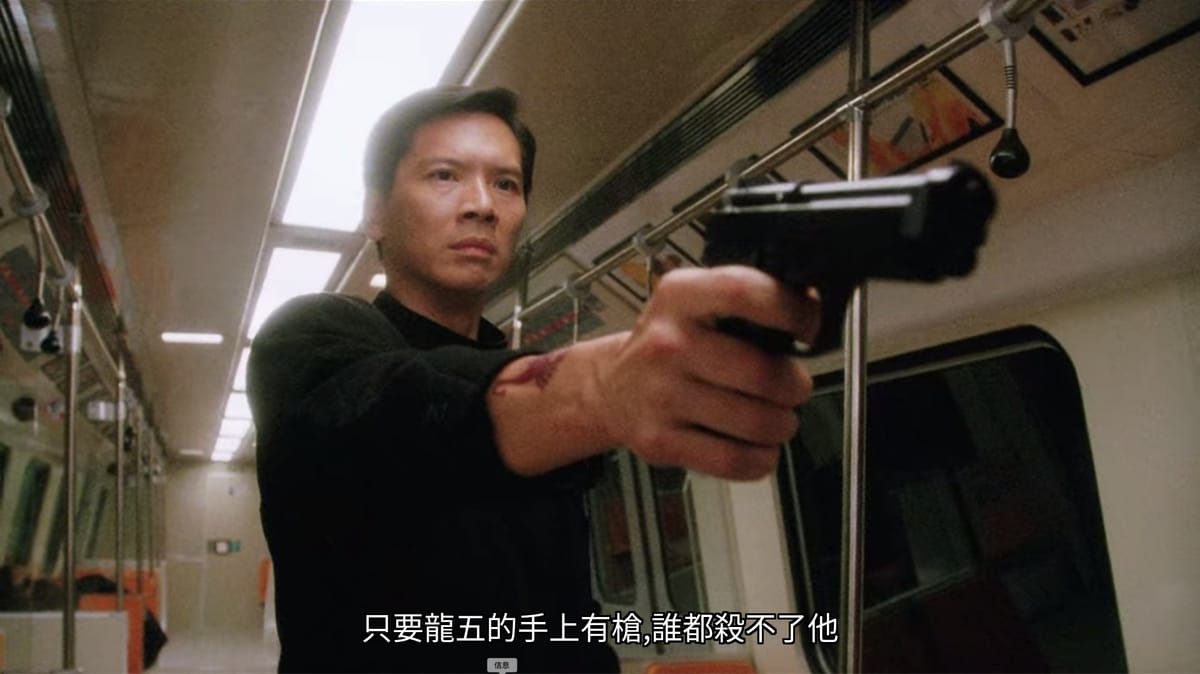
"As long as Dragon Five has a gun in his hands, no one can kill him."
That line became a meme across the Chinese-speaking internet. But few people ever stopped to ask a more basic question: why is Dragon Five Vietnamese?
In the 1989 Hong Kong hit God of Gamblers, director Wong Jing cast Charles Heung as "Dragon Five" — a stone-faced bodyguard with almost no dialogue. The character barely speaks, never smiles, and radiates quiet menace. He became an instant icon.
His backstory: a Vietnamese Chinese man who served as a captain in the South Vietnamese special forces under President Nguyễn Văn Thiệu. After the fall of Saigon, he ended up in Hong Kong, protecting the legendary gambler Ko Chun.
Wong Jing didn't pick that background at random. For Hong Kong audiences in 1989, "Vietnamese" meant something very specific.
▍ Chợ Lớn: The "Little Hong Kong"
To understand Dragon Five, you need to know about Chợ Lớn.
Chợ Lớn sits in what is now District 5 and District 6 of Ho Chi Minh City. It was one of the largest Chinese settlements in Southeast Asia. The community was mostly Cantonese, with Teochew as the second-largest group. Cantonese was the common language. During the South Vietnamese era, the area was so prosperous it earned the nickname "Little Hong Kong."
Chinese people had been in Vietnam for centuries. In 1778, a group of Chinese settlers fled south from Biên Hòa to escape a civil war and settled in what became Chợ Lớn. Under French colonial rule, ethnic Chinese dominated the rice trade and commercial life. Through the South Vietnamese period, Chợ Lớn remained one of the wealthiest districts in the country.
Dragon Five's character — a Vietnamese Chinese man who speaks Cantonese and has a military background — fits this real historical context perfectly.
▍ 1978: The Year Everything Changed
On April 30, 1975, North Vietnamese forces entered Saigon. The South Vietnamese government collapsed. President Nguyễn Văn Thiệu had resigned nine days earlier and fled — first to Taiwan, then to the UK, and finally to the United States.
In Dragon Five's fictional backstory, he was one of the South Vietnamese soldiers Thiệu left behind.
After reunification, the new government's economic policies hit the Chinese community hard. Relations between Vietnam and China deteriorated rapidly, leading to a brief border war in February 1979. Large numbers of ethnic Chinese began leaving Vietnam — some overland into China, but many more by sea.
▍ The Boat People: Hundreds of Thousands Lost at Sea
Between 1975 and 1995, around 800,000 people fled Vietnam on makeshift boats. They became known as the Vietnamese boat people. The second wave, peaking in 1978, was predominantly ethnic Chinese.
The UNHCR estimates that between 200,000 and 400,000 boat people died at sea. They faced pirates, storms, overcrowded vessels, and countries that refused to let them land.
Many of those who survived made it to Hong Kong.
▍ Hong Kong: Port of First Asylum
The first Vietnamese refugee boat arrived in Hong Kong in 1975. In 1979, Hong Kong became an official "port of first asylum" for Vietnamese refugees.
Over the next 25 years, more than 200,000 Vietnamese refugees passed through the city. At peak capacity, Hong Kong operated multiple camps simultaneously — Whitehead, Shek Kong, Chi Ma Wan, and others. For Hong Kongers who lived through that era, these camp names were more real than any movie set.
In 1994, a riot broke out at the Whitehead detention center. Police fired hundreds of tear gas canisters. In 2000, the last camp — Pillar Point in Tuen Mun — finally closed.
A 25-year chapter in Hong Kong's history came to an end.
▍ So Why Is Dragon Five Vietnamese?
Back to the original question.
When God of Gamblers premiered in 1989, Hong Kong's refugee camps were still operating. Pillar Point wouldn't close for another 11 years. "Vietnamese" wasn't an abstract concept for Hong Kong audiences — it was something they saw on the news every day.
By making Dragon Five a Vietnamese Chinese former special forces officer, Wong Jing solved several storytelling problems at once.
His military background explained his combat skills. His wartime past explained why he never talks — he's someone who survived a battlefield. His Chinese heritage explained why he speaks Cantonese and can navigate Hong Kong's underworld. And his refugee status gave the character a layer of tragedy — he didn't choose to come to Hong Kong. History threw him there.
For audiences in 1989, none of this needed explaining. They could see it with their own eyes.
▍ Those Who Stayed Behind
Beyond the movies, the real story continued.
In 1975, Vietnam's ethnic Chinese population exceeded one million. By 1989 — the year Dragon Five first appeared on screen — that number had dropped sharply.
According to Vietnam's census, around 750,000 ethnic Chinese (người Hoa) remain today. Once the country's second-largest ethnic group, they are now the ninth. Most still live in District 5 and District 6 of Ho Chi Minh City — the old Chợ Lớn.
Walk through District 5 today and you'll still see Chinese signboards, clan halls, and Cantonese tea houses. The Tuệ Thành Assembly Hall (Thien Hau Temple) and the Nghĩa An Assembly Hall (Quan Đế Temple) stand as reminders of a community that has been here for centuries.
But compared to its heyday, Chợ Lớn is much quieter now. Those who left are scattered across Hong Kong, Taiwan, Australia, the US, and France. Some built new lives. Some never went back.
▍ One Character, One History
Dragon Five is probably the most iconic "Vietnamese" character in Chinese-language cinema. Charles Heung delivered an unforgettable performance with the fewest possible lines.
But Dragon Five became a classic not just because of Heung's screen presence or Wong Jing's script. It's because behind the character stands an entire era — the rise and fall of Chợ Lớn, the collapse of Saigon, the boat people drifting at sea, the barbed wire of Hong Kong's refugee camps.
Next time you see that meme line — "As long as Dragon Five has a gun, no one can kill him" — maybe look past the joke. There's another story behind it.
The Viet Media Monthly
A curated monthly digest of the most important political, economic, tech, and industry developments in Vietnam.
Designed for reading on desktop or tablet — no algorithm, no noise. Just the stories that matter.
Delivered before the 10th of each month. Cancel anytime.