Why Is Vietnam So Obsessed With Pickleball? From a Few Hundred Players to an Industry in Two Years

In mid-2023, all of Ho Chi Minh City had a few hundred pickleball players. Two years later Vietnam has a national federation, nearly VND 1 trillion in 10-month equipment sales online, and the Pickleball World Cup opening in Da Nang on August 30 — here is why the sport took off.

Why Is Vietnam So Obsessed With Pickleball? From a Few Hundred Players to an Industry in Two Years

[Why Is Vietnam So Obsessed With Pickleball? From a Few Hundred Players to an Industry in Two Years]

On August 30, the Pickleball World Cup opens in Da Nang. Around 5,000 players from 81 countries and territories will compete through September 6 — the first time the event has left the Americas. Now rewind to mid-2023. All of Ho Chi Minh City had a few hundred pickleball players and exactly two court clusters, one in District 1 and one in Thủ Đức. When a tennis coach predicted the sport would become Vietnam's next national pastime, the professional sports community pushed back hard. Just over two years later, pickleball has a national federation, a slot in the National Sports Games, and a professional tour that has staged three Vietnam stops in under a year. Why the World Cup picked Vietnam is one question. The better one is why Vietnamese players took to the sport this fast.

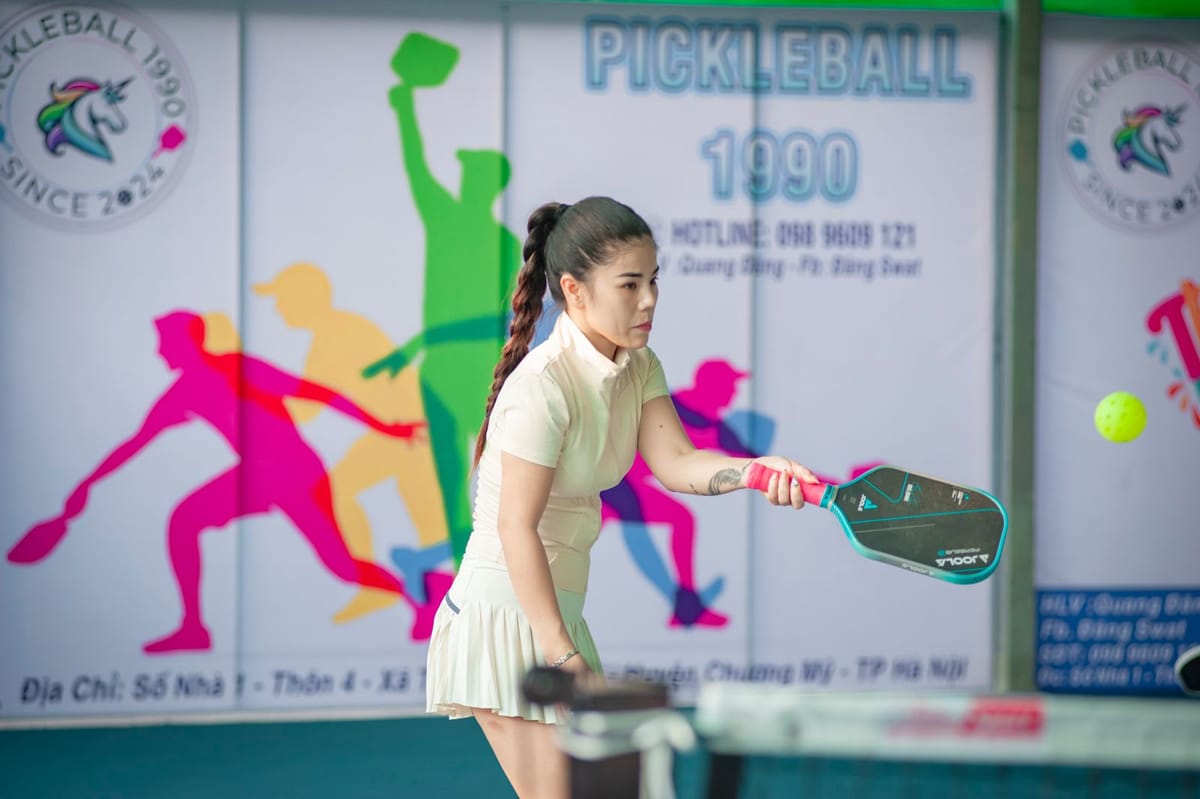
A quick primer for anyone who has not seen it. Pickleball blends tennis, badminton and table tennis: a badminton-sized court, a slightly lower net, a solid paddle and a perforated plastic ball. It was invented in the US in 1965, reached Vietnam around 2018, took root in Ho Chi Minh City, and exploded in early 2024.

The clearest measure of the craze is e-commerce. According to data platform Metric, Vietnamese shoppers bought VND 988 billion (about USD 37.9 million) worth of pickleball gear on e-commerce platforms in the first 10 months of 2025, several times the figure a year earlier. Paddles alone accounted for 1.4 million units. Nobody keeps an official count of courts. One Ho Chi Minh City coach estimates the city has about 1,000 court clusters; in Hanoi, a single ward can hold dozens of courts, with hourly rates running from VND 120,000 to 500,000. Tournaments have outgrown the supply of referees. A Hanoi referee says 500 people signed up for her certification class in October 2024. She and her colleagues later formed a refereeing team that now officiates five or six events a week, from amateur meets to corporate tournaments with over a thousand players. She has never seen a sport generate this many competitions.

How many people actually play? The most-quoted number comes from an Asia-wide survey that pickleball promoter UPA Asia commissioned from YouGov: Vietnam scored the highest pickleball awareness of the 12 territories surveyed, and the study put the number of people playing at least once a month at more than 16 million. That figure is heavily disputed. It was produced by taking the share of players in an online panel of roughly 1,000 respondents and multiplying it across the whole population — a method critics call indefensible, on top of likely sampling bias. A safer statement is "several million." For reference, the US took five years to go from just over three million players to nearly 20 million. Vietnam has no comparable participation data, but it went from a few hundred players to a national federation and a National Sports Games event in a little over two years.

Why did it spread so fast? Start with the money, because court owners moved first. One Ho Chi Minh City operator laid out the arithmetic: a single tennis court converts into four pickleball courts and can generate two to three times the revenue. Existing venues followed — even public sports facilities in central Ho Chi Minh City repurposed badminton and tennis courts. In Hanoi, one investor leased several thousand square meters of factory space and rebuilt it as a complex of more than a dozen courts, complete with parking, food service and a physiotherapy room.

Supply is only half the story. Coaches and industry watchers are specific about why demand kept pace: a beginner needs about 30 minutes to learn to serve and keep score, which delivers an instant sense of progress. The entry barrier is close to zero — teenagers can play against adults, parents against their children, and strangers can fill out a doubles game. In the UPA survey, the top reasons people play are fun, health, ease of learning and making new friends. For many players, the game is a social event first. Another group switched over from other racket sports: nearly 30 percent of Asian pickleball players previously played tennis, badminton, table tennis or squash. The most visible example is Lý Hoàng Nam, formerly Vietnam's top-ranked tennis player, who won his first international pickleball title late last year, was named Vietnam's male pickleball player of the year, and is on Vietnam's World Cup roster.

Scarce courts plus a social scene created a new middleman business. With prime-time slots hard to book, "social hosts" emerged: they block-book the best hours at downtown courts on long-term deals, then resell them in smaller slots to the player communities they run — earning a margin and matching players of similar skill levels.

At this scale, institutions and capital followed. Da Nang set up the country's first city-level pickleball federation in March last year. The Ministry of Culture, Sports and Tourism added pickleball to the National Sports Games, to be held in Ho Chi Minh City this November, with five gold medals at stake. In July, the Vietnam Pickleball Federation was founded in Hanoi, with a stated ambition of making Vietnam one of Asia's strongest pickleball nations by 2035. On the professional side, the US-based PPA Tour Asia has staged three Vietnam stops in under a year, including April's Hanoi event — the first time professional pickleball had come to the capital. Local operator D-Joy built a 52-court complex in Ho Chi Minh City that it calls Asia's largest. And the master plan for Vingroup's Hung Vuong international sports complex, unveiled in mid-August, includes a tennis-pickleball-padel park of roughly 300 courts, due for completion in August next year.

Seen against that curve, the World Cup is just one more data point. The event held its first trial edition in Peru in 2023 and stayed in the Americas until now; the 2025 edition in Florida drew just over 3,000 players, while Da Nang announced around 5,000 players and 81 countries and territories at its draw — bigger again. The organizers are the Da Nang Pickleball Federation, a private events company and streaming platform FPT Play, with Heineken Vietnam as title sponsor. City officials are blunt about the goal: Da Nang wants not just athletes but their families, fans, businesses, brands and media, and aims to become an international pickleball destination. The former national tennis coach who first promoted the sport locally started with a group of four players; it now counts 500, and he estimates the city has some 10,000 regular players. Play runs from August 30 to September 6.

📢 A quick word from our sponsor

Heading to Vietnam and dreading the SIM card counter at the airport? I use Saily eSIM instead — buy it online before you fly, scan the QR code in the app, and your data connects automatically the moment you land.

Saily also lets you switch your virtual location in the app — traffic routes through a NordVPN server, so it works much like a VPN, though it doesn't encrypt data on the device — and it blocks malicious sites, ads, and trackers. Vietnam plans start at US$3.99 for 1GB/7 days, with 3GB/30 days at US$7.99 and 10GB/30 days at US$17.99. Unlimited plans are available too.

👉 Get your Saily eSIM → and use code Special10 for an extra 10% off

` })