Vietnam's 2027 Minimum Wage Hike: The Real Cost Isn't the Base Pay
Vietnam's National Wage Council has signed off on a 7.8% average minimum wage increase for 2027. For firms already paying above the legal floor, the real cost isn't base pay — it's the social insurance pegged to the minimum wage. Here's where costs actually rise, and how companies respond.
Vietnam's National Wage Council wrapped up its second round of talks on July 16 and approved a proposal to raise the regional minimum wage by an average of 7.8%, effective January 1, 2027. The plan still needs a formal government decree (a Nghị định) before it becomes law, but the council signed off unanimously.
In cash terms, Region I — the highest band, covering the urban cores of Ho Chi Minh City and Hanoi — sees its monthly floor rise from VND 5.31 million to VND 5.7 million. The other three bands step down from there, each gaining a few hundred thousand dong a month.
By recent standards, 7.8% is on the higher end. The last few rounds ran 6%, 6%, and 7.2% — so the size of the increase has been climbing.
The figure is a compromise between labor and business. Going into the talks, the Vietnam General Confederation of Labour, representing workers, had floated two options at 9.8% and 8.5%. The Vietnam Chamber of Commerce and Industry (VCCI), representing employers, argued for around 5% and wanted the change pushed to July 2027 to give companies an extra six months to prepare. They landed at 7.8%, effective at the start of the year. VCCI's deputy chairman accepted the outcome but still worried about whether companies could absorb it.
For many firms with factories in Vietnam, the first reaction might be: "I already pay above the minimum, so this doesn't touch me." That's only half right. The other half is this — even if a factory's average pay is high, as long as it still has a batch of entry-level jobs sitting close to the legal floor, the increase reaches you through them.
Here's why. In Vietnam, the minimum wage is not just a pay floor. It's also the anchor for a company's salary scale, and the legal floor for the contribution base of social insurance, health insurance, and unemployment insurance — no one can be enrolled below the local minimum wage. On the employer side, those mandatory contributions add up to 21.5% of a worker's insured salary. When the minimum wage goes up, the contribution base for anyone paid near that floor is forced up with it — and the whole bundle of payments rises too. So the real increase often isn't the base pay on paper; it's the social insurance costs that climb alongside it.
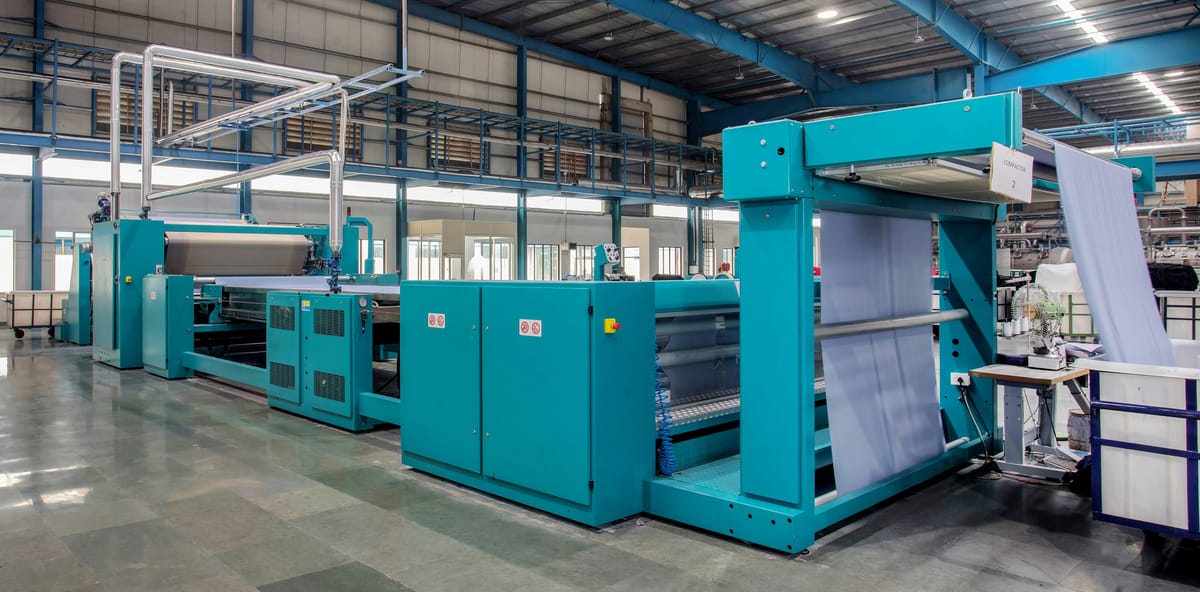
That means the pressure isn't spread evenly — it concentrates in specific industries. Textiles, footwear, and seafood processing, which are labor-heavy and employ large numbers of workers near the floor, feel it most directly. On the flip side, a factory that already pays well above the minimum barely notices. Taiwanese beverage-packaging maker Hong Chuan, for instance, estimated that because most of its Vietnam workers already earn above the minimum and its automation ratio is high, this round's impact on total wages would be under 0.45%. How hard the hit lands comes down to a factory's pay structure.
Facing labor costs that rise every year, local and foreign companies in Vietnam respond in roughly three ways.
The first is to pass the cost into pricing. Footwear contractor Chung Jye-KY runs four plants in Vietnam with tens of thousands of workers, and it raises per-shoe prices each year to pass costs on to brand clients. But brands don't accept every increase; they decide how much to absorb based on the shoe model, order volume, and sales. Footwear giant Pou Chen, which employs more than 100,000 people in Vietnam, took a similar cost-markup approach in an earlier wage round, negotiating with brands the same way it would over a rise in raw material prices. Whether the pass-through works, in the end, depends on bargaining power.
The second is to invest in automation and lift output per worker. At Da Nan, a raincoat and garment maker whose Vietnam plant spends about 70% of costs on labor, the choice in an earlier wage round was to speed up automation to cut headcount. That's also the common direction among local firms: rather than hiring broadly, invest in machinery and process redesign, reshuffle shifts, and trim redundant positions so each worker produces more. For labor-intensive industries, automation isn't only about saving money — as wages keep climbing, not automating gets harder to sustain.
The third response is less a choice than an unavoidable variable: a labor shortage. Vietnamese manufacturing has expanded so fast that skilled workers are in short supply, and foreign firms have started poaching from one another. A recent survey by the Japan External Trade Organization (JETRO) found that nearly half of Japanese companies in Vietnam reported that hiring had gotten harder, with Chinese firms expanding in Vietnam among the competitors for talent. Wage costs are rising, and companies also have to sweeten conditions to keep people. Both cost money.
It helps to put a single year's wage hike back in the context of where Vietnam sits in its development. Even after years of increases, labor costs in Vietnamese manufacturing still run at roughly half of China's. The cost advantage is still there; it's just narrowing.
The number that matters isn't how many percentage points wages rose in any one year — it's the long-run trend. Annual increases of 6% to 8% mean labor costs are on a predictable upward path. For companies operating in Vietnam, the question is shifting from "can we survive this round" to "should we move our production lines and pay structure up a level."
This article is a summary of regulations and public information. The 2027 regional figures are subject to the government's official decree; for actual hiring terms and cost estimates, please refer to the latest regulations and professional advisers.