Vietnam's Airlines Face Flight Cuts From April as China, Thailand Ban Jet Fuel Exports
China and Thailand ban jet fuel exports amid Middle East crisis. Vietnam's airlines brace for April flight cuts.
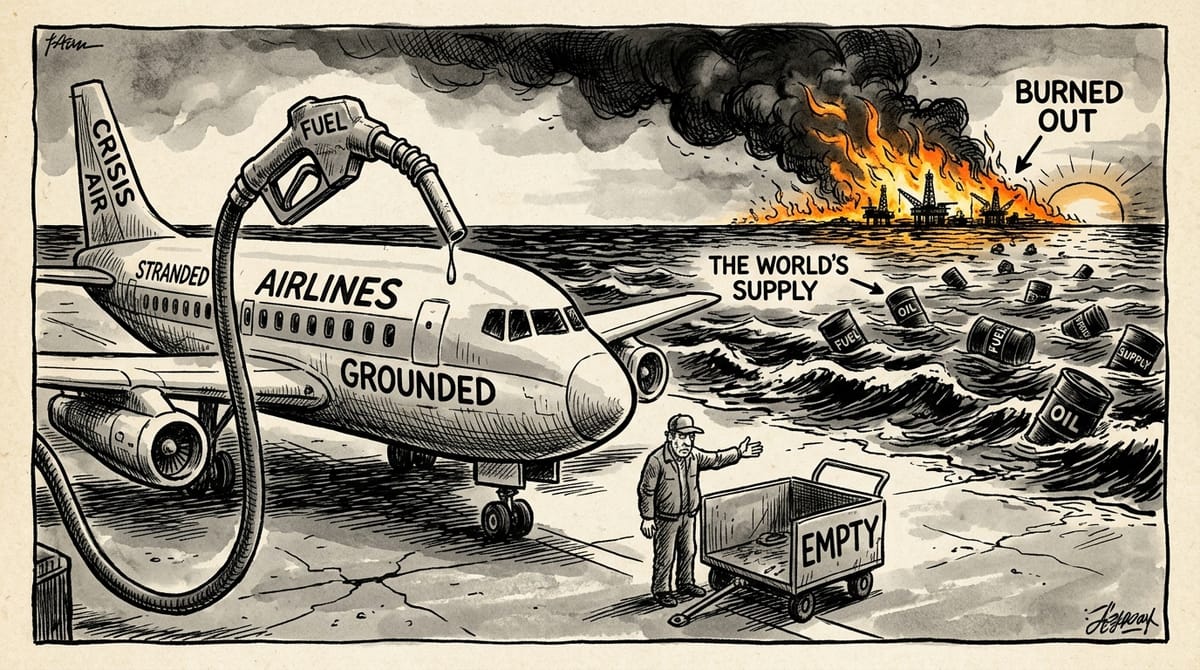
The Middle East conflict has shut down the Strait of Hormuz, sent oil prices soaring, and now Vietnam's aviation industry is bracing for a fuel supply crisis. Flight cuts could begin as early as April.
Jet Fuel Prices Triple in Days
After the U.S. and Israel launched military strikes on Iran in late February, Iran's Revolutionary Guard blocked the Strait of Hormuz. Roughly 20% of the world's oil and natural gas shipments pass through that waterway.
Jet A-1 fuel on the Singapore market jumped from USD 83–89 per barrel in January and February to USD 231 in early March, a 160% spike in just a few days. Fuel accounts for 30 to 40% of an airline's operating costs.
China and Thailand Cut Off Vietnam's Biggest Supply Lines
Vietnam imports more than two-thirds of its jet fuel, with 60% of that coming from China and Thailand. Both countries have now halted fuel exports because of the Middle East crisis.
Vietnam's two main fuel importers, Petrolimex and Skypec, told regulators they can only guarantee supply through March. April contracts may not be honored. Suppliers in Singapore, Thailand, and China are delaying deliveries, and some may invoke force majeure clauses to walk away from deals entirely.
On March 9, the Civil Aviation Authority of Vietnam (CAAV) issued a formal warning: "There are risks of jet fuel shortages for Vietnamese airlines from the beginning of April."
Domestic Refineries Can't Fill the Gap
Vietnam has two refineries, Dung Quat and Nghi Son, which together cover roughly half the country's fuel demand. But their jet fuel output is limited, and both are already running above designed capacity.
Domestic output falls far short of replacing lost imports.
Vietnam's fuel reserves don't offer much cushion either. Commercial and strategic reserves combined amount to about 30 days of supply. The actual national strategic reserve covers just 7 days. The prime minister has ordered a study on raising reserves to 90 days of imports, but that won't help in the short term.
How Much Are Airlines Losing
Vietnam Airlines estimates that if fuel stays around USD 230 per barrel, its losses could reach VND 30 trillion for the full year. Vietjet Air says its fuel costs are rising by roughly VND 2 trillion per month.
Beyond the price shock, Middle East airspace closures have forced route changes. Vietnam Airlines' Europe-bound flights used to pass near Iranian airspace. Now they must detour through Central Asia or South Asia, stretching flight times from 10 hours to over 12 and burning more fuel along the way.
Middle Eastern carriers have also pulled back from Vietnam. Emirates has repeatedly suspended its Dubai–Ho Chi Minh City service, and Qatar Airways has been canceling Hanoi and HCMC flights to Doha. Since late February, dozens of Middle East-bound flights across Vietnam's airports have been scrapped, leaving thousands of passengers stranded.
What the Government Is Doing
CAAV has told airlines to review their schedules, with domestic routes getting the closest scrutiny. Airports have been asked to prepare extra parking space in case aircraft are grounded due to fuel shortages. Skypec has even suggested restricting air transport to essential domestic routes if the conflict drags on.
On the pricing side, CAAV has proposed allowing a fuel surcharge on domestic tickets (currently not permitted), along with tax relief on jet fuel and fee cuts similar to those during COVID-19.
The regulator also recommended sourcing fuel from South Korea, Japan, Brunei, and India, but acknowledged that "in the current context, it is difficult to find new suppliers."
What Comes Next
March fuel supplies appear secure, but April is the real test.
If the Middle East conflict continues, the Strait of Hormuz remains blocked, and China and Thailand keep their export bans in place, Vietnam's airlines face widespread flight cuts and possible route suspensions. Domestic routes would be hit first, but international services won't be spared.
For travelers, higher ticket prices are all but certain in the near term, and there will be fewer flights to choose from. Anyone planning to fly in or out of Vietnam should confirm flight schedules early and build in extra flexibility.