Vietnam's First Year Without Presumptive Tax: Most Small Shops Owe Nothing, But Now They Have to Keep Books
Vietnam scrapped its decades-old presumptive tax this year. Tax officers used to estimate your revenue and collect a fixed sum; now you declare what you actually earned. The tax-free threshold rose to VND1 billion at the same time, so most small shops owe nothing — what got heavier is the paperwork.
[Vietnam's First Year Without Presumptive Tax: Most Small Shops Owe Nothing, But Now They Have to Keep Books]
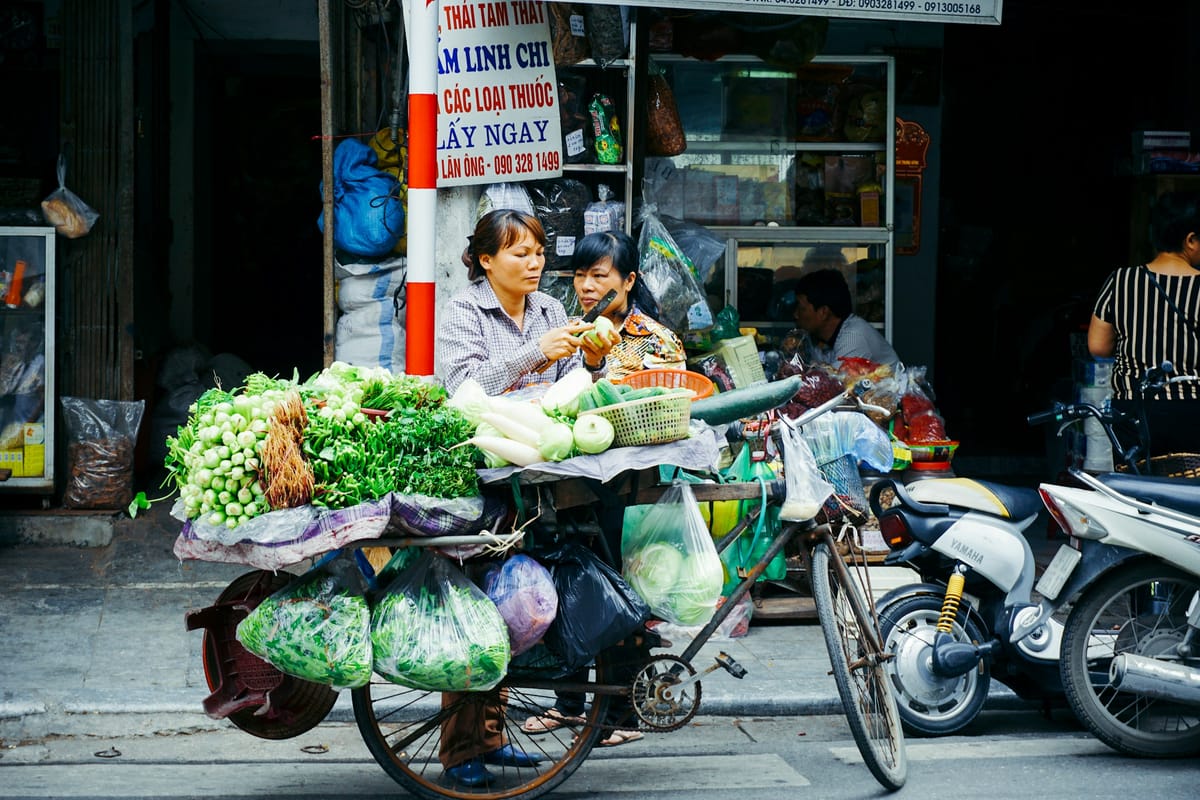
July 31 is the first nationwide deadline Vietnam's household businesses face under the new tax regime. Household business is a broad category here: market traders, noodle shops, family-run storefronts and individual landlords.
Since January 1, Vietnam has scrapped the presumptive tax it ran for decades. Under the old system, a tax officer estimated your annual revenue and collected a fixed amount against that number, whether you had a good year or a bad one. Now you declare what you actually earned. The change is written into National Assembly Resolution 198/2025/QH15, passed in May 2025: household businesses stop using the presumptive method from January 1, 2026, and pay tax under the Law on Tax Administration instead. The government issued Decree 68/2026 in March to fill in the details.
For anyone running a shop, the shift is less about the figure on the tax bill than about what you now have to do every day. You calculate your own revenue and keep records that hold up. You report the bank account and e-wallet numbers you use for the business. And if your annual revenue tops VND1 billion (about USD 40,000), you have to switch to a cash register that transmits e-invoices to the tax office.
Four groups need to act before July 31:
➤ Businesses that opened in the first half of this year with revenue at or below VND1 billion must report the revenue they actually took in.
➤ Businesses already trading below the threshold that have not yet reported their business bank account or e-wallet numbers must file them.
➤ Landlords who declare property rental income twice a year must file their first declaration.
➤ Quarterly filers who estimate their 2026 revenue between VND1 billion and VND50 billion must file for the second quarter.
Local tax offices have worded their notices slightly differently, so the actual obligation depends on what your local office says.
The tax itself got lighter. Last year the tax-free threshold was VND100 million in annual revenue. This year it was raised in stages: the Law on Value-Added Tax lifted it to VND200 million, the National Assembly pushed it to VND500 million last December, and in late April it was settled at VND1 billion, backdated to January 1. Household businesses earning up to VND1 billion a year owe no VAT and no personal income tax for 2026. Tax authorities count about 2.56 million of them. The government estimates this brings in roughly VND16.65 trillion less than the presumptive system would have collected last year.
The threshold is not fixed in law. When the National Assembly amended the legislation in April, it stripped the number out of the statute and handed the decision to the government; Finance Minister Ngô Văn Tuấn said at the time the decree would set it at VND1 billion. Which means being exempt this year guarantees nothing about next year. The figure can move annually.
On the ground, the friction is mostly about compliance. Traders in Ho Chi Minh City's traditional markets were still struggling six months in. A vendor at An Đông market who has run her stall for more than three decades said what worries her is the paperwork, the ledgers and the technology, not the amount of tax. At Bến Thành market, one trader said keeping records while serving customers is easy to get wrong when you are older, and once you forget to write something down it is gone. A 65-year-old stall owner spent more than VND6 million on a cash register and e-invoicing software, and still waits for her grandchild to get home from school to key in the product names and codes.
The physical constraints are real too. Market stalls are cramped, with no room for a computer or equipment, and fire safety rules limit running extra electrical wiring. Phạm Viết Thuận, director of the Institute of Resources and Environmental Economics, has suggested bringing the presumptive method back for businesses in the VND1 billion to VND5 billion range.
The account reporting is what matters over the longer run. Nearly every commercial bank and foreign bank branch in the country has connected its systems to supply taxpayer account information, so once a household business files the account it trades through, its money in and out sits where the tax office can see it. Those below the threshold owe nothing this year, but they still have to report the account and still have to keep the revenue records.
—
This article is a description of the rules and a news report. It is not tax or legal advice. For your actual filing obligations and which threshold applies to you, consult Vietnam's tax authorities or a licensed tax adviser. The detailed regulations are still being adjusted. Information current as of July 27, 2026.