Ten Ren Is Back in Vietnam After Seven Years, Starting in Hanoi
Ten Ren reopened in Hanoi in May and announced plans to return to Ho Chi Minh City. Its first attempt in Vietnam lasted 21 months and ended when its local licensee, not Taiwan headquarters, decided to shut all 23 stores.
[Ten Ren Is Back in Vietnam After Seven Years, Starting in Hanoi]
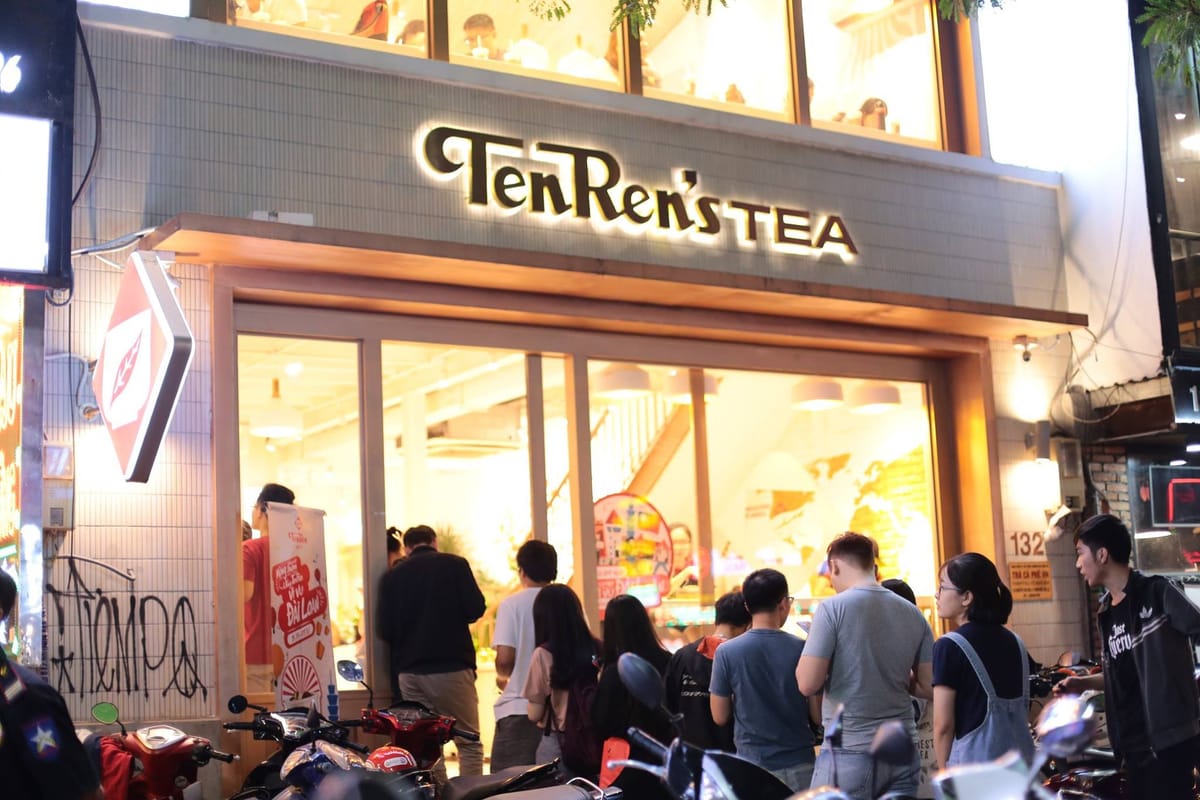
Ten Ren reopened in Hanoi in May, seven years after leaving Vietnam. That same month, the Taiwanese tea chain announced on its Vietnam Facebook page that it would return to Ho Chi Minh City as well. Founded in Taiwan in 1953, the brand lasted 21 months in Vietnam the first time around.
It entered in November 2017 by granting exclusive rights to The Coffee House, a local coffee chain. Bubble tea was booming at the time: an estimated 30 brands ran about 1,500 outlets nationwide, with a cup going for VND 30,000 to 60,000. The licensee said it aimed to have 40 Ten Ren stores open by the end of 2018.
It got to 23. In mid-2019, The Coffee House announced it was shutting the chain down, and every store closed on 15 August. The stated reason was that the existing business model did not match what customers wanted, and results had fallen short of expectations. The company declined to say how much it had lost. The stores were converted into The Coffee House outlets, resources went back into its core coffee business, and the Ten Ren licence was not passed to anyone else.
So the decision to close Ten Ren came from The Coffee House, which held the exclusive rights in Vietnam, not from Taiwan. Once a brand licenses itself out, whether it keeps operating depends heavily on how the partner chooses to spend its own resources.
Vietnamese demand for the drink never went away. A 2022 report on bubble tea in Southeast Asia estimated Vietnamese consumers spend USD 362 million a year on the category, third in the region behind Indonesia and Thailand.
But demand does not guarantee that every brand sticks around. Sharetea, which arrived at roughly the same time as Ten Ren and opened its first store on Nguyễn Huệ walking street in HCMC in 2017, closed in 2022 when its licence agreement with its Taiwanese parent expired. Chatime, which came earlier, never issued an exit announcement — by the time Vietnamese media took stock of the market, it was already being described as long gone.
By 2025, the pressure had spread across food and beverage. More than 50,000 outlets nationwide stopped operating in the first half of the year, with Hanoi and HCMC both down more than 10 percent. Higher-priced tea brands such as The Alley and Tiger Sugar closed a significant number of stores.
Two Taiwanese brands have held on regardless. KOI Thé arrived in 2015 and runs every store itself, with no franchising. It grows slowly, but it decides where to open and when to close, and had 64 stores as of May 2025. Wu Jia arrived in 2019, built its own central kitchen in HCMC, and expanded through low-cost tea-cart franchising, passing 400 outlets in June 2025 to become the largest Taiwanese tea chain in Vietnam by store count. The two took opposite routes, but neither handed its brand to a local licensee to run.
The market Ten Ren returns to is harder than the one it left, and its route has reversed. All 23 of its old stores were in the south, in HCMC and neighbouring Biên Hòa. This time it has started in Hanoi. Why north before south, and who is running the business now, has not been disclosed.
Southern customers, meanwhile, are waiting. Since news of the return spread, people have kept asking when HCMC gets its turn, and the brand says it has received plenty of enquiries from customers there.
The Viet Media Monthly
A curated monthly digest of the most important political, economic, tech, and industry developments in Vietnam.
Designed for reading on desktop or tablet — no algorithm, no noise. Just the stories that matter.
Delivered before the 10th of each month. Cancel anytime.