Apartments Up 32%, Villas Down 20%? What Hanoi's Housing Numbers Actually Say
Hanoi apartment prices rose a third in a year while villa prices dropped a fifth — both figures from the same report. Unpack how they are calculated and they tell one story. The number actually rewriting the market is the floating mortgage rate, now at 15% and climbing.
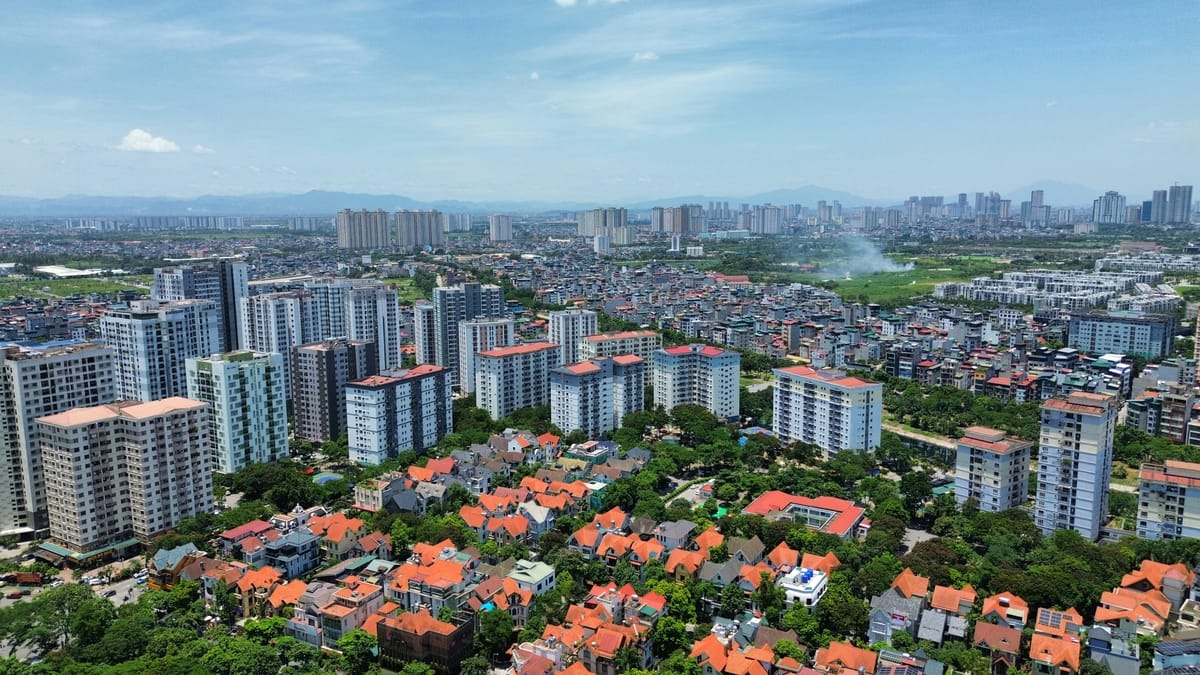
[Apartments Up 32%, Villas Down 20%? What Hanoi's Housing Numbers Actually Say]
Two numbers in JLL's first-half 2026 report on Hanoi look like they cannot both be true. The average primary-market price of an apartment — new units sold directly by developers, as opposed to resales — rose 32% from a year earlier. In the same report, primary prices for villas and townhouses fell 20% year on year. Same city, same report: one segment up a third, the other down a fifth.
Before asking which number reflects the real market, ask a better question: how is each one calculated?
A primary-market average is simply the mean price of whatever projects happen to be on sale that period. Change the mix of projects, and the average moves — even if not a single developer adjusts its prices.
That is what happened on both sides. For apartments, JLL's explanation is direct: a large stock of high-priced units remains unsold and stays in the sales basket, keeping the average elevated. The expensive skew is structural — roughly two-thirds of the apartments launched in Hanoi in the first half were high-end products.
The villa decline is the same effect running in reverse. According to Vietnamese media reporting on the JLL data, expensive projects have thinned out of the sales basket while other projects held their prices steady; top-priced homes barely sell without developer incentives.
So two opposite-pointing numbers share one cause: the composition of unsold inventory changed. For a read on actual market conditions, look at transactions instead. Apartment sales in the second quarter fell by about half from the first, which JLL attributes to buyer caution.
The caution has a clear source: the cost of money. Research firm DXS-FERI puts typical Vietnamese mortgage rates at 12-14% a year in the first half of 2026, with some floating-rate loans already at 15-16%. Phạm Đức Toản, CEO of property firm EZ Property, cites an even higher figure: floating rates have reached about 16.5%, and he does not rule out further increases.
Vietnamese mortgages usually start with a promotional period at around 9-11%. When it ends, most loans switch to a floating rate calculated as the bank's deposit rate plus a margin of roughly three percentage points. When deposit rates rise, mortgage rates follow. The rate a borrower sees at signing and the rate they pay for years afterward are two different things.
The results show up in transactions. DXS-FERI estimates that first-half sales across Vietnam's primary market fell 62% from the second half of 2025, and only two to three of every ten launched products actually sold.
The buyers who remain look different, too. JLL sees demand shifting from short-term investment to owner occupancy. DXS-FERI's surveys show more than nine in ten buyers now rank clean legal documentation as a top priority, and funding has moved from bank leverage to buyers' own capital. At these rates, leveraged investors exit first. What is left are people spending their own money on homes they intend to live in.
The land-plot market is colder still: supply kept growing in the second quarter, yet DKRA counts only about 4% of it actually selling, and on property platform Batdongsan buyer attention has swung clearly toward apartments. Đinh Minh Tuấn, the platform's southern region director, points out that the split runs inside each asset class as well: land in areas with real infrastructure, real residents, and clear planning is a different product from land supported only by price expectations.
Beyond prices and rates, a third line is moving: geography. Savills data shows Hanoi's new housing supply now concentrates in outlying districts — Đông Anh, Long Biên, Hoài Đức, and Đan Phượng. The city center is not refusing to build; it mostly cannot. Developable land is scarce, development costs keep rising, and downtown transactions happen largely in the secondary market.
In its market reporting this year, Savills judges that supply and transactions will slow in the short term on buyer hesitancy, but the outward migration of demand will continue along Hanoi's northern, eastern, and western development corridors. Transaction data backs this up: second-quarter sales of landed housing clustered in Đan Phượng, Thường Tín, and Bắc Từ Liêm, mostly in previously pre-launched projects.
Policy is paving the way at the same time. In mid-July, Hanoi's People's Council approved adding 873 land-recovery projects — land recovery being the step that precedes development — on top of the city's long-term urban rail plan. Đỗ Thị Thu Hằng, senior director of research and consultancy at Savills Hanoi, argues that transit-oriented development can create new growth poles, redistributing population outward and easing pressure on the core.
Outward supply does not mean affordable supply, though. Local market research defines "affordable housing" as anything under 50 million VND per square meter. JLL's average primary apartment price in Hanoi is twice that line.
Reading the halved transaction volume as a crash would miss what is actually happening. Võ Hồng Thắng, deputy CEO of DKRA Group, calls it a filtering period: money no longer follows the crowd the way it did in 2020-2022. Lê Thị Huyền Trang, country head of JLL Vietnam, says the Hanoi market is entering a phase of sharper geographic differentiation. And JLL expects the next source of pressure is already forming: heavy supply in satellite provinces — Bắc Ninh, Hưng Yên, Hải Phòng — will weigh on Hanoi's landed-housing segment.
The Viet Media Monthly
A curated monthly digest of the most important political, economic, tech, and industry developments in Vietnam.
Designed for reading on desktop or tablet — no algorithm, no noise. Just the stories that matter.
Delivered before the 10th of each month. Cancel anytime.