What to Wear in Vietnam in Winter: The North-South Climate Divide
Vietnam's winter climate varies wildly. Hanoi drops below 10C while HCMC stays at 30C. Sapa even gets snow.
Many people assume Vietnam is hot year-round -- sunshine, shorts, and flip-flops. If that's what you're expecting in Hanoi during winter, you're in for a rude surprise.
Vietnam stretches over 1,600 km from north to south. Summer is hot everywhere. Winter is a different story.
Same Day, Down Jackets in Hanoi, T-Shirts in HCMC
In December, the north-south temperature gap can exceed 20 degrees Celsius.
Hanoi starts cooling down in November, with temperatures ranging from 14 to 22C. During cold snaps, it can drop below 10C. High humidity and strong winds make it feel even colder -- a bone-chilling damp cold that cuts right through you.
At the same time, HCMC is still around 30C. Locals ride to work in short sleeves without a second thought.
Cold Enough for School Closures
Northern Vietnam's winters are no joke. From December to February, cold fronts sweep down from China one after another. Hanoi temperatures can plunge 7 to 8 degrees overnight.
Northern provinces have a special rule: below 10C, kindergartens and primary schools close. Below 7C, middle schools shut down too. Mountain areas trigger these closures almost every winter.
The 2025-2026 winter has been shaped by La Nina, which means colder-than-usual conditions. La Nina pushes more cold fronts into East Asia. Meteorologists predicted multiple strong cold snaps in January, with possible snow and ice in northern mountain areas.
Snow in Vietnam? The White Spectacle of Sapa
Yes, Vietnam gets snow.
Sapa sits in the northern highlands at about 1,500 meters above sea level. Winter temperatures sometimes drop below zero. In late December and early January, a strong enough cold front can blanket Sapa in white.
Fansipan, Vietnam's highest peak at 3,147 meters, is an even bigger draw for snow chasers. Photos of its snow-covered summit make people question whether this is really Southeast Asia.
Snow in Sapa isn't a sure thing. It usually lasts just a few hours before melting. Late December to early January offers the best odds.
What to Pack for Winter in Vietnam
It depends on where you're going.
HCMC and the south: Summer clothes are fine. Maybe a light jacket for air-conditioned rooms.
Hanoi and the north: Bring real winter gear. A heavy coat, sweaters, long pants, and a scarf. Hanoi winters are damp and cold, so a windproof, waterproof jacket works better than a plain down jacket.
Sapa and the mountains: Pack like you're facing a serious cold snap. Thermal base layers, a down jacket, a beanie, gloves, thick socks -- bring everything.
Next time someone asks if Vietnam gets cold: the north does, the south doesn't.
Hanoi's winters are colder than you think, and Sapa can get snow. Don't let "Southeast Asia" fool you. Check the weather at your destination before you pack, or you'll arrive with a suitcase full of T-shirts.
The Exception: HCMC in Early 2026
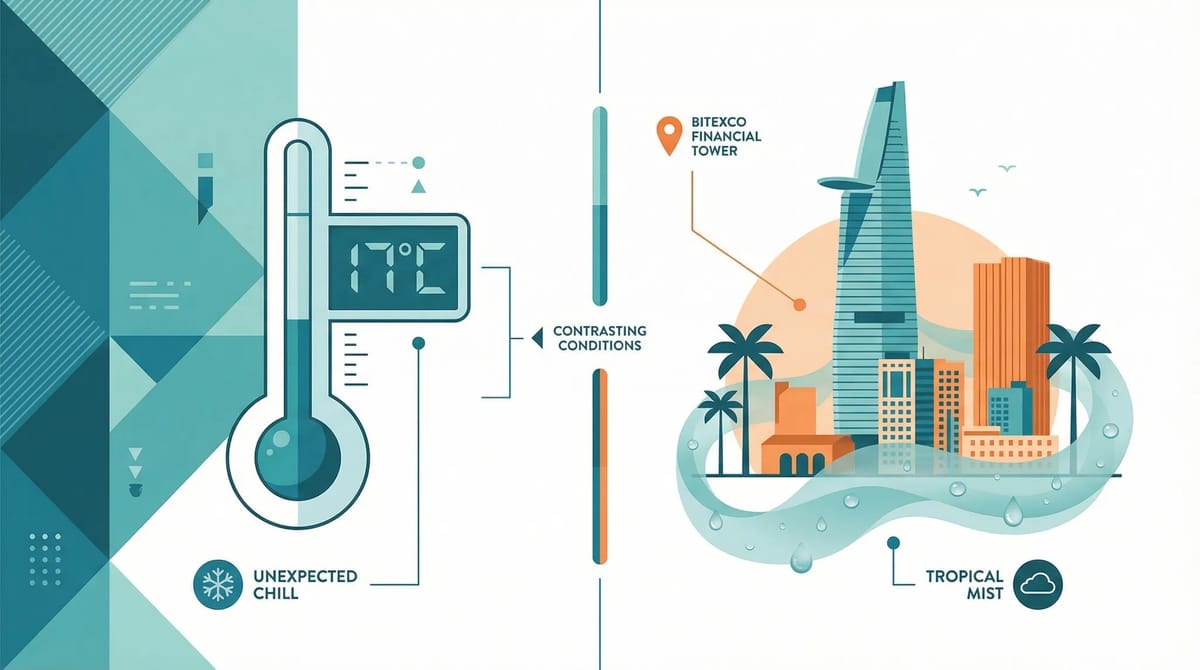
On the morning of January 9, HCMC temperatures dropped to 16-17C, the lowest in a decade.
Other southern areas also broke records. Vung Tau hit 19.5C, beating the previous low of 19.7C set in 1996. Tay Ninh province fell to 16C, also a 30-year first. The cause: La Nina combined with a strong northeast monsoon that pushed cold air all the way south.
That morning, a rare sight appeared on HCMC streets: motorcycle commuters pulling on jackets and gloves. For locals used to year-round heat, it felt like being transported to Da Lat.
Sources: CNA, Weather Spark, Vietnam Tourism, Vietnam Meteorological Agency, VnExpress, Tuoi Tre