Visiting Vietnam During Tet — Is It Actually a Good Idea?
During Tet, 80% of shops close, hotel prices jump, and ATMs run out of cash. But an empty HCMC might be something you'll only see once in your life.
Vietnam celebrates Lunar New Year, just like Taiwan.
That sounds familiar — but for travelers, it means you might land in a city that has shut down.
Vietnam's Tet holiday typically lasts about nine days.
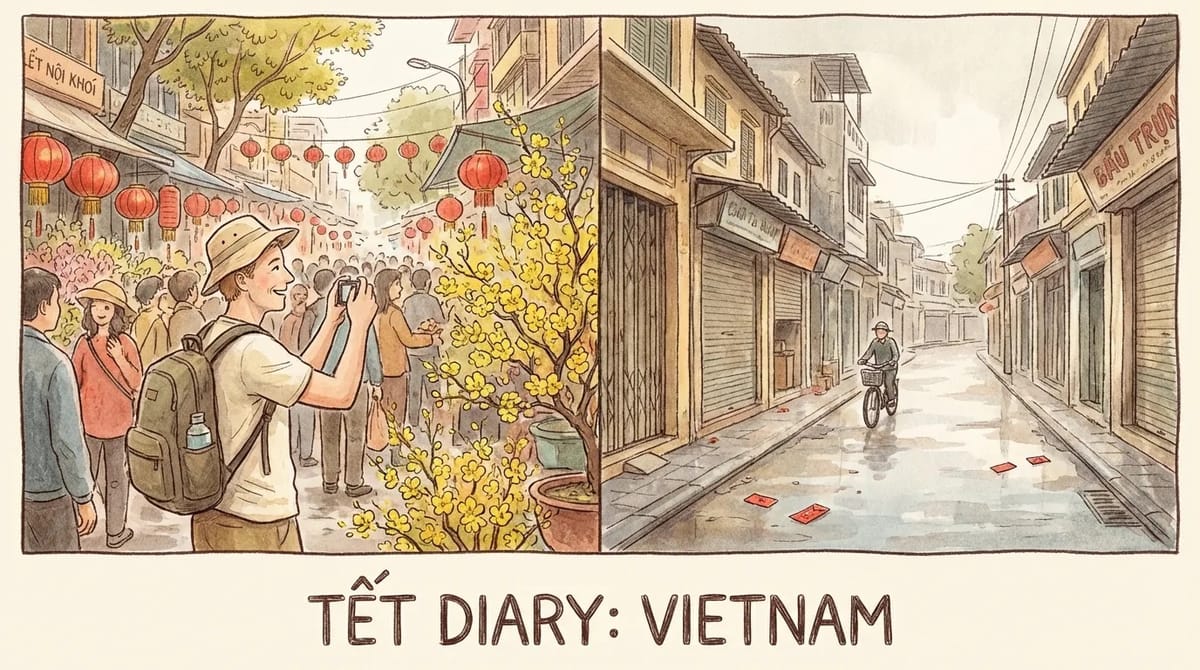
The first three days of the new year are the quietest. Eighty to ninety percent of restaurants, street food stalls, and shops close. Roadside vendors vanish almost entirely. Even convenience stores may struggle to stay stocked.
Finding food or shopping options during this window is genuinely difficult.
So should you go? It depends on what kind of trip you want.
What You Will Run Into
Let's start with the practical realities.
Hotels and flights get more expensive — significantly.
Book as early as possible. Many hotels sell out by the end of the previous year.
ATMs run dry.
Banks are closed during the holiday. Cash replenishment cannot keep up, especially in tourist areas.
Bring enough VND before you leave, or stock up a few days before New Year's Eve.
Credit cards work at hotels and chain stores in major cities, but street vendors and small shops are cash-only.
Traffic is a mess.
In the days before Tet, airports and intercity bus stations are packed with people heading home.
The return wave around the 5th and 6th days is just as bad.
Taxis are nearly impossible to get from the 1st to the 3rd — Grab too, since most drivers go back to their hometowns.
If you plan to travel between cities, book your tickets or arrange a private car two to three months ahead.
Which Days Are Worst, Which Are Fine
Not all nine days are the same.
Roughly, there are four phases:
Before Tet (February 14-16): About 60% of shops are still open. Markets are actually busier than usual because of holiday shopping. The atmosphere is great — decorations going up everywhere, flowers being sold, families prepping holiday meals.
Days 1-3 (February 17-19): Full shutdown. Only about 20% of restaurants open. Street food nearly gone. Most museums and attractions closed.
The upside: the streets are empty. HCMC — normally gridlocked — feels like a different city for these three days.
Days 4-6 (February 20-22): Gradual recovery. More than half the shops reopen. Attractions resume. Some popular restaurants may still be closed.
Day 7 onward (February 23): Mostly back to normal.
So Why Do Some People Come Specifically for Tet?
International visitor numbers during Tet grow every year.
Travel agencies' Tet tour packages typically sell out well before the holiday, even at premium prices.
Clearly, some people choose this timing on purpose.
The reason is simple: things you cannot see the rest of the year are on full display.
Hanoi's flower markets are the prime example.
In the week before Tet, the areas around Hoan Kiem Lake and the Ceramics Road fill up with massive displays of peach blossoms and kumquat trees.
Northern Vietnam displays peach blossoms for the new year; the south uses yellow apricot blossoms. This only happens during Tet.
Temples are packed with locals burning incense and praying during the first three days.
For visitors, it is the easiest time to experience Vietnamese folk religion up close.
There is also a very practical reason: no crowds.
Hanoi's Old Quarter is normally shoulder-to-shoulder. During Tet, you can walk through the Thirty-Six Streets and actually look at the old buildings.
District 1 in HCMC, usually roaring with traffic, is so quiet on New Year's Day that you can hear your own footsteps.
Some travelers come specifically for that.
How to Plan Smarter
If you decide to visit Vietnam during Tet, a few strategies can help you avoid trouble:
Food: Hotel restaurants and chain stores (like 7-Eleven) usually stay open through the holiday. Look up what is open near your hotel before you leave — do not wait until you arrive. Bring snacks as backup. Days 1-3 are genuinely tough for finding meals.
Accommodation: Go with large hotels or international chains. Service levels hold up better during Tet. Guesthouse and small hotel owners may go home themselves.
Location: Da Nang and Hoi An recover faster during Tet than Hanoi or HCMC because tourism makes up a bigger share of the local economy — businesses close for fewer days.
Da Lat and Phu Quoc are top Tet vacation spots for Vietnamese themselves, so tourist infrastructure stays fully operational. Foreign visitors are less likely to find things shuttered.
Ha Long Bay and Ninh Binh are natural landscape destinations and are barely affected by Tet. Cruise boats keep running.
Timing: The ideal approach is to arrive before Tet and leave after.
Land around February 12, spend the first few days exploring pre-Tet markets and flower fairs, soak in the holiday preparations.
Schedule natural attractions or hotel downtime for days 1-3.
From day 4, the city wakes up — then go eat and shop.
If your only available dates are days 1-3, brace yourself: limited food options, most attractions closed, difficult transportation.
You can still go. Just build flexibility into your itinerary, and have backup plans ready.