290,000 Vietnamese Workers in Taiwan: The Story Starts Back Home
How did the Vietnamese caregivers and factory workers you see in Taiwan get here — and why are they the largest group of undocumented workers? Seen from Vietnam, this isn't a "migrant problem" but a 40-year-old industry called labor export.
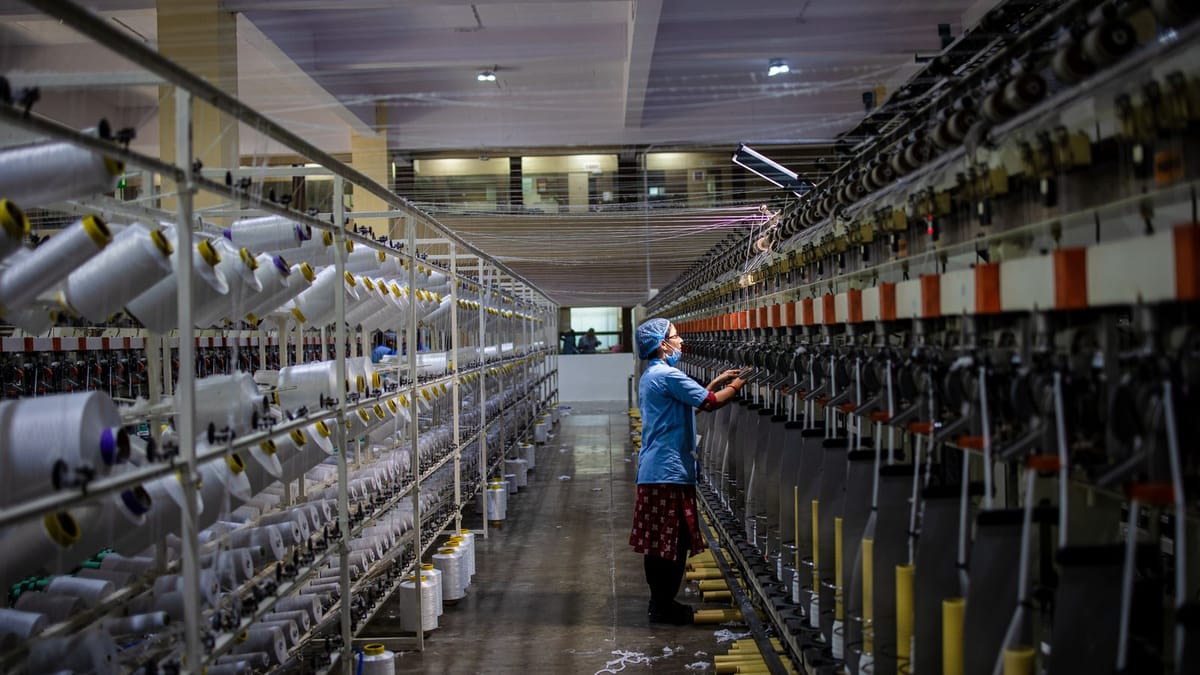
You see them everywhere in Taiwan: in long-term care homes, on the electronics assembly lines around Taoyuan and Zhongli, on fishing boats in Nanfang'ao, even in the kitchens of restaurants and teppanyaki grills. By the end of August 2025, Vietnamese industrial and social-welfare migrant workers numbered more than 290,000 — about a third of all migrant workers in Taiwan, and the second-largest group after Indonesians. That doesn't even count those who have stayed through marriage or other routes. Taiwanese are used to them being here. Few stop to ask why they left Vietnam in the first place.
In Taiwan's public conversation, Vietnamese workers tend to get tied to one word: missing. By the end of 2025, more than 94,000 migrant workers had gone off the radar across Taiwan. Over 60,000 of them were Vietnamese — more than every other nationality combined. So in Taiwan, "Vietnamese worker" easily picks up a label: prone to running, hard to manage, a public-safety worry.
But in Vietnam, these same people carry a very different identity. They aren't called "migrant workers." What they do is called xuất khẩu lao động — labor export — an industry more than four decades old that the state treats as a national achievement. To understand those 290,000 people on Taiwan's streets, you first have to understand what that phrase means in Vietnam.
Vietnam's story of sending people abroad to work goes back to 1980. That November, the government issued Resolution 362, sending demobilized soldiers, surplus factory hands, and unemployed vocational graduates to the Soviet Union, East Germany, Bulgaria, and Czechoslovakia under state-to-state agreements. In the lean years of the planned economy, it solved two problems at once — jobs and foreign currency. Between 1980 and 1990 alone, more than 300,000 people went abroad, bringing home around US$300 million and 80 billion VND.
When the Soviet Union and Eastern Europe collapsed in the 1990s, that path closed, and Vietnam turned to Northeast Asia. In 1992 it began sending technical trainees and ship crews to Japan and South Korea; the number working abroad rose from just over 1,000 in 1991 to 31,000 by 2000. In the 2000s the market widened again, with Malaysia and Taiwan taking the lead — Malaysia alone took in more than 190,000 Vietnamese workers between 2002 and 2012.
Four decades on, Vietnam's labor export reaches 40 countries and more than 30 industries. Over 500 licensed agencies send out around 100,000 people a year, with Taiwan and Japan taking more than 90% of them. About 860,000 Vietnamese are working abroad right now. In the five years from 2021 to 2025, Vietnam sent out 636,000 workers — nearly 30% above its own target. Together they remit US$6.5–7 billion a year. For Vietnam, this isn't a social problem; it's a pillar of foreign exchange. For many rural families, having someone abroad is the fastest way up.
But that ticket up has to be bought on credit.
Vietnamese law caps total broker fees for working abroad at US$4,000. Reality is another matter. An investigation by Taiwan's Control Yuan found Vietnamese workers were routinely charged US$4,500 to US$8,000, far above the official ceiling. On the Vietnamese side, agencies also subcontract recruitment to layers of middlemen — cò, or "brokers' brokers" — each taking a cut, so the fee keeps stacking up. Back in 2019, the newspaper Tuổi Trẻ cited international research showing that even legal brokers could charge US$7,000 for a three-year factory contract in Taiwan — 1.3 times what Indonesians paid and three times what Filipinos and Thais paid.
Most people can't put that money down, so they borrow it. That 2019 report told the story of a woman named Mai. She borrowed US$6,300 to pay a broker — ten times what she earned in a whole year at a Samsung factory. The broker had promised US$1,000 a month; after tax, fees, and living costs in Taiwan, she took home about US$500. She couldn't clear the debt and couldn't go home, so she eventually left her employer and became an undocumented worker.
Mai is not an exception. By the National Immigration Agency's method, the rate at which Vietnamese workers go missing runs as high as 14.22% — well above the 5.96% overall rate, and far above Indonesians (2.26%), Thais (1.4%), and Filipinos (0.35%). For years, Vietnamese have been the largest group of missing workers in Taiwan, and the one with the highest rate.
But pinning it all on "Vietnamese who love to run" or "greedy Vietnamese brokers" is too easy. A 300-page Control Yuan report — based on interviews with 33 undocumented workers, with investigators traveling to Vietnam themselves — put it plainly: going missing is at heart about leaving one's employer, and it should be understood through workers' conditions in Taiwan, not blamed on individuals. And Taiwan's own system builds in several of the pressures.
The biggest is that workers can't freely change employers. Taiwan's Employment Service Act works on a "prohibited in principle, permitted by exception" basis. Unless something happens that isn't the worker's fault — the employer closes down, fails to pay wages, dies, or emigrates — a worker on a work visa can't switch bosses. Even those who qualify to transfer can be hit with an illegal "buy-work fee," another layer skimmed off them. Home caregivers, meanwhile, live in their employer's house 24 hours a day, their lives tightly controlled with almost no time of their own. When the work and pay fall short of what was promised and there's nowhere to turn, "disappearing" into the informal market can look like a way out: undocumented work often pays more than NT$40,000 a month — above the minimum wage — and lets someone clear their broker fees and loans within six to ten months of evading the authorities. In the Control Yuan's interviews, more than one worker said undocumented work was simply "freer."
Vietnam's government hasn't dodged the problem either. In November 2025, the Department of Overseas Labour (Dolab), under the labor ministry, again singled out the Taiwan market for "rampant brokers, high commissions, and deep interference in worker selection" that drive up what workers must pay to leave. Officials also noted that Vietnamese workers tend to trust brokers from their own village or hometown rather than checking with a licensed company directly — and a familiar face's word of reassurance is often where the high-interest debt begins.
The problem doesn't stop at the brokers, though. In 2026, Vietnamese prosecutors charged officials in a corruption case that reached the top of the labor ministry: former Deputy Minister Nguyễn Bá Hoan and former Dolab Director Tống Hải Nam, among others, accused of deliberately obstructing companies in the export-approval process to extort bribes. The money trail is the key part — the bribes officials collected traced back to service fees that export companies illegally overcharged workers. One company charged US$5,000 above the legal standard just to send a single worker to South Korea; over 2020 to 2024, several firms over-collected and hid off the books more than US$70 million. In other words, part of what workers overpaid ended up bribing officials. (We unpacked this case in full in an earlier report, "$500 a Worker: The Case of Vietnam's Former Deputy Labor Minister.")
Back in Vietnam, the story has a bright side and a quiet one. First the ledger: those US$6.5–7 billion in yearly remittances have lifted countless families, especially in a few central "labor export provinces," where money sent from abroad has built house after house and changed the face of whole villages.
But those new houses are missing people. With parents away for years, children are mostly raised by grandparents. A reporter visiting these villages recorded one scene: asked whose child he was, a boy answered, "I'm grandma's." To him, the grandmother who feeds him, walks him to school, and puts him to sleep is his mother. In such villages, day to day, "it's mostly the elderly, children, and a few middle-aged people." Vietnamese mainstream media has long carried readers' letters about another cost: when one spouse is away for years, quite a few marriages don't survive.
And this seemingly solid system is itself starting to loosen. Even Japan, the top destination, has lost some of its pull as a weak yen eats into workers' real earnings. Vietnam's own government is rethinking a model that has run for forty years.
One part of that rethink aims squarely at the debt that crushes people. From January 2026, Vietnam has been rolling out Decree 338/2025, letting people going abroad apply for preferential loans through the Bank for Social Policies, with even lower rates for ethnic minorities and poor households. The logic is clear: rather than have workers take on high-interest debt from a hometown broker, offer an official, low-interest, traceable channel — loosening, at the source, the knot that pushes people into going missing.
Whether the decree can really ease that debt remains to be seen, and it only addresses the Vietnamese end of the problem. Among those 290,000 Vietnamese on Taiwan's streets, the ones who end up "missing" usually start not from any urge to run, but from the heavy broker fee they shoulder before they even leave — compounded, once in Taiwan, by being unable to change employers and seeing no way out. This is a structure spanning both Vietnam and Taiwan, with room for improvement on each side. The same people are treated as a pillar of foreign exchange and a rural family's hope for a better life in Vietnam, only to be reduced to a number in a table in Taiwan. Broker fees, corruption, rules that bar changing employers — the causes are scattered across both ends. But whichever end fails, the ones who bear it are always the same: the Vietnamese workers who left home for no grander reason than to earn a little more for their families.
The Viet Media Monthly
A curated monthly digest of the most important political, economic, tech, and industry developments in Vietnam.
Designed for reading on desktop or tablet — no algorithm, no noise. Just the stories that matter.
Delivered before the 10th of each month. Cancel anytime.