Vietnam Launches Property ID Code System in March — Every Building Gets a Unique Number
Starting March, Vietnam rolls out electronic ID codes for all properties nationwide, aiming to solve the real estate market's longstanding transparency problem.
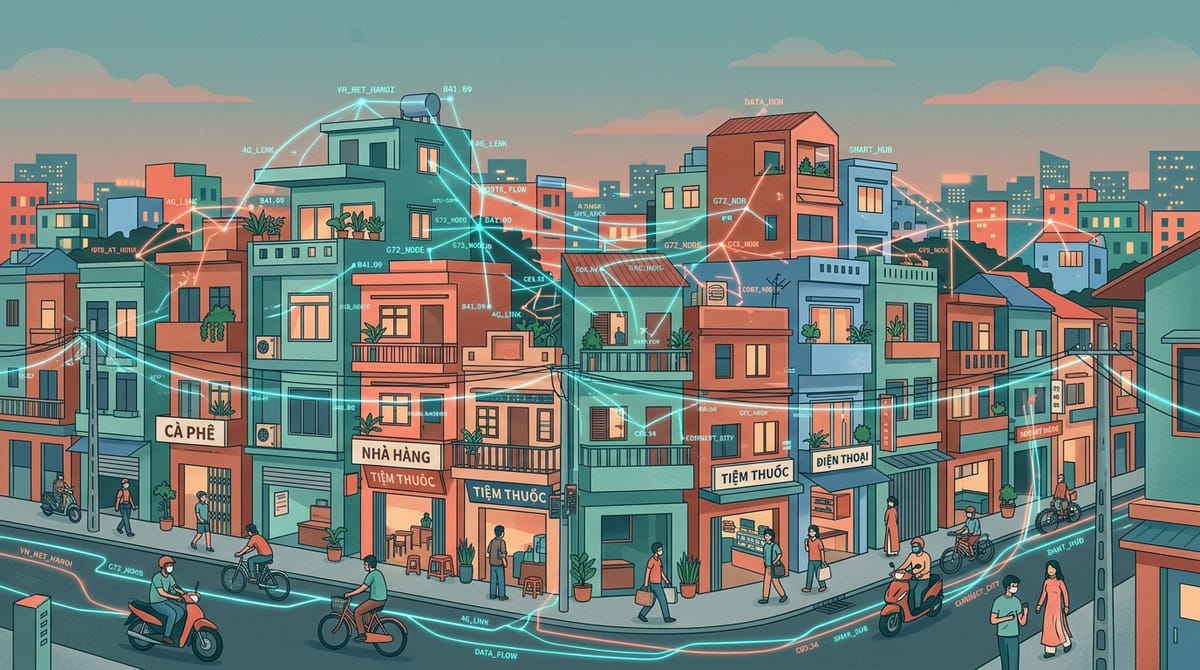
Starting March 1, Vietnam rolled out a new electronic identification code system for real estate.
The system is the centerpiece of Decree 357 (Nghị định 357/2025/NĐ-CP), issued by the government late last year.
In simple terms, every house, apartment, and floor area unit in a development project now gets a unique digital ID.
Once assigned, the code follows the property through every sale, lease, and mortgage.
How Opaque Is Vietnam's Property Market?
Information asymmetry has long plagued Vietnam's real estate market.
Before buying a property, it's nearly impossible to check its full legal status. Is there a mortgage on it? Any ownership disputes? What's the transaction history? This information is scattered across different government agencies — the Ministry of Agriculture and Environment handles land, the Ministry of Construction handles buildings, tax authorities handle transaction taxes — and they all use different systems with different standards, none of which talk to each other.
The same property can have different versions of data at different agencies.
An even more common problem is "dual-price" transactions.
Buyers and sellers sign two contracts — one with the real price, another with a lower price for tax purposes.
Without a unified transaction database, the government can barely verify these. Tax evasion is an open secret.
Speculators also profit from the information gap.
Hoarding, flipping, and creating artificial supply-demand imbalances — these tactics thrive in an opaque market.
What Does the ID Code Look Like?
Each code is an alphanumeric string of up to 40 characters, automatically generated by the national database system.
The structure includes several components: a land parcel code, a project or building code, a location code, and a set of supplementary characters.
This design ensures no two properties in the country receive the same code.
Once generated, the code never changes.
Residential units get their code when they meet sales conditions. Floor area units in development projects get coded when their feasibility reports are approved.
No matter how many times the property changes hands, the code stays the same.
It's Not Just Buildings — Real Estate Agents Are Tracked Too
Many assume this system only covers properties, but the decree actually defines five types of electronic ID codes:
The first covers residential products, including apartments and detached houses.
The second covers floor area units in development projects.
The third covers real estate brokerage certificates — each certificate is automatically linked to a code containing the province code, personal ID, issue date, certificate number, and revocation status.
The fourth covers apartment management and operations companies.
The fifth covers housing policy beneficiaries, such as low-income households and families of war veterans eligible for housing subsidies.
The third category is the most noteworthy.
Unlicensed practice is a serious problem in Vietnam's brokerage industry — out of nearly 300,000 agents nationwide, only about 40,000 hold legitimate practice certificates.
Buyers have no easy way to verify whether the agent in front of them is actually licensed.
Under the new system, every legitimate brokerage certificate will be logged in the system, making it theoretically possible to tell real from fake with a quick lookup.
What Problems Could This Solve in Theory?
Once the system is up and running, the Ministry of Construction will build a unified national housing and real estate database, integrating existing cadastral, construction, tax, and notarization records.
Buyers will be able to check a property's legal status and transaction history through an application process before purchasing.
Financial institutions assessing collateral can pull standardized data from the unified platform.
The government gets a new tool to monitor price fluctuations and detect suspicious transactions.
When every property has a complete transaction and legal record, speculation should theoretically become easier to track.
Properties that change hands frequently in a short period will leave a trail in the system.
Developers will also face greater accountability, as project data — total investment, land use scale, construction progress — will all be entered into the database.
Can You Actually Look Anything Up? Not Yet
The short answer: as of early March, the general public cannot query any property identification codes online.
The system is legally in effect, but the Ministry of Construction's planned "Housing and Real Estate Market Information System" has not yet launched publicly.
Provincial construction department websites show no related search portals either.
In other words, the rules for generating codes are set, but the data hasn't been entered and the system isn't online.
The decree outlines the following query process: once the system launches, citizens can log in and submit requests through the national public service portal, visit a Ministry of Construction one-stop service counter in person, or mail in an application form.
After review and access authorization by the Ministry, the applicant pays a fee. The entire process takes up to seven working days.
Under Appendix VI of the decree, detailed property information — legal status, transaction records, mortgage status — falls under "paid data" and is not freely available to the public.
Some have compared this system to Taiwan's real-price registration system, but the two are quite different.
The database mandated by the decree will indeed record transaction prices, sale amounts, and notarization records — it's actually quite comprehensive in scope.
But Taiwan's system is free and public. Anyone can go online, select a district and street, and see recent transaction prices in that area.
Vietnam's system classifies price data as paid content, not open to just anyone.
Even when fully operational, it will be closer to an "apply to access" model.
Brokerage certificate lookups are also still in a transition period.
Provincial construction department websites currently only post static lists of certificate issuance decisions, with no interactive real-time search functionality.
In theory, you'll eventually be able to enter a certificate number or personal ID to check an agent's license status, but the interface is still being built.
The Real-World Challenges Are Significant
The direction is right, but execution is another matter.
The first problem is data quality.
Cadastral data varies wildly across Vietnam.
Many areas still rely on hand-drawn cadastral maps from decades ago that were never fully digitized.
In rural areas, overlapping boundaries between adjacent parcels are common. If these inaccurate records are used to generate ID codes, existing errors get locked into the system, making corrections even harder down the line.
The second problem is local government capacity.
Vietnam operates on a central-command, local-execution model.
The gap in IT capabilities, staffing, and budgets between provinces is enormous.
HCMC and Hanoi may have the resources to build proper systems, but remote provinces face real pressure to complete data entry and system integration in a short timeframe.
The third problem is real-time updates.
The property market sees splits, mergers, and transfers every day.
But current data update processes across agencies still rely on manual verification — too slow to keep up with market activity.
If the database contains outdated information, query results become useless.
The fourth problem is more practical: citizens may have to go through redundant processes.
The red book (property certificate), household registration database, and tax database already contain a lot of this information.
But once the new system launches, citizens may be asked to resubmit this data — effectively handing in the same documents multiple times.
What Happens After March 1?
Frankly, the March 1 launch date doesn't mean nationwide full activation.
The Ministry of Construction is responsible for building and operating the national database system. Local governments are responsible for collecting, updating, and syncing property data within their jurisdictions.
Just cleaning up and entering the country's existing property data into the system is a massive undertaking.
The concept behind this system is sound. The UK, for example, assigns every property a permanent UPRN (Unique Property Reference Number) — a similar logic.
But Vietnam's challenge is that it's pushing forward while cadastral data remains incompletely digitized and agency databases remain incompletely connected.
How effective this system becomes depends on how well local governments can clean up their foundational data over the next few years.
For anyone looking to buy property or invest in Vietnam, this is a positive direction.
The system applies equally to Vietnamese nationals and foreigners. The design includes foreign identification codes — anyone legally holding property in Vietnam falls under the same ID code framework.
But in the short term, anyone hoping to use this system to find complete, real-time property information will have to wait a bit longer.