Inside Saigon Heritage: 160 Years of Vietnamese Currency on Display
A rare exhibition inside the State Bank of Vietnam HCMC branch traces 160 years of Vietnamese currency history.
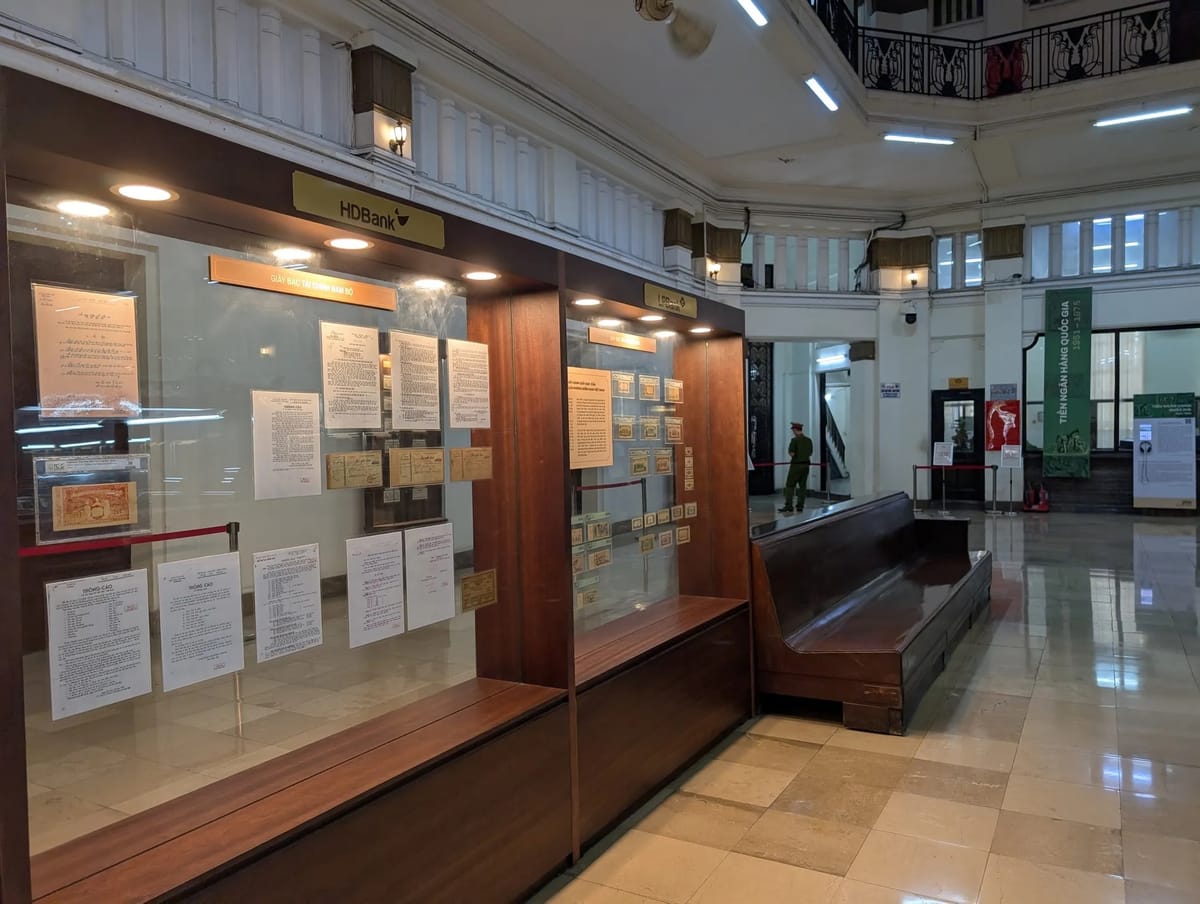
We recently visited the State Bank of Vietnam's HCMC branch in District 1. This government building is normally closed to the public, but it's currently hosting a rare exhibition on Vietnamese monetary history. If you're interested in Vietnam's history, architecture, or financial development, it's worth the trip.
The building was completed in 1930 and stands as one of Saigon's iconic Art Deco landmarks. Step inside the main hall and you'll find intricate stone carvings blending Khmer Garuda and Naga motifs. The exhibition's artifacts tell the story of Vietnam's economic evolution from the colonial era to the present.
Key Milestones in Vietnamese Currency History
1862-1955, French Indochina era: The exhibition documents the founding of the Banque de l'Indochine and the history of the Indochinese piastre. In old Saigon, all financial trade revolved around this building by the river.
1946-1951, Early independence: On display are the first "fiscal banknotes" issued by Ho Chi Minh's government, a powerful symbol of the new independent state. The public affectionately called them "Giay bac Cu Ho" (Uncle Ho's banknotes).
1951-1978, National banking system established: The State Bank of Vietnam was officially founded, and multiple currency reforms followed. In 1959, old notes were exchanged at a 1:1,000 ratio to establish a new credit system.
1975-1985, Reunification and integration: After the South's liberation in 1975, northern and southern currencies were unified. A major monetary reform in 1985 exchanged old notes at a 10:1 ratio.
2003 to present, Modern era: Polymer banknotes were introduced nationwide, greatly improving durability and anti-counterfeiting features -- a symbol of Vietnam's economic modernization.
Visitor Guide and Rules
The exhibition is inside a government building, so rules are strict. Here's what you need to know:
Reservation proof: The online registration system does not send email confirmations. Take a screenshot after you register -- you'll need to show it at the entrance.
ID required: Foreign visitors must bring their original passport. Security will check it before entry.
Dress code: This is an official government office. No shorts, sandals, or flip-flops. Dress neatly or you'll be turned away.
Language: All exhibition panels and guided tours are in Vietnamese only.
Interactive Experience: Step Inside a Banknote
The exhibition uses AI technology to let visitors scan a QR code and merge their photo with historic banknote designs, creating a unique digital souvenir.
Exhibition Details
Venue: State Bank of Vietnam - HCMC Office
Address: 8 Vo Van Kiet, Phuong Nguyen Thai Binh, Quan 1, TP. Ho Chi Minh
Hours: Fridays at 14:00, 15:00, 16:00 (group reservations); Saturdays and Sundays 9:00-11:00, 14:00-16:00
Registration: https://dangky.sbvkv2.vn/
This article is based on an on-site visit.
If you found this article useful, feel free to share it with anyone interested in Vietnam.
Want regular updates on Vietnam? Visit our website to subscribe to our free newsletter.
We also have a LINE group for readers -- join link is in our Facebook page bio. Come chat about all things Vietnam.